


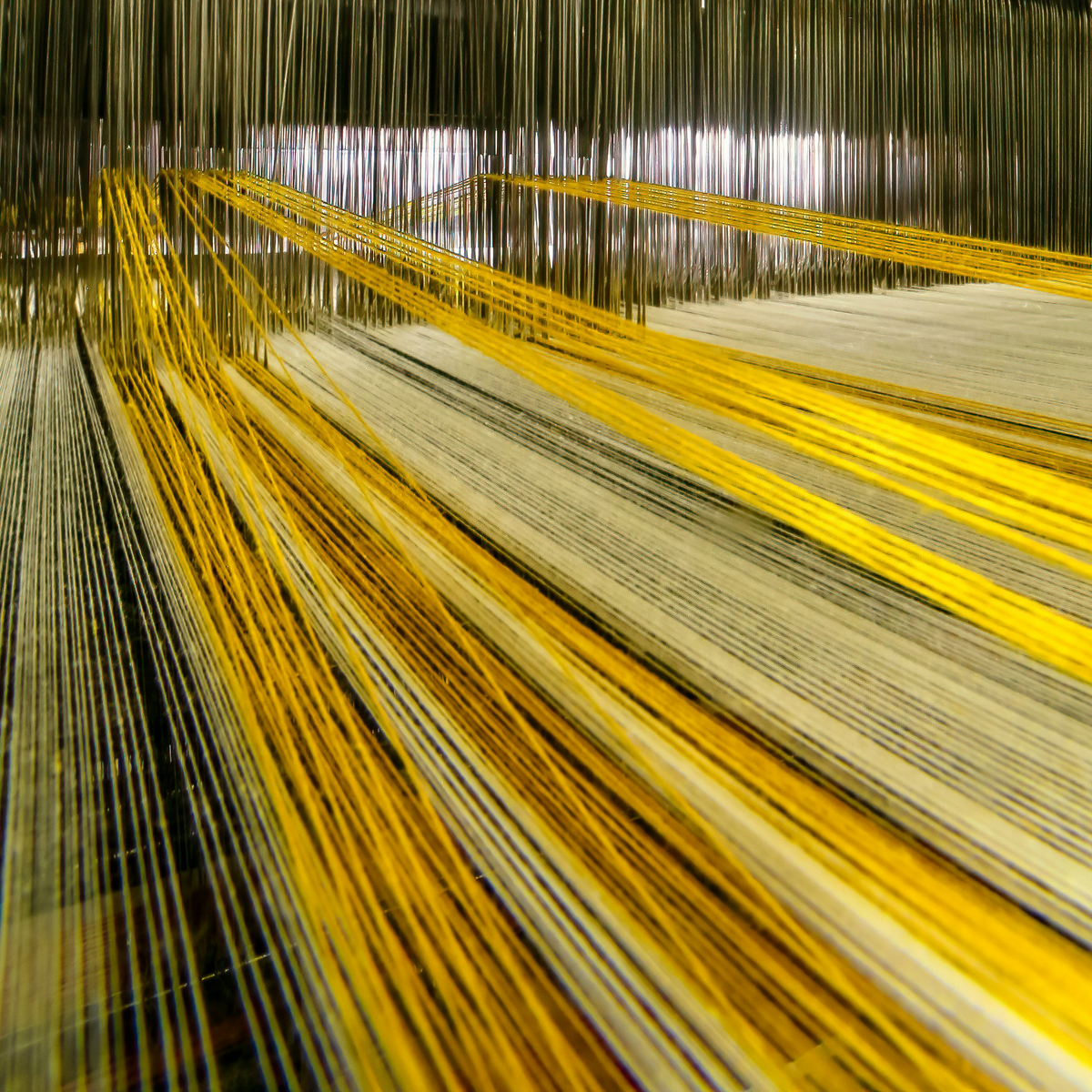
Walk a weaving shed and the first thing you notice is the noise. The second thing, if you have been doing this a while, is that the compressor room is enormous relative to the size of the plant. That is not an accident and it is not overbuilt.
Compressed air for textile mills is unlike almost any other industry we sell into, because in air jet weaving the air is not powering the machine. The air is the machine. It is the thing that carries the pick across the shed, thousands of times a minute, and if it stops, production stops instantly.
The number that should reframe how you think about this
In modern air jet weaving, compressed air commonly accounts for 30 to 40 percent of total energy spend. Not of the compressor's energy. Of the mill's.
That single figure changes what a compressed air system is. In a machine shop, the compressor is overhead. In a weaving shed, it is a production cost per square meter of fabric, and it sits right alongside yarn and labor on the cost sheet. A one percent improvement in air efficiency is money in a way it simply is not anywhere else.
It also means the usual advice gets inverted. Elsewhere we tell people not to obsess over compressor efficiency because the machine is idle half the time. Here it runs flat out, continuously, and every point of specific power compounds across three shifts and fifty weeks.
Where the air goes on an air jet loom
Understanding the split matters, because it tells you where optimization pays.
A pick is launched by the main nozzle and then carried the rest of the way across the shed by a series of relay nozzles firing in sequence, timed to the pick's travel. There are also tuck-in devices, cutters, and cleaning air.
Roughly 80 percent of the compressed air a loom consumes goes to the relay nozzles. That is the whole optimization target. Typical consumption runs somewhere around 60 to 90 normal cubic meters per hour per loom at 6 to 7 bar, though that varies a great deal with fabric width, reed width, pick rate and yarn type.
Multiply by however many looms you have and the plant demand gets large quickly. A two hundred loom shed is a serious industrial compressed air installation by any measure.
Optimization at the loom beats optimization at the compressor
This is the part worth emphasizing, because it is where the money actually is and it is not something you buy from us.
Published mill studies have found large reductions available at the nozzle rather than the plant. Reducing the hole diameter on single-hole relay nozzles and tightening the blowing time on multi-hole relay nozzles has been reported to cut air consumption by around 21 percent in a working mill. At scale that is a very large annual number. Mills running loom-level optimization commonly report high-teens percentage reductions in air per square meter of fabric with no increase in stops or defects.
So the honest order of operations for a weaving shed:
- Optimize the looms first. Nozzle sizing, valve timing, pressure setting per machine. This is loom manufacturer and technician territory and it is the biggest lever you have.
- Fix leaks. A shed running 8,760 hours a year with thousands of connections has a leak rate, and at these duty hours it is expensive. See leak detection.
- Drop system pressure to the minimum the looms actually need. Every psi you carry unnecessarily across the whole plant is paid for continuously. See what PSI to set.
- Then size and control the compressors properly. Which is where we come in.
Do it in the other order and you buy a compressor sized for waste, then run it forever.
Why variable speed is close to mandatory here
A weaving shed's air demand is not flat. It moves with how many looms are running, which changes with style changes, warp beam changes, breaks, maintenance and scheduling. A shed at 70 percent of its looms is a very different load than one at full.
A fixed speed compressor meets that by loading and unloading, and an unloaded machine still burns a meaningful share of full load power while producing nothing. Across the hours a mill runs, that adds up to real money.
A variable speed compressor matches output to demand by changing motor speed, so part load costs roughly what part load should cost. In an application running continuously with a swinging load, that is close to the textbook case for VSD. Our explainer on what a variable speed drive compressor is covers the mechanics, and control modes compared covers what each alternative costs you at part load.
The usual configuration in a well designed mill is base load fixed speed machines carrying the steady portion, with one VSD trimming the top. One VSD in a bank of fixed speed machines is the common and sensible answer. Two VSDs fighting each other is not. We work through the base-plus-trim layout, the sizing steps and the sequencing in detail in rotary screw compressors for textile mills.
And because these machines run continuously, ask every vendor for the CAGI data sheet and compare package specific power before you compare price. At mill run hours the efficiency difference between two machines is a larger number than the purchase price difference. See how to read a CAGI data sheet.
Lint, size dust, and what they do to a compressor
Here is the part specific to this industry that catches people who came from general manufacturing.
A textile plant is full of airborne fiber. Cotton lint, synthetic fly, and fine powder from sizing agents used in warp preparation. All of it is light, all of it stays suspended, and all of it is looking for somewhere to settle.
Your compressor is an air pump. It will find that material for you.
| Where it lands | What happens |
|---|---|
| Intake filter | Blinds off fast. Restricted intake means lower output and a hotter machine. |
| Cooler cores and fins | Insulates the cooler. Discharge temperature climbs, oil oxidizes, machine life drops. |
| Motor cooling fins and enclosure screens | Motor runs hot for no visible reason. |
| Oil, via a bypassing intake filter | Abrasive circulating through the airend. Shows up as silicon on an oil analysis. |
| Control cabinet | Fiber packed around electronics, plus a fire consideration in a lint environment. |
What to do about it:
- Put the compressor room on positive pressure with filtered makeup air, or duct the intake from outside. This is the single highest value decision in a textile installation. Do not let the machine breathe shed air.
- Treat the intake filter as a frequent consumable, on a much shorter interval than the manual suggests. The manual was written for a cleaner plant than yours.
- Schedule cooler cleaning. Not annually. Often.
- Run oil analysis. Rising silicon is your early warning that fiber and dust are getting past the filter, and it appears before the wear does. See compressor oil analysis.
- Watch discharge temperature as a leading indicator. A climbing trend usually means something is blocked. Our note on overheating causes covers the sequence.
Air quality and drying
Weaving air does not need pharmaceutical quality, but it is going through very small nozzle orifices at high frequency and it is touching yarn.
The practical spec:
- Dry enough that nothing condenses in the distribution. A refrigerated dryer at a 38 to 40 degree F pressure dew point covers a heated, conditioned mill. If any header runs through an unheated space or outdoors, you need better. See refrigerated versus desiccant.
- Oil control matters more than people assume. Oil mist landing on yarn is a staining and dyeing defect that will not be traced back to the compressor room for weeks. Coalescing filtration at minimum, and look hard at whether the finish-critical areas justify better.
- Particulate filtration ahead of the looms. Relay nozzle orifices are small and there are a great many of them.
- Drain everything, automatically. Covered below.
Distribution
A weaving shed is a long building with a lot of identical machines, which is close to the ideal case for a properly engineered ring main.
- Run a loop, not a dead end. Feeding the far looms from two directions halves the effective run length and evens out pressure across the shed. Uneven pressure across a loom line means uneven insertion behavior, which is a quality issue and not just an energy one.
- Size the main generously. Pressure drop across a large shed is paid for continuously at the compressor. Our pipe sizing guide covers the math.
- Take drops off the top of the main. See drops and drip legs.
- Put local storage near heavy demand. Helps with the step loads when a line restarts after a beam change.
- Consider aluminum over black iron. Smoother bore, no internal corrosion, easier to modify when the shed layout changes. See pipe materials compared.
What we see go wrong in mills
- Buying compressor capacity instead of fixing nozzles. The most expensive mistake available, because you then pay for the waste forever.
- Letting the compressor breathe shed air. Second most expensive, and it is usually free to fix at installation and costly to fix later.
- Running the whole plant at the pressure the worst loom needs. Regulate locally, drop globally.
- A bank of fixed speed machines with no sequencer. Several partly loaded compressors is a large amount of wasted power that shows up nowhere on a gauge.
- No metering. You cannot manage 35 percent of your energy bill with no measurement on it. A flow meter on the header pays for itself immediately at this scale.
- Timer drains left to vent continuously. Small individually, significant across a plant this size. Our range of condensate drains covers the zero loss alternatives. More below.
Frequently Asked Questions
How much compressed air does an air jet loom use?
Commonly in the range of 60 to 90 normal cubic meters per hour per loom at 6 to 7 bar, though it varies widely with reed width, pick rate, fabric and yarn. Roughly 80 percent of that goes to the relay nozzles, which is why nozzle and timing optimization is the highest value efficiency work available.
Why is compressed air such a big part of a textile mill's energy bill?
Because in air jet weaving the compressed air is doing the production work rather than supporting it. In modern air jet mills it commonly accounts for 30 to 40 percent of total energy spend, which makes it a direct production cost per square meter of fabric rather than plant overhead.
Is a variable speed compressor worth it for a weaving shed?
Usually yes, and this is close to the textbook case. Demand swings with how many looms are running, the plant runs continuously, and a fixed speed machine burns meaningful power while unloaded. The common configuration is fixed speed machines carrying base load with one variable speed unit trimming the top.
How do I keep lint out of the compressor?
Do not let it breathe shed air. Duct the intake from outside or put the compressor room on filtered positive pressure, then treat the intake filter as a frequent consumable and clean cooler cores on a short schedule. Oil analysis will tell you if fiber is getting through before the wear shows up, because silicon rises first.
Should I fix the looms or upgrade the compressor first?
The looms, every time. Nozzle diameter and blowing time optimization has been shown to cut mill air consumption by around 20 percent, and a compressor sized around unoptimized demand locks that waste in for the life of the machine. Optimize, fix leaks, drop pressure, then size the plant.
Where to start
Meter the header and find out what you actually use per square meter of fabric. Then work the looms with your technicians before you spend a cent on plant equipment. Once demand is honest, size the compressors around it with a variable speed machine trimming the swing, and make sure that machine is breathing filtered air rather than the shed.
Browse our variable speed rotary screw compressors, or send us your loom count and shift pattern and we will work through the plant sizing with you. For the equipment side in detail, read rotary screw compressors for textile mills: sizing for air jet looms.


