


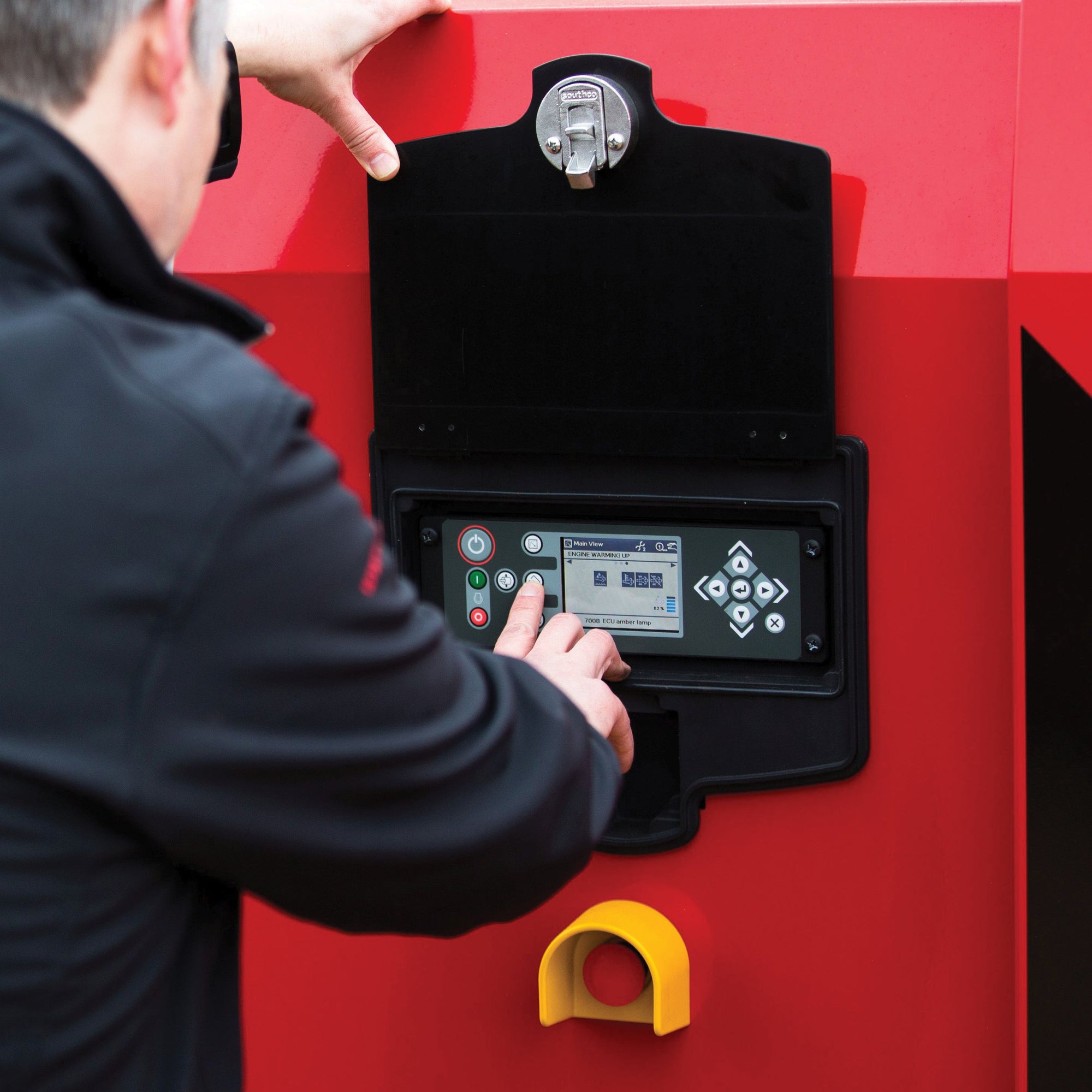
Two shops down the road from each other, same 30 HP rotary screw, same air tools, roughly the same hours. One of them pays about forty percent more per month to make air than the other.
The difference is not the compressor. It is how the compressor decides what to do when you are not using all of its air, and that is decided by the control mode.
Almost nobody asks about this when they buy. They compare CFM, they compare price, they compare the brand on the hood. Then they live with the electric bill for the next fifteen years. So here is a plain look at the four air compressor control modes you will actually run into, what each one does at part load, and how to tell which one belongs in your shop.
Why part load is the whole conversation
Here is the fact that makes control modes matter: hardly anybody runs their compressor at 100 percent output. Most shops average somewhere between 40 and 70 percent of rated capacity across a shift. Tools cycle. People take lunch. The night shift uses a third of what day shift does.
At full output every control mode looks identical, because the compressor is simply making all the air it can. The differences only show up in the gap between what the machine can make and what you are actually pulling. That gap is where your money either gets used or gets thrown away.
The number worth remembering: a rotary screw sitting unloaded, making zero usable air, still draws roughly 15 to 35 percent of its full load horsepower just to spin. That is the tax you pay for a machine that is running but not producing.
The four control modes
Start/stop
The simplest one there is. Pressure hits the top setpoint, the motor shuts off. Pressure falls to the bottom setpoint, the motor starts again. No idle time, no wasted power, zero draw when it is off.
On paper that sounds perfect, and for a small piston compressor it basically is. The catch is starting current and heat. Every start hits the motor hard, and electric motors have a limit on starts per hour. On a large rotary screw that limit is low, often something like six starts an hour. If your demand cycles more often than that, start/stop will cook the motor.
Right for: small shops, piston machines, anywhere demand comes in long infrequent blocks.
Load/unload
The motor runs continuously. When pressure reaches the top setpoint, the inlet valve closes and the compressor stops making air but keeps turning. When pressure drops, it loads back up.
This is the most common control on rotary screws, and it is decent, but its efficiency depends almost entirely on how much storage you have. With a big receiver, the compressor loads, fills the tank, and gets a long comfortable unloaded rest. With a small receiver, it thrashes between loaded and unloaded every few seconds and spends most of its life burning that 15 to 35 percent idle power for nothing.
This is why we push receiver capacity so hard. Storage is the cheapest efficiency upgrade you can buy on a load/unload machine. Our air receiver tanks are usually a better first dollar than a new compressor.
Right for: steady industrial demand with adequate storage behind it.
Modulation
Modulation throttles the inlet valve part way, choking the amount of air the compressor takes in so it produces less. The motor speed never changes.
The problem is that restricting the inlet does not reduce power anywhere near proportionally. Throttle to 50 percent output and you are still drawing something in the neighborhood of 80 percent of full power. You are essentially making the compressor breathe through a straw and paying almost full price for half the air.
Modulation exists because it holds pressure very steady, which matters for some processes. As an energy strategy on its own it is the worst of the four. Many machines run modulation down to a floor and then unload, which is usually sold as dual control or auto dual, and that is a real improvement over pure modulation.
Right for: processes that need tight pressure control, ideally combined with unloading.
Variable speed drive
A VSD changes the motor speed to match demand. Need 60 percent of the air, the motor turns at roughly 60 percent speed and draws roughly proportional power. No unloaded idle, no throttling loss.
Where VSD wins big is a shop with genuinely variable demand across the day. Where it wins nothing is a shop that runs flat out at full load, because at 100 percent a VSD is actually slightly less efficient than a fixed speed machine thanks to drive losses. It also has a minimum turndown, often around 20 to 25 percent of capacity, below which it has to stop or unload anyway.
VSDs cost more up front and add a drive that can fail. On the right demand profile they pay that back quickly. On the wrong one they never do. We have a full lineup in rotary screw air compressors including variable speed models.
Side by side
| Control mode | Power at zero output | Power at ~50% output | Best fit |
|---|---|---|---|
| Start/stop | None, motor is off | Roughly proportional | Small or intermittent demand |
| Load/unload | About 15 to 35% of full load | Depends heavily on storage | Steady demand with a large receiver |
| Modulation | About 70% of full load | Around 80% of full load | Tight pressure control only |
| Variable speed | Off or unloaded at minimum speed | Roughly 50 to 60% of full load | Genuinely variable daily demand |
Treat those percentages as typical ranges rather than a spec for your specific machine. Manufacturers publish real part load curves and they vary. But the shape of the story holds across brands: modulation is expensive at part load, load/unload lives and dies by storage, and VSD only earns its money when demand actually varies.
How to figure out which one you need
You cannot pick a control mode intelligently without knowing your demand profile. Guessing costs real money in both directions, and we have seen shops buy a VSD they did not need just as often as we have seen shops flog a modulating machine for a decade.
The honest way to find out is to log flow and pressure for a week. A data logging flow meter on the main header will show you the peaks, the average, the night load, and how often you swing. That week of data tells you more than any rule of thumb.
Short of that, a few practical signs:
- If your compressor loads and unloads more than a few times a minute, you do not have enough storage. Fix that before you change anything else.
- If your load is dead steady all shift, a fixed speed machine on load/unload with good storage is hard to beat, and it is cheaper to buy and simpler to fix.
- If your demand swings widely, or you have a big day shift and a light night shift, VSD is worth pricing out.
- If you have multiple compressors, sequencing them properly usually saves more than changing any single machine's control mode. Run one as the trim machine and let the others run loaded or off.
The thing most people miss
Before you spend anything on air compressor control modes, drop your system pressure if you can. Every 2 PSI you cut off your discharge pressure saves roughly one percent of energy, and it also reduces flow through every leak in the building. Most shops run 15 to 20 PSI higher than they need because somebody bumped it up years ago to solve a pressure drop problem that was really a filter or a pipe sizing problem.
Fix the pressure drop, lower the setpoint, add storage, then talk about control strategy. In that order. It is not as exciting as buying a new machine but it is where the cheap savings live.
Frequently Asked Questions
Is a VSD compressor always more efficient?
No. At full load a VSD is slightly less efficient than an equivalent fixed speed machine because of losses in the drive. It wins when demand varies, and it can lose when your shop runs flat out all day. The demand profile decides it, not the technology.
How much storage do I need for load/unload to work well?
A common starting point is 4 to 6 gallons of receiver per CFM for load/unload control. Less than that and the machine spends its life cycling. More storage almost never hurts, and it costs a fraction of what a compressor costs.
Can I change the control mode on my existing compressor?
Sometimes. Many rotary screws can be switched between modulation and load/unload in the controller settings, and some can be set to auto dual. Converting a fixed speed machine to variable speed is a much bigger job and usually not worth it versus replacing the unit. Check with the manufacturer for your model.
Why does my compressor run constantly but never seem to keep up?
Either you genuinely need more air, or you are losing it. Leaks are the usual culprit and they run 20 to 30 percent of output in a shop that has never been audited. A restricted filter or undersized piping can also cause it by forcing the machine to work at a higher discharge pressure than it should.
Does control mode matter on a small piston compressor?
Not much. Piston machines in the shop and garage range almost always use start/stop, which is the right choice for them. Control strategy becomes a real financial question once you are into continuous duty rotary screws.
Bottom line
The four air compressor control modes are not interchangeable and the cheapest machine to buy is often the most expensive one to run. Start/stop for small and intermittent. Load/unload with real storage for steady industrial demand. Modulation only when a process demands rock steady pressure. VSD when demand genuinely varies through the day.
If you are not sure which bucket you are in, log a week of data before you spend anything. We are happy to look at the numbers with you and tell you honestly if a VSD is going to pay for itself or just cost you more up front.


