


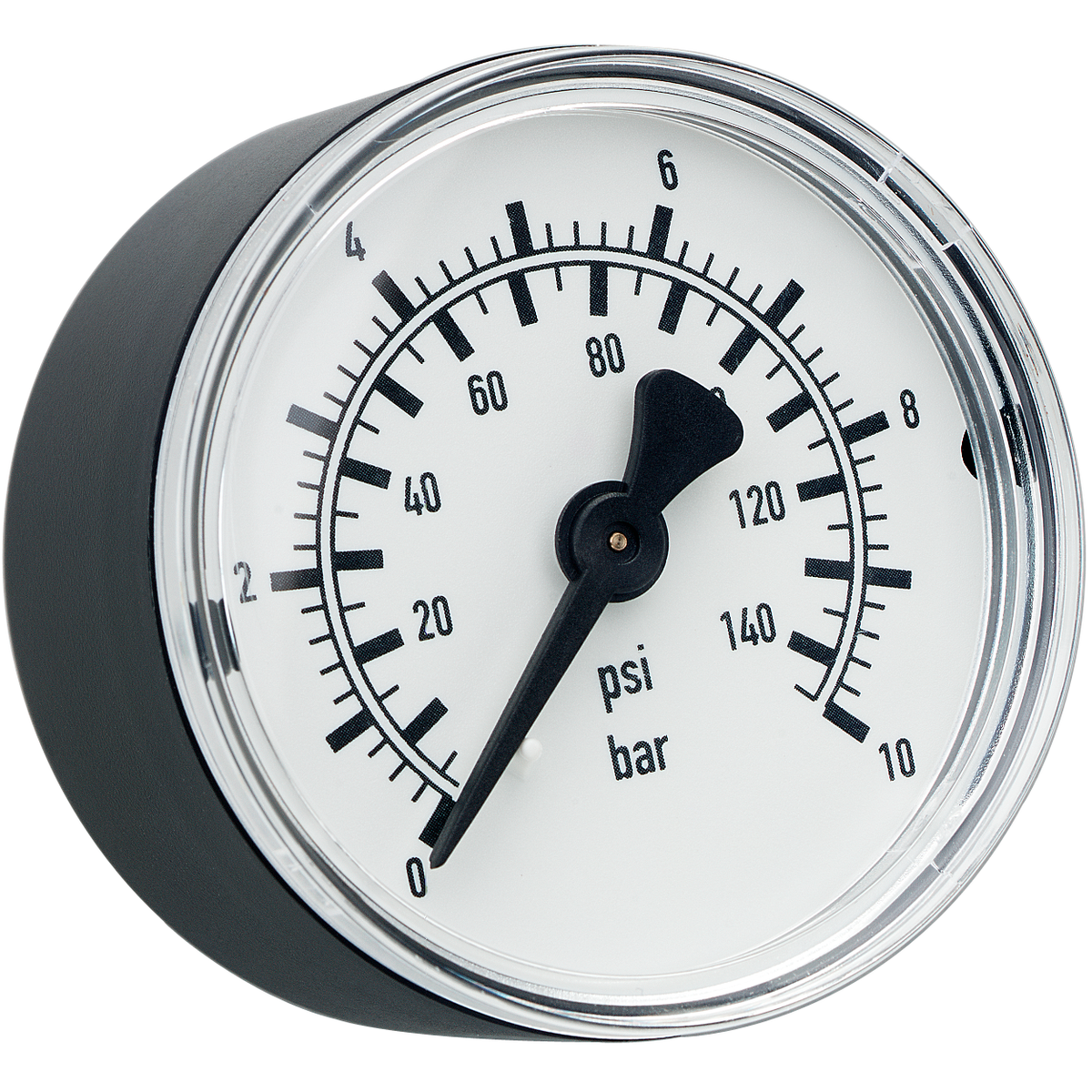
Most people set their compressor to whatever it came from the factory at, then crank it up the first time a tool feels weak. That second move is where the money goes, because pressure is the one setting on a compressor that costs you every single hour it runs.
So, what PSI should my air compressor be set to? The short answer is the lowest pressure that still runs your worst tool properly, and that number is usually lower than what is on your gauge right now.
The number that should change how you think about this
In a system running around 100 psig, every 2 psi you add to discharge pressure costs roughly 1 percent more energy at full output. That is the standard engineering rule of thumb and it is well established.
It gets worse when you account for unregulated uses. Blow guns, open drains, leaks and anything else without a regulator will flow more air at higher pressure, so you are not just paying more per cubic foot, you are also making more cubic feet. In a system with 30 to 50 percent unregulated usage, the combined effect works out to roughly 1.6 to 2 percent more energy for every 2 psi.
Run the arithmetic on that. Turning a system down from 120 psi to 100 psi is 20 psi, which at the combined figure is somewhere in the range of 16 to 20 percent of your compressor energy. On a 50 HP machine running two shifts, that is a meaningful number every year, for free, by turning a knob.
Two different pressures, and people mix them up
There are at least three pressure settings on a typical shop system and they do different jobs.
| Setting | What it controls | Where it lives |
|---|---|---|
| Cut-in | Pressure at which the compressor starts or loads | Pressure switch or controller |
| Cut-out | Pressure at which it stops or unloads | Pressure switch or controller |
| Differential (band) | The gap between the two | Usually a second adjustment on the switch |
| Regulated line pressure | What the tool actually sees | Regulator at the header or the drop |
The tool cares about the last one. The compressor's energy use cares about cut-out. The pressure switch guide and the regulator guide cover the mechanics: see how a pressure switch works and how to set a regulator.
How to pick your numbers
Work backwards from the tool, not forwards from the compressor.
- Find your highest-pressure tool requirement. Most air tools are rated at 90 psi at the tool while running. A few things want more. Check the actual spec sheets rather than assuming.
- Add your real pressure drop. Measure it, do not guess. Put a gauge at the tool and run the tool while somebody watches the compressor discharge gauge. The gap is your drop. A well built system is 10 psi or less. A lot of shops find 20 to 30.
- That sum is your minimum cut-in. If the tool wants 90 and you lose 12 in the system, cut-in has to be at least 102 for the tool to still work at the bottom of the cycle.
- Set the differential. A typical band is 20 to 40 psi on piston machines, roughly 10 psi on rotary screws. Too narrow and the machine short cycles, which is hard on motors and pressure switches. Too wide and you run at unnecessarily high pressure for part of every cycle.
- Cut-out equals cut-in plus the differential. Check that it is within the machine's rating and the relief valve setting.
Working example. Tools want 90 psi. Measured drop under load is 12 psi. Minimum cut-in is 102, call it 105. With a 20 psi band, cut-out is 125. Then regulate the header down to 95 at the drops so the tools see a steady 90 at the trigger regardless of where the compressor is in its cycle.
Notice what just happened: the regulator, not the compressor, is what gives the tool a consistent pressure. That is the whole point of having one.
Fix the drop instead of raising the pressure
If step 2 gave you a big number, you have found something better than a setting change.
Cranking the compressor up to overcome pressure drop is treating a symptom and paying for it forever. The usual causes, in the order we find them:
- Undersized or too-long hose. A 50 foot coil of 3/8 inch hose feeding a tool that wants 1/2 inch is often 15 psi by itself.
- Quick couplers. Cheap industrial couplers are surprisingly restrictive. On a high-flow tool, a high-flow coupler is worth real psi. See our coupler guide.
- Undersized header or a dead-end layout. Long runs of small pipe to the far corner. Our pipe sizing guide has the tables.
- Clogged filter elements. A loaded filter is pure pressure drop. Change on measured differential, per when to replace filter elements.
- Not enough storage. Pressure that sags every time a big tool triggers is a storage problem, not a pressure setting problem.
- Leaks. A system leaking 25 percent is running the compressor harder to hold the same pressure. Start with leak detection.
How to turn a system down safely
If you suspect you are running high, do it carefully rather than all at once.
- Write down the current settings before you touch anything.
- Drop cut-out by 5 psi.
- Run a normal production day and listen for complaints from the far end of the shop and from the highest-demand tool.
- If nothing suffers, drop another 5.
- Stop when something starts to struggle, then go back up 5 and leave it.
Two cautions. Never set cut-out above the machine's rated maximum or anywhere near the safety relief valve setting. And if you have a refrigerated or desiccant dryer, remember that lowering system pressure increases the actual velocity through it, so a dryer that was marginal at 120 psi may be undersized at 100. Check the dryer's correction factors before a big change.
Frequently Asked Questions
What is a normal cut-in and cut-out pressure for a shop compressor?
A very common piston setup is 105 cut-in and 125 cut-out, giving a 20 psi band. Rotary screws typically run a tighter band, often around 10 psi, for instance loading at 100 and unloading at 110. The right numbers for you come from your highest-pressure tool plus your measured pressure drop, not from a default.
Does running my compressor at higher pressure give my tools more power?
Only up to the tool's rated pressure, and only if pressure was the limitation. Past that you are wasting energy and, on some tools, wearing them out faster. If a tool feels weak at its rated pressure, the problem is usually flow, not pressure. Our piece on air tool CFM covers the difference.
How much does 10 psi actually cost me?
Roughly 5 percent of compressor energy at full output using the 2 psi per 1 percent rule, and closer to 8 to 10 percent once unregulated uses are counted. On a large machine running long hours that is a real annual figure, which is why turning a system down is one of the cheapest energy projects available.
Why does my compressor short cycle after I adjust the pressure switch?
Almost always because the differential got set too narrow. A band that is too tight makes the machine start and stop constantly, which is hard on the motor and the switch. Widen the differential, and if it still cycles rapidly, look at storage volume and leaks.
Should I set pressure at the compressor or at a regulator?
Both, and they do different jobs. The compressor's cut-in and cut-out set how much energy you spend making air. A regulator at the header or drop is what gives the tool a steady pressure regardless of where the compressor is in its cycle. Set the compressor as low as your system allows, then regulate down to what the tool wants.
Set the compressor from the tool backwards, measure your drop instead of guessing at it, and fix distribution problems rather than paying for them with pressure. That is the whole answer to what PSI should my air compressor be set to.


