


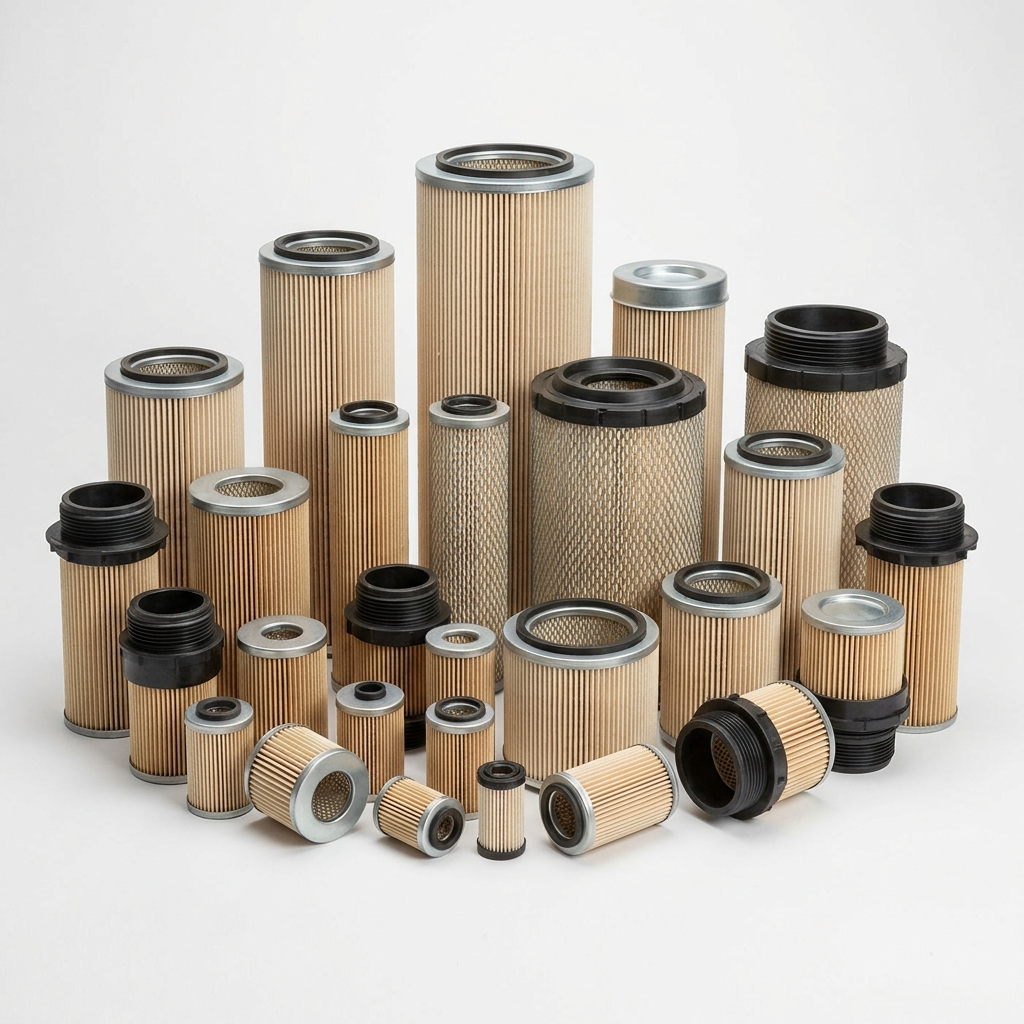
Every breath your compressor takes is dirty. Not a little dirty. Every cubic foot of shop air it pulls in carries millions of specks of dust, oil mist, and grit, and the only thing standing between that mess and your pump is the air compressor intake filter. It is a cheap part that does an outsized job, and most people ignore it until the compressor starts running hot or eating oil.
Let's fix that. Here is what the intake filter actually does, how to read a micron rating, and when to change it before it costs you a pump.
What the intake filter does
The air compressor intake filter sits at the very front of the machine, on the inlet where the pump draws air. Its whole job is to catch contaminants before they get pulled into the cylinders or the airend. That matters more than it sounds, because whatever gets past the filter does not just pass through. It gets compressed, so it becomes more concentrated and more abrasive on the way in.
Dirty intake air scratches cylinder walls, swells and sticks valves, and contaminates the oil in a lubricated unit. On a rotary screw, it fouls the airend and shortens oil life. The filter is the first line of defense, and clean, unrestricted air at the inlet is the single biggest thing you can do for peak output.
Micron ratings, in plain terms
A micron is one millionth of a meter. A filter's micron rating tells you the size of particle it can trap. For reference, anything your eye can actually see is at least 5 microns, so these filters are catching debris you will never spot. Most general-purpose intake filters land at 40 micron or 5 micron.
| Rating | Catches down to | Where it fits |
|---|---|---|
| 40 micron | Coarse dust and debris | Standard shop air, typical paper or pleated element |
| 10 micron | Finer dust | Dustier shops and sites |
| 5 micron | Fine particulate | Cleaner work and quality-sensitive air |
| 1 micron and below | Very fine particulate | Severe dust, felt or heavy pleated media |
Here is the trade-off nobody mentions: the tighter the filter, the faster it plugs. A 5 micron element in a dusty shop clogs a lot sooner than a 40 micron one because the smaller holes fill quicker. Match the rating to your environment, not to whatever number sounds most impressive.
Paper, foam, and pleated elements
Most intake filters use a pleated paper or synthetic element. Pleating packs more surface area into a small housing, so it flows well and lasts longer between changes. Some smaller compressors use a foam wrap or a foam pre-filter over a paper core, which is easy to knock the dust out of but is not as fine. Whatever style yours uses, the rule is the same: keep it clean and keep it flowing.
When to change the intake filter
As a baseline, plan on replacing the intake element around every 2,000 hours of run time. That is a starting point, not a law. In a dusty environment, cut that way down, because a plugged filter does real damage. A restricted inlet makes the pump work harder for less air, drives up operating temperature, and on a lubricated unit it can pull oil past the rings and raise your oil consumption.
Signs your intake filter is choking
Watch for output that has quietly dropped off, a compressor that runs hotter than it used to, or oil use that has crept up for no obvious reason. A whistling or sucking noise at the inlet is another tell. Pull the element and hold it up to the light. If you cannot see light through it, it is done. Do not just bang it out and reinstall a filter that is packed solid, replace it.
Picking the right replacement
Three things have to match: the mounting or thread size so it physically fits, the flow rating so it can pass your compressor's full CFM without choking it, and the micron rating for your environment. An undersized filter starves the pump even when it is brand new, so do not go smaller than the original just because it bolts on. When in doubt, match the OEM element and step the micron rating to your conditions.
You can find replacement intake elements and the rest of your air treatment in our air filters collection. If you are also cleaning up the air downstream of the tank, our coalescing air filters pull out oil and fine mist, and you will find odds and ends in parts.
Where the intake filter fits in your whole system
It helps to remember the intake filter only handles what goes into the pump. Everything after the pump, the water, the oil mist, the fine rust, gets handled downstream by separators and line filters. So the intake filter is not a substitute for a good water separator or a coalescing filter on your drops. Think of it as the front door. It keeps the big mess out so your downstream filters are not overwhelmed and your tools get clean, dry air. Skip it and you push more junk into the oil and into the air, and everything downstream works harder and clogs faster.
A game plan for a dusty shop
If you work in wood dust, blast media, drywall, or a gravel yard, the standard schedule will not save you. Step up to a pleated element with more surface area so it lasts longer between changes, add a foam pre-filter if your housing allows it, and check the element weekly instead of monthly. Some guys run a remote intake, piping the inlet to cleaner air away from the dirtiest corner of the shop. It is a cheap trick that stretches element life and keeps the pump cooler.
Quick takeaways
- The intake filter protects the pump from the millions of contaminants in every cubic foot of shop air.
- Match the micron rating to your environment. Tighter is not automatically better, because it plugs faster.
- Change it around every 2,000 hours, sooner in dust, and never run the compressor without one.
- If light will not pass through the element, replace it. Do not just knock the dust off.
Frequently Asked Questions
Can I clean an intake filter instead of replacing it?
A foam pre-filter can be blown out or washed and reused a few times. A paper or pleated element is different. Once it is packed with fine dust you cannot fully clear it, and blowing it backward can tear the media. When light will not pass through it, replace it.
What happens if I run without an intake filter?
Do not. Without a filter, raw shop dust goes straight into the pump. It scores cylinders, sticks valves, and contaminates the oil in short order. A filter costs a few dollars. A pump does not.
Does a smaller micron rating always mean better?
No. A finer filter traps more, but it also restricts flow and plugs faster. If it is too tight for your compressor's air demand, you actually lose output and run hotter. Match the rating to how dusty your space really is.
How often should I check the intake filter?
Give it a quick look monthly and a real inspection at every oil change. In a dusty shop, check it more often. It takes thirty seconds and tells you a lot about what your compressor is breathing.
The air compressor intake filter is the easiest part on the whole machine to overlook and one of the cheapest to replace. Keep a spare on the shelf, change it on schedule, and your pump breathes clean for years instead of choking its way to an early rebuild.


