


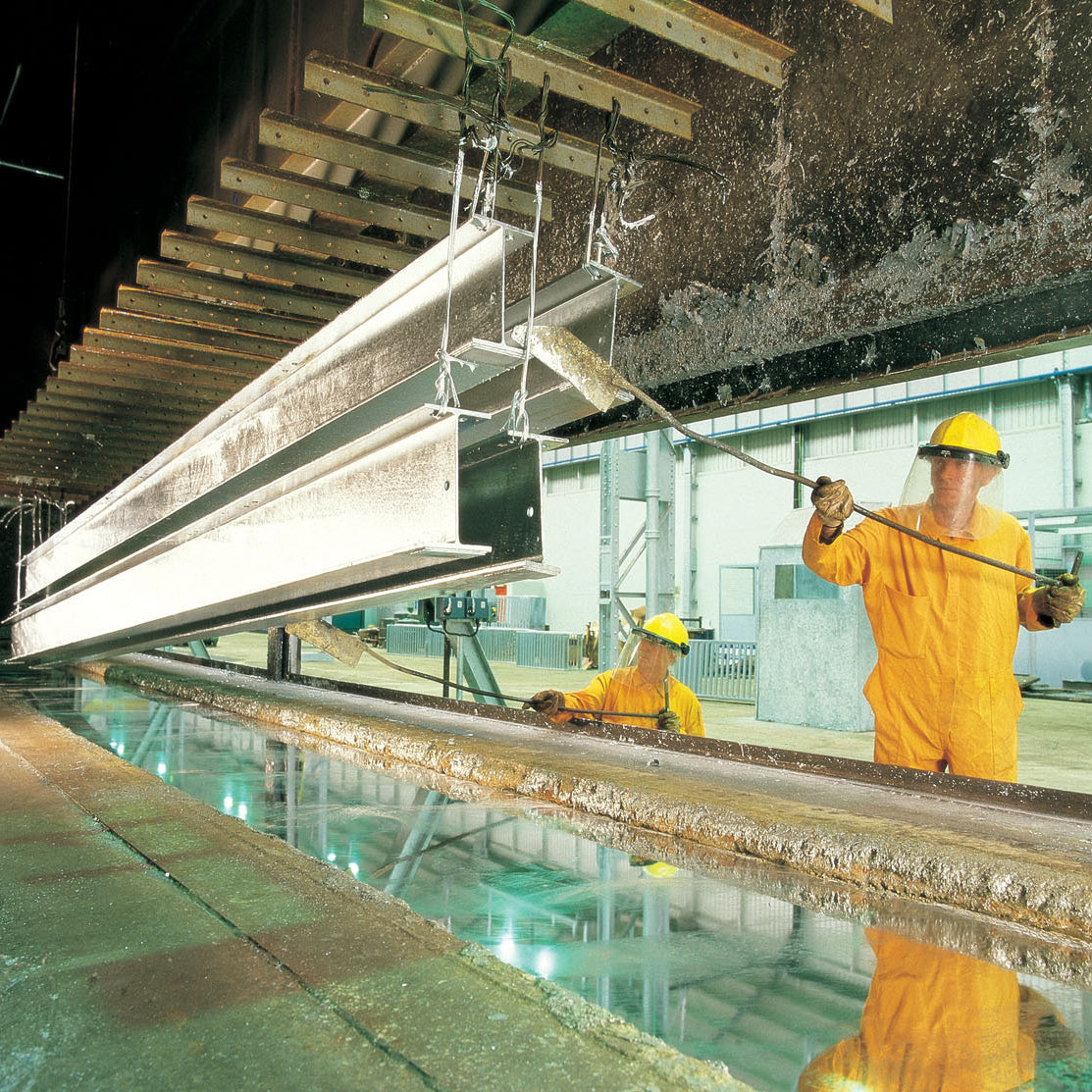
Here is a number that should make any galvanizer sit up. A job shop in Louisiana that galvanizes, blasts and paints steel had four 400 HP compressors and a 200 ton chiller feeding its air system, with a combined capacity around 1,900 CFM. When an energy assessment team from LSU's Industrial Assessment Center put a meter on the plant, the actual demand was about 500 CFM. The plant was running machines sized for almost four times its real load.
That case is the most useful thing we found on compressed air for hot-dip galvanizing, and it shapes how we would approach this whole trade. Before we get into it, a plain admission: we could not find published machine-level air figures for the galvanizing line itself, such as CFM per hoist or pressure per station. So we are not going to hand you made-up numbers. What we can do is show you the verified case, the one hard pressure range we can cite, and a method for sizing by measurement.
What the Louisiana case actually showed
The assessment (a university program that audits small and mid-size plants) looked at Southland Industrial Coatings. The company galvanizes, but it also does metalizing, sandblasting, fireproofing and painting, so the air load is not galvanizing alone. Treat the numbers as a picture of a mixed coatings plant, not a pure galvanizing line.
| Item | Finding |
|---|---|
| Installed compressors | Four 400 HP units plus a 200 ton chiller |
| Installed capacity | About 1,900 CFM |
| Measured need | About 500 CFM |
| Recommendation | One 100 HP compressor |
| Energy saved | 759,646 kWh per year |
| Cost saved | $79,003 per year |
| Project cost and payback | $63,000, about 0.8 years |
| Lower discharge pressure | 47,121 kWh and $4,901 per year |
| Leak repair | 83,055 kWh and $8,638 per year |
Two things stand out. The biggest saving came from not running capacity nobody used. And the small items, pressure setpoint and leaks, still paid several thousand dollars a year each. Neither of those needs a new machine.
Why galvanizing plants end up oversized
Nobody buys four 400 HP compressors by accident. A heavy industrial plant gets built in stages. One compressor goes in, then the next for a new line, then another as a backup because downtime scares everyone. Sandblast pots, paint spray and big pneumatic tools arrive over the years, and nobody ever subtracts. Add an old rule of thumb that more horsepower is safer, and you end up with a lightly loaded fleet.
Lightly loaded is the expensive way to run. A compressor that is unloaded or throttled still draws power. Four big machines sharing a small load means most of them are spinning mostly for show. We explain the mechanics in our piece on compressor control modes.
The first job is to measure
You cannot right-size on a guess. Before you touch the compressor room, find out what you really use.
- Put a flow meter on the main header and log it for at least a full production cycle, including a night and a weekend. Our flow meter guide explains the options.
- Log discharge pressure at the compressors and at the farthest point of use. The gap is your pressure drop.
- Walk the plant with an ultrasonic leak detector and tag every leak. See our guide to finding and fixing air leaks.
- List every large user: blast pots, spray booths, pneumatic hoists, any dust collector pulse system, tools. Note which ones can run at the same time.
If you want a professional to do it, a compressed air audit does exactly this, and some utilities and university programs will run one for free or at a discount. The LSU assessment was one of those.
The one pressure range we can verify
If your plant runs a pulse-jet baghouse for fume or dust collection, here is a hard number worth knowing. A dust collector manufacturer's guidance puts the starting point for pulse cleaning at 60 psi, with about 70 psi typical for felted filter media. It says not to exceed 100 psi without an engineer's input, and that 100 to 120 psi is reserved for difficult applications. That is generic dust collector guidance, not a galvanizing-specific rule, so check your own collector's manual. But it makes a real point. A pulse valve does not need 125 psi from the header, and if the whole plant runs at 125 psi to satisfy one device, you are paying for pressure you do not need.
This is where setpoint work pays. Every 2 psi you drop the header pressure lowers compressor energy use, and the Louisiana plant saw about $4,900 a year from that alone. Our article on what PSI to set your compressor to walks through the logic.
Right-sizing the replacement
Say the meter confirms you use about a quarter of what you installed. Now what?
Pick the base machine for the average
The Louisiana recommendation was one 100 HP compressor for a 500 CFM need. A rule of thumb many people use is that a rotary screw delivers roughly 4 CFM per horsepower at 100 psi, which is why 100 HP lines up with a few hundred CFM. Check the actual CFM rating of the specific model you are considering, because it varies by design and pressure.
Add a variable speed unit for the swing
Galvanizing and coatings plants swing between idle and heavy blast or spray. A variable speed compressor follows that load instead of cycling on and off. Our write-up on when variable speed pays back has the numbers, and the variable speed rotary screw compressors in our range start there.
Keep a backup, but a smaller one
Downtime is the real fear, and it is a fair one. A plant that cannot galvanize while the compressor is down loses real money. But a backup does not have to be four times what you need. A sensible setup is a lead machine sized for the base load plus a second unit that can carry the plant at reduced output. We cover control and sequencing in lead lag control for multiple compressors.
Storage, drains and the unglamorous parts
A big receiver on the wet side and another downstream of the dryer smooth out the bursts from blasting and tool use, so the compressor does not chase every spike. Condensate is a real issue in a hot, humid plant, and a timer drain that blows air all day wastes more than people think. See our article on timer drains versus zero loss drains and browse the air receiver tanks.
Air quality: what we will and will not say
We could not find a published air quality standard specific to galvanizing, so we will not invent one. In general, the closer the air gets to coating, painting or blasting, the cleaner and drier it must be, because oil and water ruin a finish. For paint and blast air, see our guides on air dryers for sandblasting and compressed air for abrasive blasting. If your plant also does breathing-air blasting, that is a separate system with its own rules.
Mistakes we see
- Adding capacity without ever subtracting.
- Running the whole plant at one high pressure for one device.
- Sizing from the nameplate rather than from a meter.
- Leaving leaks until the next shutdown. They never get smaller.
- Buying a backup the same size as the main unit.
Where to start
Meter the header for a full cycle, fix the leaks, and see what the number says. Then look at a right-sized rotary screw and a variable speed unit for the swing. Start with our variable speed rotary screw compressors and call us with your meter log. We will tell you honestly if you are better off keeping what you have.
Frequently Asked Questions
How much compressed air does a galvanizing plant use?
It varies a great deal, and we could not find a published per-machine figure. One Louisiana coatings plant that galvanizes, blasts and paints had about 1,900 CFM installed and measured demand near 500 CFM. Meter your own plant.
What pressure should a pulse-jet baghouse run at?
One manufacturer's guidance starts at 60 psi, about 70 psi for felted media, and says not to exceed 100 psi without an engineer. Check your collector's manual.
Is it worth replacing four big compressors with one?
In the Louisiana case, one 100 HP unit replaced the fleet and saved about $79,000 a year on a $63,000 project. That plant's load was much lighter than its installed capacity, so measure yours first.
Do I still need a backup compressor?
Usually yes. Size it to carry the plant at reduced output rather than to match the main unit.
Can lowering the pressure really save money?
Yes. The same plant saved about $4,900 a year from a lower discharge pressure alone.


