


Some filters could not be applied and were reset.
-
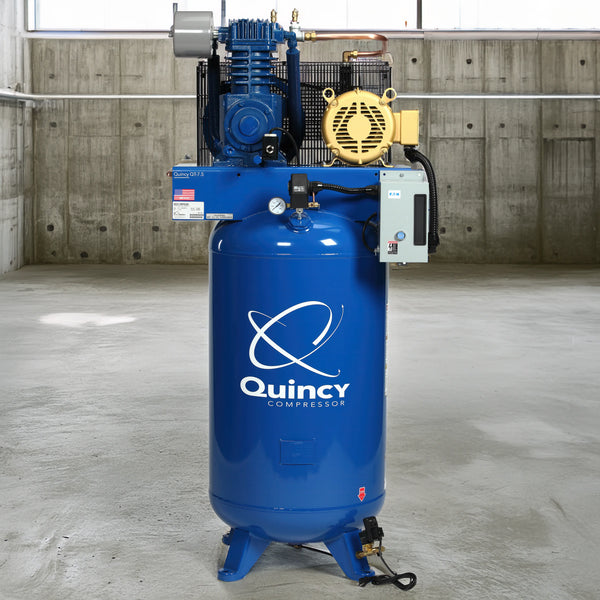 Sale Quincy QT Two Stage Piston Air Compressor $3,299.00
Regular price $4,899.00Add to cart -
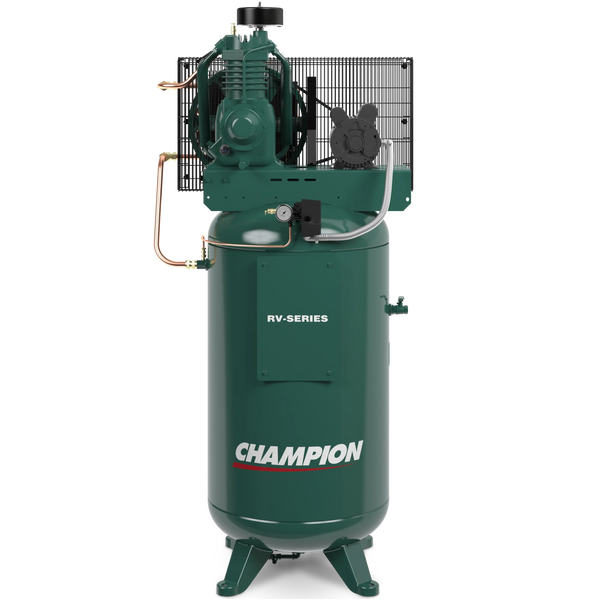 Sale Champion 5 HP RV Series Splash Lubricated Electric Stationary Reciprocating Air Compressor $3,167.00
Regular price $5,903.00Add to cart -
 Sale Champion ADVANTAGE Series Two Stage Simplex Piston Air Compressor $4,666.00
Regular price $8,873.00Add to cart -
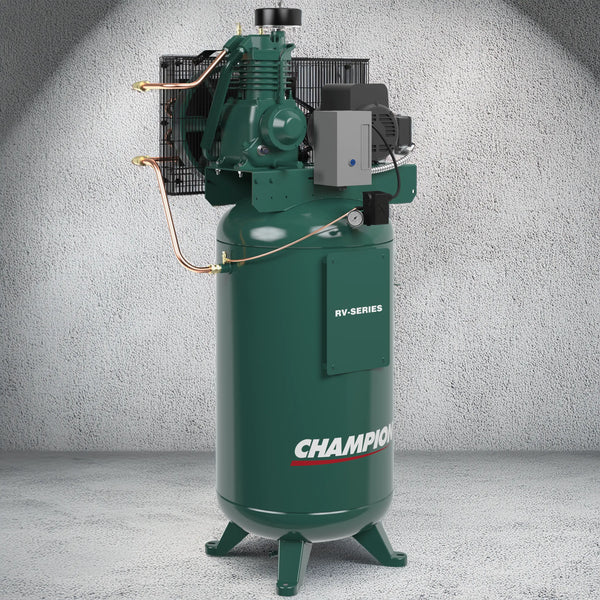 Sale Champion 7.5 HP RV Series Splash Lubricated Electric Stationary Reciprocating Air Compressor $3,713.00
Regular price $6,921.00Add to cart -
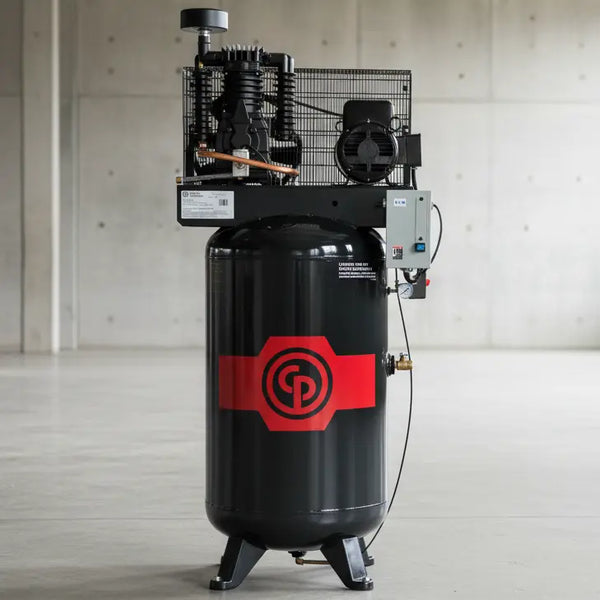 Sale Chicago Pneumatic RCP-C Iron Series Two-Stage Air Compressor $3,338.00
Regular price $4,173.00Add to cart -
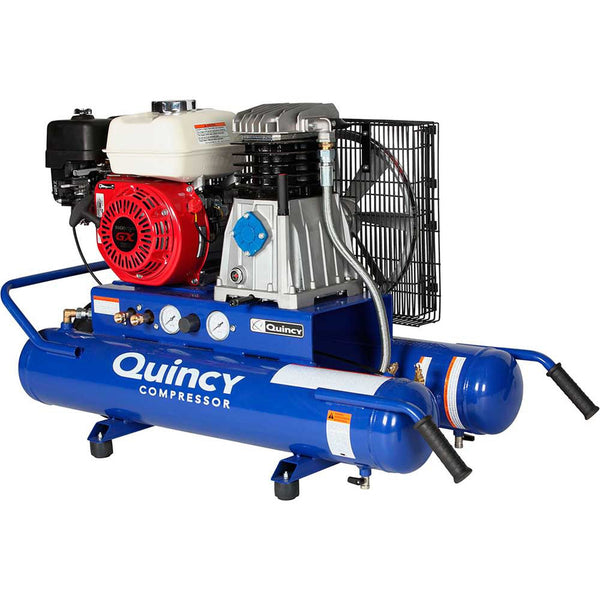 Sale 5.5 HP 145 PSI Gas Engine Wheelbarrow Portable Air Compressor By Quincy - G15H8WQ $1,403.00
Regular price $1,922.00 -
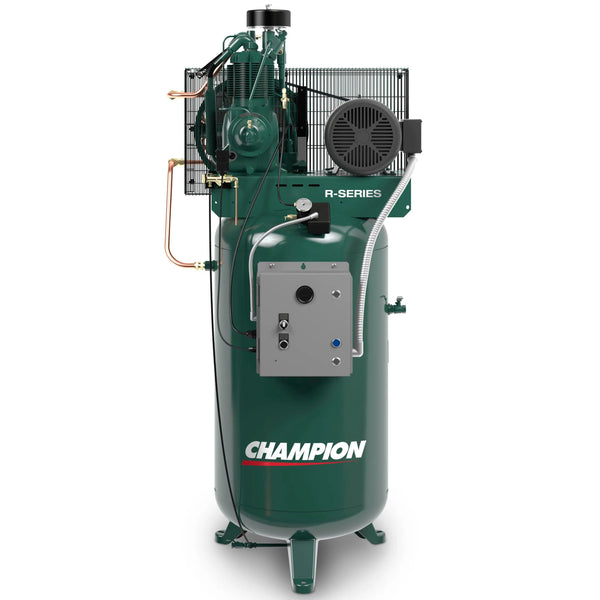 Sale Champion R-Series Vertical Simplex Piston Air Compressor $3,949.00
Regular price $7,360.00Add to cart -
 Champion R-Series Horizontal Simplex Piston Air Compressor $3,882.00 Add to cart
-
 Sale 5.0 HP, 80 Gal, Belt Drive, Oil-Lubricated Air Compressor - California Air | CAIR-80050BD $1,545.00
Regular price $1,931.00 -
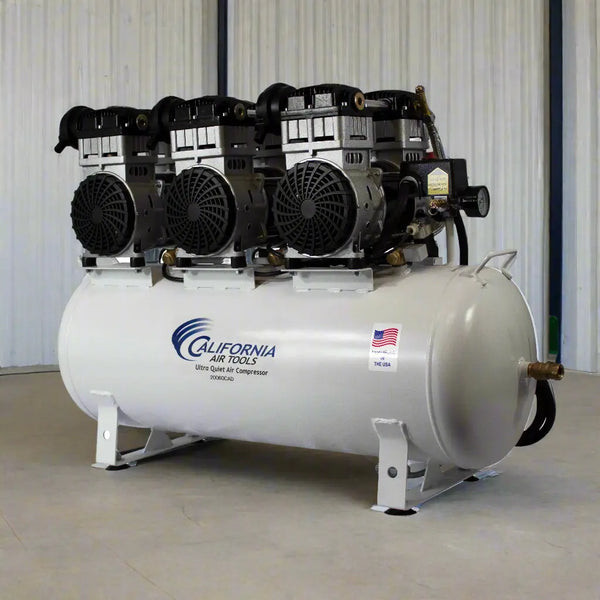 Sale 6.0 HP, 20.0 Gal, Steel Tank, Auto Drain, Ultra Quiet Oil-Free Air Compressor - California Air | CAT-20060CAD $1,992.00
Regular price $2,490.00 -
 Sale ABAC AB5-2180VQP 5 HP Quiet Power Two-Stage Air Compressor - 80 Gallon Vertical, 175 PSI, 16.6 CFM, 66 dBA $4,912.00
Regular price $6,140.00Add to cart - Unoair UC5540H Gas Air Compressor, 5.5 HP Honda, 10 Gallon Twin, 8.8 CFM $1,768.99
-
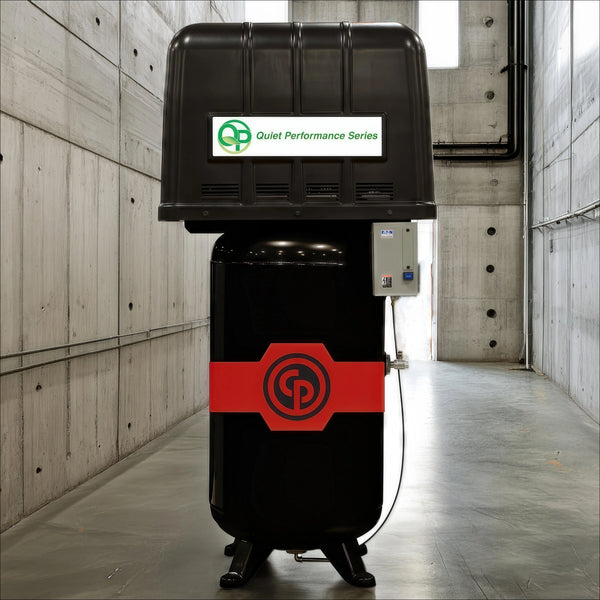 Sale Chicago Pneumatic RCP Quiet-Enclosed Two-Stage Air Compressor $5,949.00
Regular price $7,437.00Add to cart -
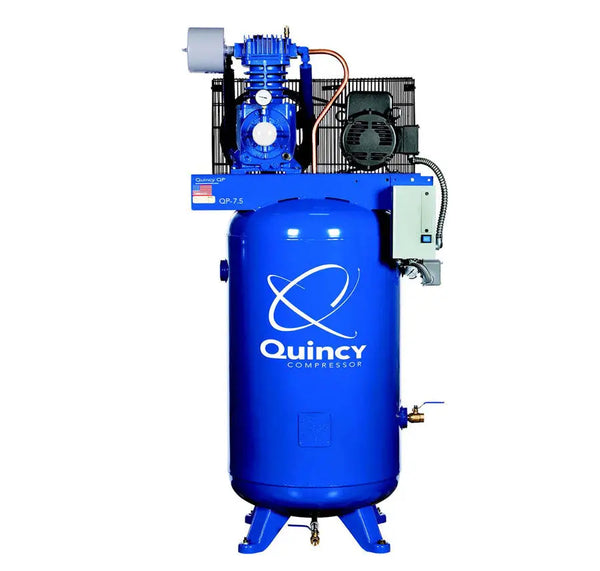 Sale QP Series Pressure Lubricated Reciprocating Compressor By Quincy $4,538.00
Regular price $6,216.00Add to cart -
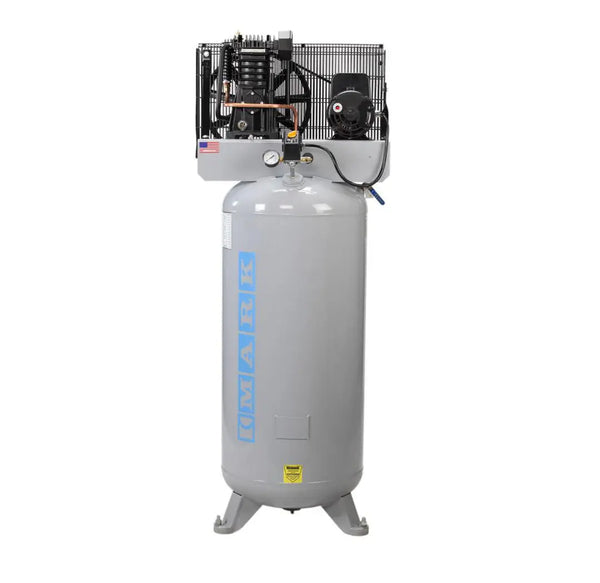 Sale IronAir Series Tank Mounted Cast Iron Reciprocating Air Compressor By Mark $3,881.00
Regular price $3,920.00Add to cart -
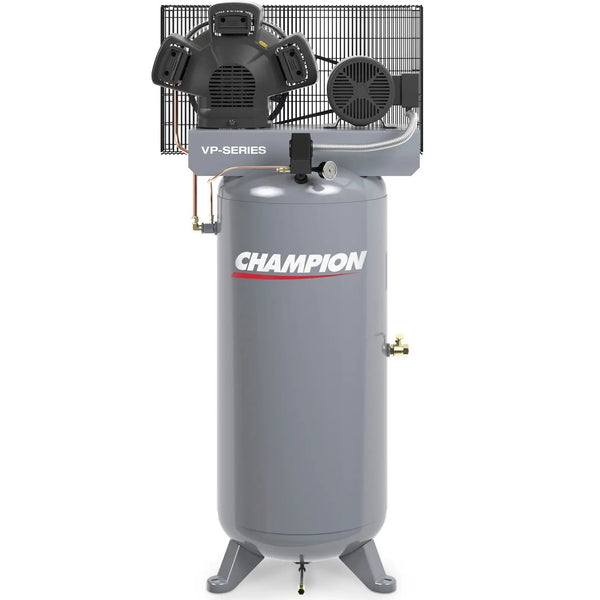 Sale Champion VP-Series Reciprocating Air Compressors $2,132.00
Regular price $3,972.00Add to cart -
 Sale Champion Airstation R-Series Horizontal Simplex Piston Air Compressor $7,150.00
Regular price $13,325.00Add to cart -
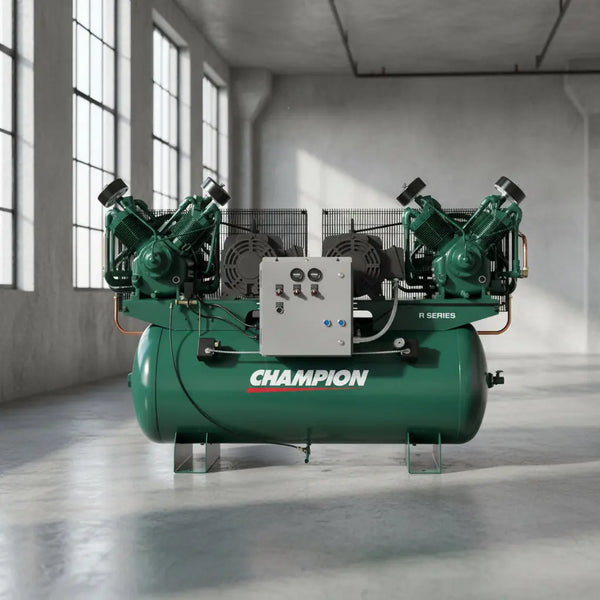 Sale Champion Duplex R-Series Piston Air Compressor $8,830.00
Regular price $16,790.00Add to cart -
 Sale Champion Base-Mounted R-Series Piston Air Compressor $3,199.00
Regular price $5,963.00Add to cart -
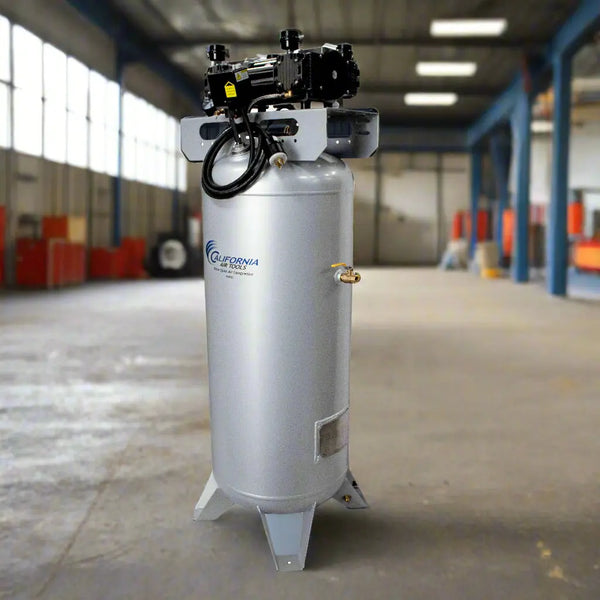 Sale 6.5 HP, 60.0 Gal, 3-Phase, 220V, Ultra Quiet Oil-Free Air Compressor - California Air | CAT-60065C $2,375.00
Regular price $2,969.00 -
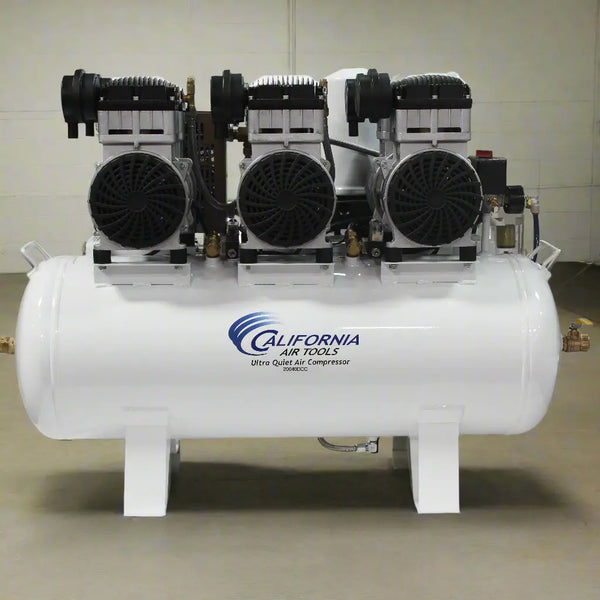 Sale 6.0 HP, 20.0 Gal, 98% Air Dryer, Twin Purge, Ultra Quiet Oil-Free Air Compressor - California Air | CAT-20060DCC $6,400.00
Regular price $8,000.00 -
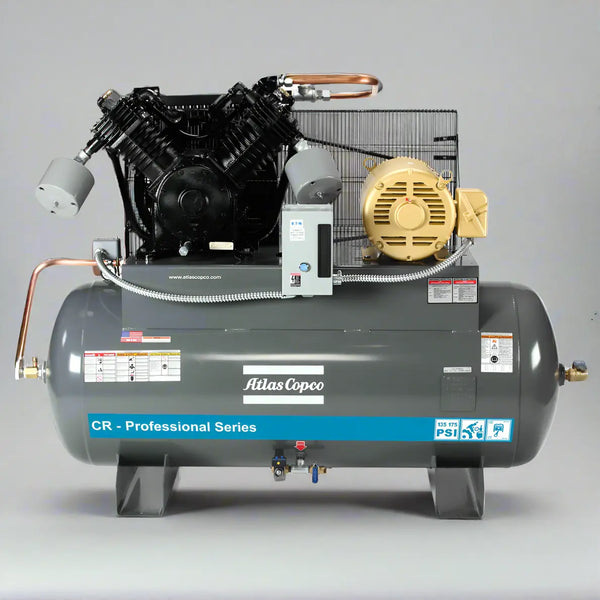 Sale Atlas Copco CR Cast-Iron Piston Professional Series Air Compressor $3,504.72
Regular price $4,380.90Add to cart -
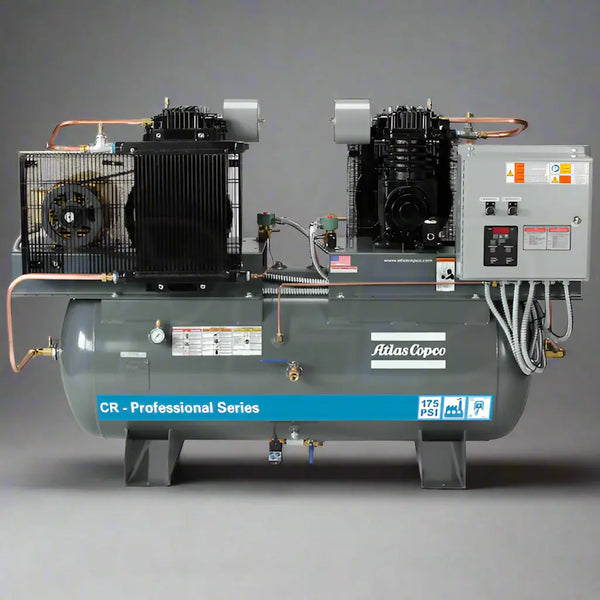 Sale Atlas Copco CR Duplex Cast-Iron Piston Professional Series Air Compressor $9,680.82
Regular price $12,101.02Add to cart -
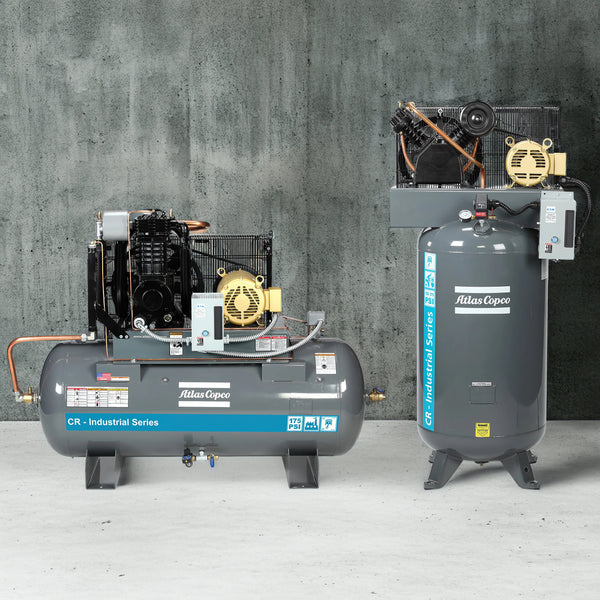 Sale Atlas Copco CR Cast-Iron Piston Industrial Series Air Compressor $4,701.18
Regular price $5,876.48Add to cart


About 17 CFM at 175 PSI. That's what a two stage 5 HP pump makes, and it's why this is the size that moves more than any other on our floor. It covers a one or two bay shop running impacts, a ratchet, a die grinder and the occasional spray gun, on a tank big enough that the motor isn't cycling every ninety seconds.
What this range runs
A 1/2 inch impact wrench pulls 4 to 5 CFM at 25 percent duty. A 6 inch random orbital sander pulls 12 to 18 CFM and runs continuously, which is the tool that catches people out. One sander on a 5 HP machine works. Two sanders does not. If there's a sander or a sandblaster in the picture, size off that tool and nothing else.
5, 6 or 7.5
The step from 5 to 7.5 HP buys roughly 5 to 8 more CFM, which is the difference between one air tool at a time and two. The 6 and 6.5 HP units here are mostly single stage oil-free machines on 20 and 60 gallon tanks, quieter but lower pressure, topping out near 125 PSI instead of 175. Two stage is the better buy if the air is for tools rather than quiet.
The single phase ceiling
7.5 HP is the practical end of single phase. Those units exist and we sell them, but they draw 35 to 40 amps and want a 60 amp circuit with a magnetic starter. If you already have three phase in the building, use it. If you don't, 7.5 HP single phase is a real option and 10 HP is not. The breakdown is in single phase versus three phase.
Tank and dryer
60 to 80 gallons is right for a 5 HP piston, 80 to 120 at 7.5 HP. Undersized storage shows up as short cycling and a hot pump. If the compressor room runs warm or the air feeds anything painted, add a refrigerated dryer sized to compressor output, not to the tool. Extra receiver capacity is cheap compared to a second compressor.
Where piston stops making sense
Two stage pistons in this range are built for 50 to 60 percent duty. They fill, shut off and cool. If the shop is pulling air for more than half of every hour, a rotary screw at the same horsepower runs 100 percent duty and quieter, and it will cost less to own over ten years even though it costs more to buy. We'd rather tell you that now than warranty a piston pump you ran into the ground. See duty cycle for what the rating means.
Not sure where you land? The pump-up test calculator tells you what your current machine is really making, which is usually the fastest way to find out whether it's worn or just too small.


