


Some filters could not be applied and were reset.
-
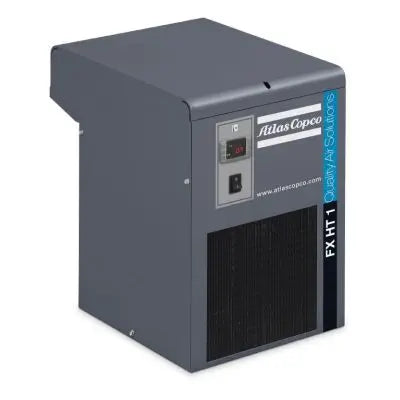 Sale FX HT15-60 High-Temperature Refrigerated Air Dryer By Atlas Copco $2,125.00
Regular price $3,400.00Add to cart -
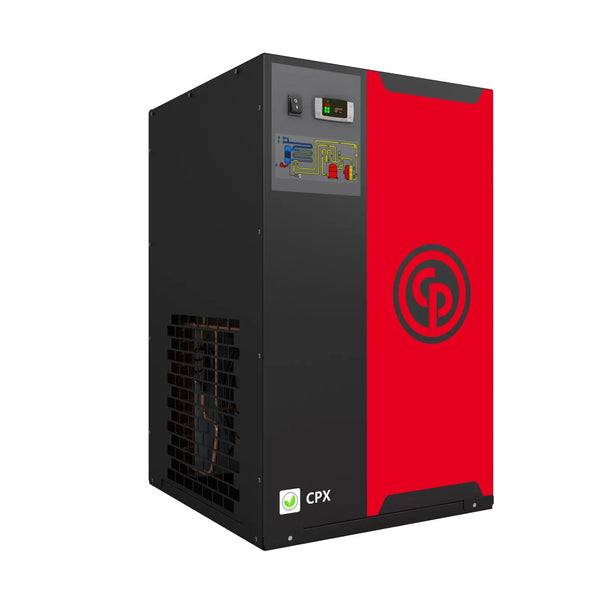 Sale CPXHT Refrigerated Air Dryer By Chicago Pneumatic $2,156.00
Regular price $2,695.00Add to cart -
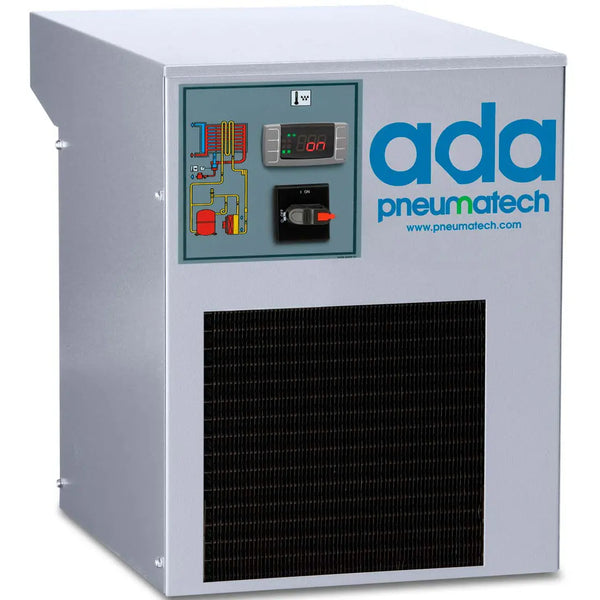 Sale ADA Non-Cycling Hi-Temp Refrigerated Air Dryer By Pneumatech $2,320.00
Regular price $2,984.00Add to cart -
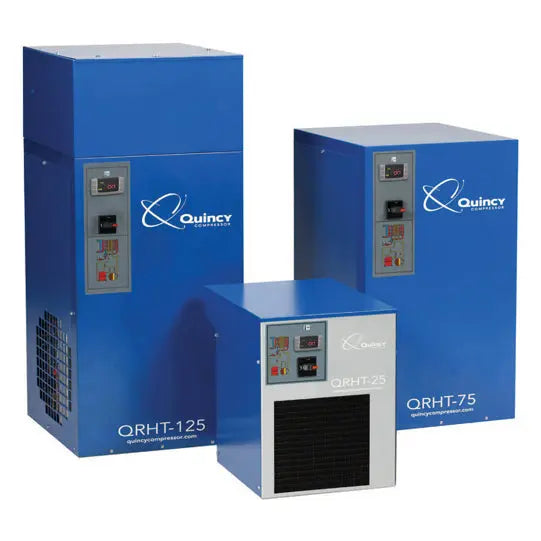 Sale QRHT High Temperature Refrigerated Dryer By Quincy $3,065.00
Regular price $3,606.00Add to cart -
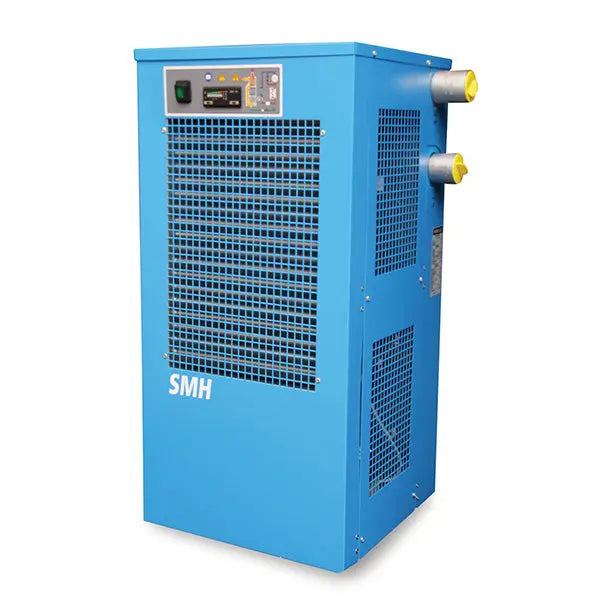 Sale Schulz SMH High Temperature Air Dryers $2,489.00
Regular price $4,232.00Add to cart -
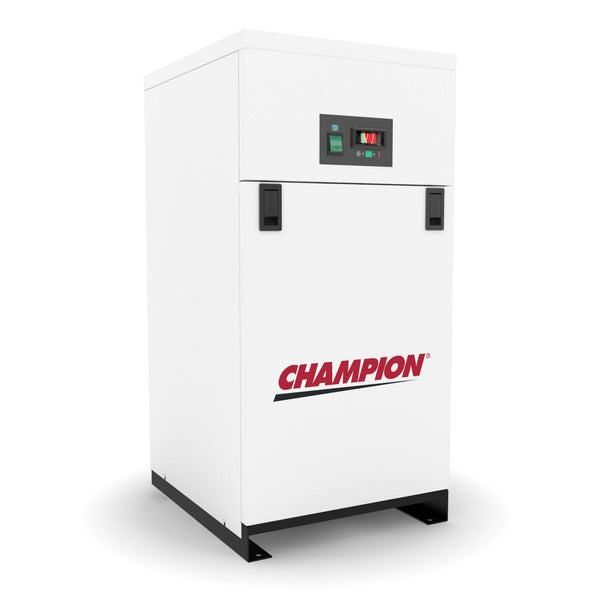 Sale Champion CRHA Series High Inlet Temperature Refrigerated Air Dryer (15-100 SCFM) $2,795.00
Regular price $3,095.00Add to cart
These take 180 degree F inlet air and hand you a 50 degree F pressure dew point. A standard refrigerated dryer is rated for 100 degree inlet. Feed that same dryer 160 degree air off an uncooled compressor and it will pass water straight through to your tools while the gauge says everything is fine.
A high temperature dryer solves that by building the cooling stage into the dryer itself, which raises the obvious question: if you can fit a standalone aftercooler ahead of a standard dryer, do that instead. It costs less, it gets you a colder 38 degree dew point rather than 50, and it drops most of the condensate out before the dryer ever sees it. The high temp unit is for the cases where you can't. Compressor packages with no built-in cooler, piston machines feeding a line directly, mechanical rooms with nowhere to put a second vessel, portable setups that get moved.
Two things to plan for. A 50 degree dew point is warmer than standard, so anything running outdoors or into an unheated space will still make water and needs solving separately. And hot air carries a lot of liquid, so put a real automatic drain on the separator and check it on a schedule. A plugged drain on a high temp dryer floods the downstream line faster than any other dryer in the building.


