


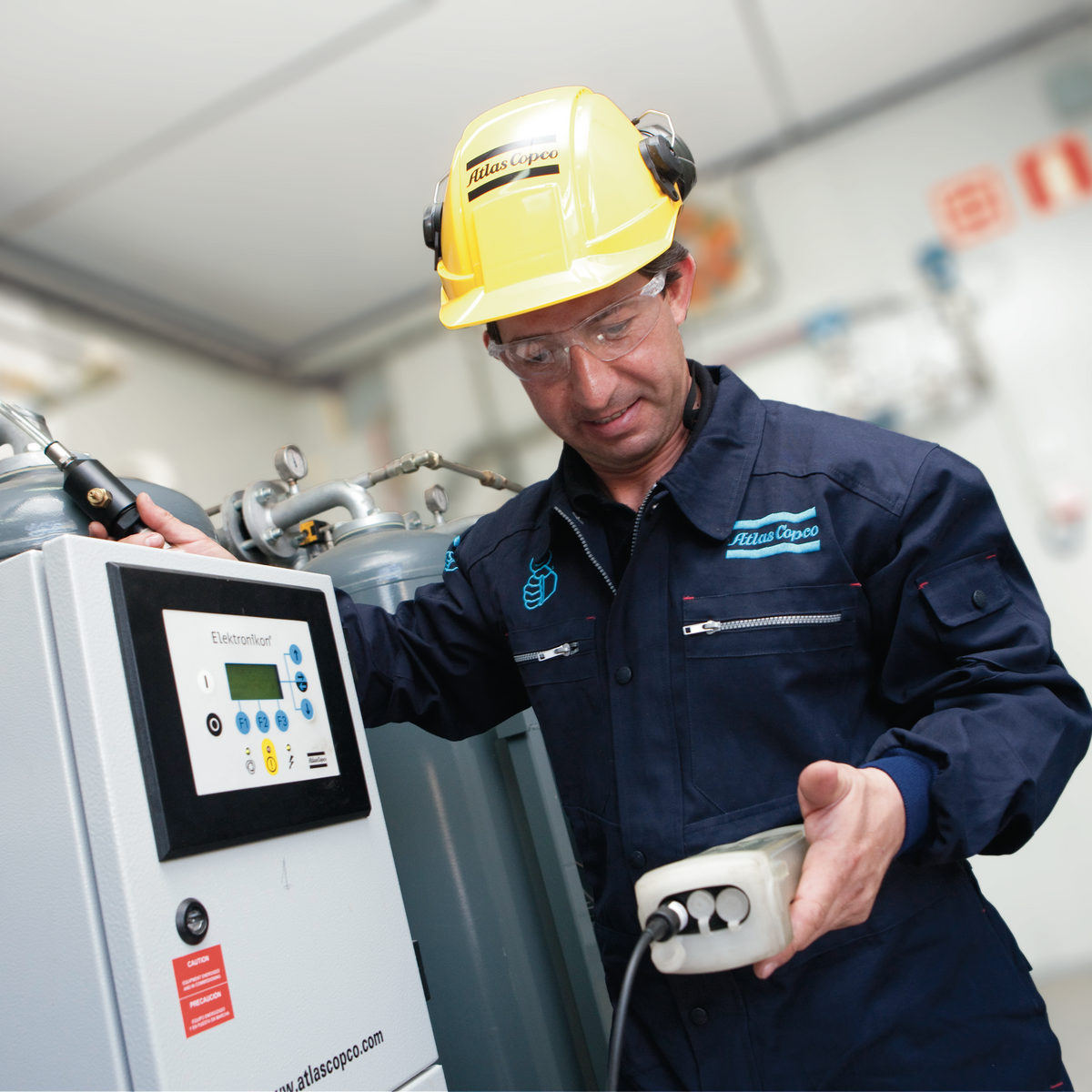
Somebody from a compressor dealer offers you a free air audit. Two weeks later you get a report recommending you buy a new compressor from that dealer. You have just learned something about the difference between an audit and a sales call.
Real compressed air audit work is a measurement exercise, and a good one will usually tell you to buy less equipment, not more. Here is what one actually involves, what it tends to find, and how to judge whether the one you have been offered is the real thing.
Why the numbers are so bad in the first place
Compressed air is the most expensive utility in most plants per unit of work delivered, and almost nobody meters it. So it drifts.
The Department of Energy estimates that 30 to 50 percent of compressed air is wasted through inefficiencies and leaks. Typical systems lose 20 to 35 percent to leaks alone, and over 50 percent is not unusual in a plant that has never looked. The Compressed Air Challenge's guidance is that a proper supply and demand analysis at a facility that has never been audited typically surfaces 20 to 30 percent savings.
For scale on a single leak: the DOE puts a 1/8 inch leak at 100 psi at roughly $1,700 a year in electricity. Most plants have more than one.
Those numbers are why audits exist. They are also why a plant manager who has never measured tends to be skeptical of them, which is fair. The point of an audit is to replace that estimate with your number.
What a real audit measures
An audit that is worth paying for covers six areas, and the instrument list is a decent test of whether it is real.
| Area | What gets measured |
|---|---|
| The compressors | Power draw, loaded and unloaded hours, control mode behavior, capacity against nameplate |
| Air treatment | Dryer performance, actual dew point, pressure drop across filters |
| Distribution | Pressure profile from compressor room to the farthest point of use, under real load |
| End uses | What the air is actually doing, including inappropriate uses like open blow-off and cooling |
| Controls | How multiple machines sequence, whether they fight each other, storage adequacy |
| Leaks | Ultrasonic survey, tagged and quantified rather than just noted |
The minimum instrumentation for a credible audit is a calibrated flow meter, an ultrasonic leak detector, a dew point meter, a calibrated pressure gauge set with test points, and a data logger running a 24 to 72 hour demand profile. If nobody is leaving equipment on site overnight, you are not getting an audit. You are getting a walkthrough.
That data logging period is the heart of it. A snapshot on a Tuesday afternoon tells you almost nothing, because the interesting behavior is at shift change, at startup, over the weekend when the plant is empty and the compressor is still running, and during whatever your peak event is.
What audits usually find
The findings repeat across plants with striking consistency:
- Leaks, more than expected. Nearly always the largest single item, and the cheapest to fix. Our guide to finding and fixing leaks covers doing this yourself.
- System pressure set higher than anything requires. Usually because somebody cranked it up years ago to overcome a pressure drop that was never fixed. Every 2 psi is roughly 1 percent of energy, so this is free money. See what PSI your compressor should be set to.
- Weekend and off-shift running. A compressor holding pressure in an empty building all weekend, feeding nothing but leaks.
- Artificial demand. Unregulated end uses flowing more air simply because system pressure is high.
- Inappropriate uses. Open tube blow-off, compressed air used for cooling or moving product, and cabinet vortex coolers that could be fans. Engineered nozzles fix a lot of this.
- Bad control strategy. Two machines both modulating at part load instead of one running loaded and one off. Our comparison of control modes covers why that costs so much.
- Not enough storage. Pressure sags on peaks, somebody raised the pressure to compensate, and now the whole plant pays for one intermittent event.
- Undersized distribution. Pressure drop being solved with horsepower. See pipe sizing.
Notice that most of those cost very little to fix and none of them are "buy a bigger compressor."
Free audits: when they are fine and when they are not
Plenty of compressed air vendors audit for free when new equipment is a likely outcome, and many utilities and energy efficiency programs will fund an audit at low or no cost. Neither of those is automatically a problem. A dealer with good technicians and real instrumentation can do genuinely useful work.
The questions that sort it out:
- Are you leaving data loggers on site, and for how long? Anything under 24 hours is not a demand profile.
- Will the report quantify leaks in CFM and dollars, with tags? "We found some leaks" is not a finding.
- Will it include recommendations that do not involve buying equipment? If the answer is no, you know what it is.
- Will you measure actual delivered capacity against nameplate? A tired machine making 80 percent of its rating changes every other number in the report.
- Is there a measurement plan for after the changes? Savings you did not verify are savings you assumed.
A utility-funded audit through an efficiency program is often the cleanest option, because the auditor is not selling you anything and the program frequently comes with rebates for the fixes.
What you can measure yourself first
Before paying anyone, there is real work you can do in an afternoon that will tell you whether a full audit is justified.
- Do a weekend test. Shut the plant down, leave the compressor running, and see what it does. If it is loading regularly with nothing running, you have quantified your leak load roughly and for free.
- Put a gauge at your worst tool. Compare it to compressor discharge under load. A gap over 10 psi is a distribution finding.
- Read your hour meters. Loaded hours against total hours tells you how much of the day you are paying to make air you are not using.
- Install a flow meter and watch it for a week. A permanent flow meter on the header is the single most useful instrument you can add, and it turns every future decision into a measured one. See our flow meter guide.
- Buy an ultrasonic leak detector. They have gotten inexpensive, and a maintenance tech with one for two days will find most of what an auditor would. Browse leak detection equipment.
Plenty of plants find that doing those five things captures most of the available savings without an audit at all. The audit earns its money on complex multi-compressor systems, on plants where the control strategy is unclear, and where you need a documented case to justify capital.
Frequently Asked Questions
How much does a compressed air audit cost?
It varies widely by system size and depth. Many vendors perform them free when equipment sales are a likely outcome, and utility efficiency programs frequently fund them at low or no cost to the plant. The more useful question is what instrumentation and how many days of data logging are included, because that determines whether the report is worth anything regardless of price.
How much can an audit realistically save?
Guidance from the Compressed Air Challenge puts a proper supply and demand analysis at 20 to 30 percent savings in a facility that has never been audited. The DOE estimates 30 to 50 percent of compressed air is wasted overall. Your number depends entirely on how long the system has gone unexamined.
Is a free audit from a compressor dealer trustworthy?
It can be. Judge it on method rather than price: how many days of data logging, whether leaks are quantified in CFM and dollars, whether delivered capacity is measured against nameplate, and whether the recommendations include anything that does not involve buying equipment. A utility-funded audit avoids the conflict entirely and often comes with rebates.
What can I do myself before hiring an auditor?
Run a weekend leak test with the plant down, put a gauge at your worst tool and compare it to compressor discharge under load, read your loaded versus total hour meters, and do an ultrasonic leak survey. Those four cost almost nothing and frequently capture most of the available savings.
How long should the data logging period be?
At least 24 hours, ideally 72, and it should include a full production cycle plus an off-shift or weekend period. The expensive behavior usually happens when nobody is watching, which is exactly why a walkthrough during day shift misses it.
A compressed air audit is worth paying for when the system is complex enough that you cannot reason about it, or when you need documented numbers to justify spending. For a lot of plants, a flow meter, a leak detector and a weekend test get you most of the way there first. Call us if you want help deciding which situation you are in.


