


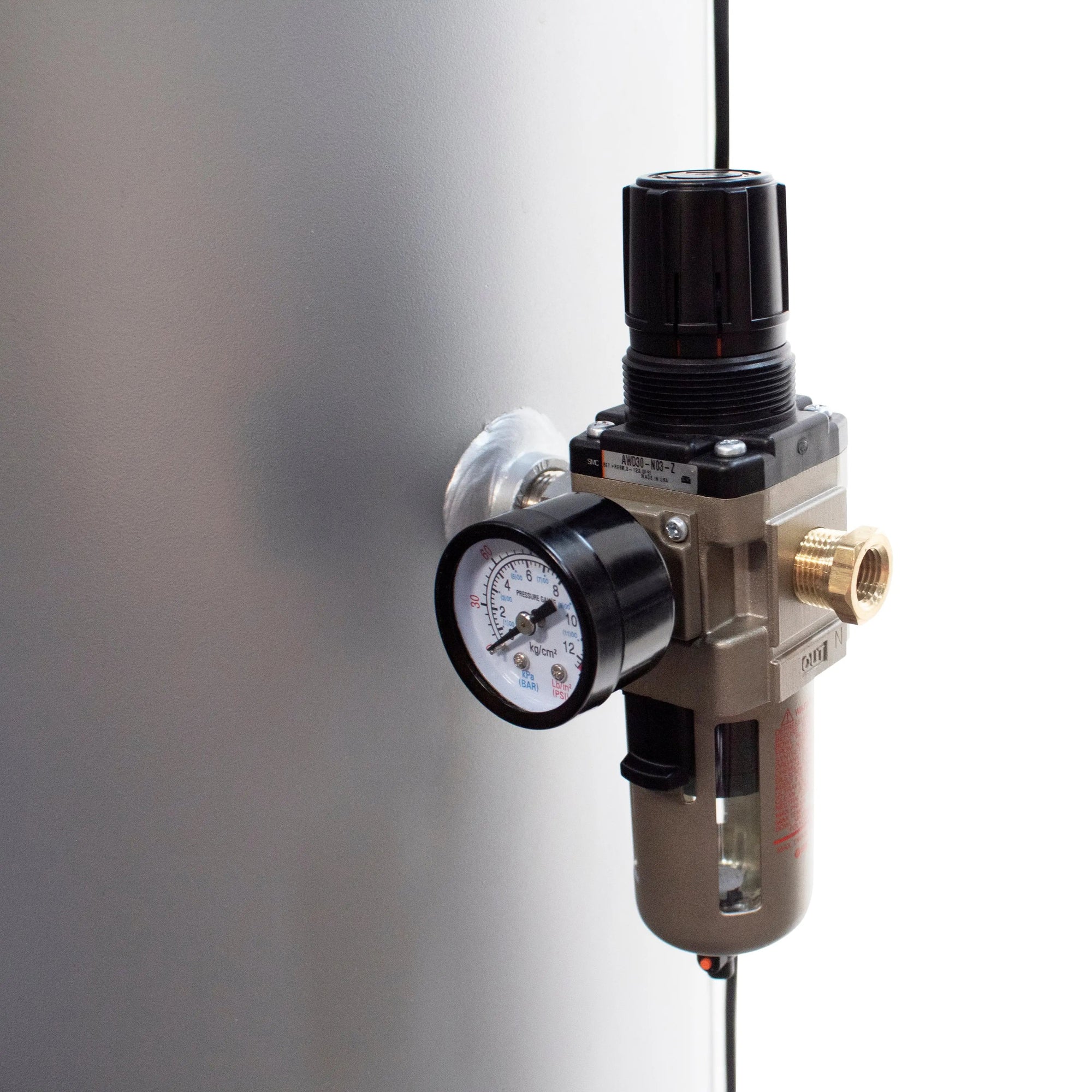
Plenty of ruined paint jobs and stripped fasteners trace back to one misunderstanding: people think the pressure in the tank is the pressure going to their tool. It isn't, and the part that controls the difference is the regulator.
An air compressor regulator is the knob that decides how much pressure actually reaches your tool, separate from whatever the tank is holding. Learn to set it right and your tools last longer, your finishes come out clean, and you stop guessing.
Tank Pressure vs Working Pressure
Your compressor stores air at a high pressure, often 125 or 150 PSI in the tank. Almost no air tool wants that much. An impact wrench likes about 90 PSI, a brad nailer maybe 70 to 90, and a paint gun often runs far lower. The regulator is what steps that stored tank pressure down to the working pressure your tool actually needs.
Think of it like a dam. The tank is the reservoir holding a lot of pressure in reserve. The regulator is the gate that lets out a steady, controlled amount. You keep a big reserve for when demand spikes, but you only feed the tool what it's rated for. That's why you'll see two gauges on most setups: one reads tank pressure, the other reads the regulated pressure heading to your hose.
How to Set an Air Compressor Regulator
Setting a regulator takes about thirty seconds once you know the trick. The key is to set it while air is actually flowing, because that's the pressure that matters.
Step 1: Know your tool's target pressure
Check the tool or its manual for the recommended PSI. Most air tools list it right on the body. When in doubt, 90 PSI is a safe starting point for common tools, but always follow the tool's spec, especially for spray guns.
Step 2: Unlock the knob
Many regulators have a knob you pull out to adjust and push in to lock. Pull it out. Turning clockwise raises pressure, counterclockwise lowers it.
Step 3: Set it under flow
Here's the part people miss. Pull the trigger on your tool, or let air flow, while you dial in the pressure. Pressure always sags a little when air is moving, so a regulator set with no flow will read too high once you start working. Set it to your target while the air is actually running.
Step 4: Lock it and check
Push the knob back in to lock your setting. Run the tool and confirm the working gauge holds close to your target. Adjust if needed.
The Regulator Is Usually Part of an FRL
On most shop setups the regulator doesn't stand alone. It lives in a combo called an FRL, which stands for filter, regulator, lubricator. The filter pulls out water and dirt, the regulator sets your pressure, and the lubricator (when used) adds a fine mist of oil for tools that need it. Air flows through in that order, so your tool gets clean, correctly pressured, and properly lubricated air all in one unit.
If you run sensitive equipment or spray finishes, pair your regulator with good air filtration ahead of it. A regulator sets pressure, but it won't clean your air. Water and oil carryover ruin paint and rust tools no matter how perfectly you set the PSI.
Common Regulator Problems
Regulators are simple, but a few issues come up.
- Pressure creeps up on its own. If the regulated pressure slowly climbs when the tool is idle, the internal diaphragm or seat is worn and letting air past. Time for a rebuild or replacement.
- Can't reach target pressure. If you can't dial up to what you need, check that tank pressure is high enough and that an undersized filter or fitting upstream isn't choking the flow.
- Pressure swings while working. Big sags usually mean the compressor can't keep up on CFM, not a bad regulator. The regulator can only pass along the air it's given.
Why Getting It Right Pays Off
Too much pressure isn't just wasteful, it's destructive. Overpressure strips fasteners, blows past seals, wears tools out early, and wrecks a paint finish with overspray and orange peel. Too little pressure leaves tools weak and sluggish. The regulator is how you land in the sweet spot for each job, and it costs nothing but a few seconds to set. Match it to the tool, set it under flow, and let your air compressor do the rest.
Frequently Asked Questions
What does an air compressor regulator do?
It reduces the high pressure stored in your tank down to the lower working pressure your tool needs, and holds it steady. Tank pressure and the pressure going to your tool are two different numbers, and the regulator controls the second one.
What pressure should I set my regulator to?
Set it to the pressure your tool calls for, which is usually printed on the tool or in its manual. Around 90 PSI suits many common air tools, but spray guns and specialty tools often need much less, so always follow the tool's spec.
Why should I set the regulator while air is flowing?
Pressure drops a little whenever air is moving. If you set the regulator with no flow, it will read higher than what your tool actually gets under load. Setting it while the tool runs gives you the true working pressure.
Why does my regulator pressure keep creeping up?
Creep usually means a worn diaphragm or seat inside the regulator that lets air slip past when the tool is idle. That calls for a rebuild kit or a new regulator.
What is an FRL?
FRL stands for filter, regulator, lubricator. It's a common combo unit that cleans the air, sets the pressure, and adds tool oil in one place. The regulator is the middle stage that controls your working pressure.
Set your pressure to the tool, set it under flow, and you'll protect both your work and your equipment. When you need a new regulator or a full FRL, browse our regulators and dial your air in right.


