


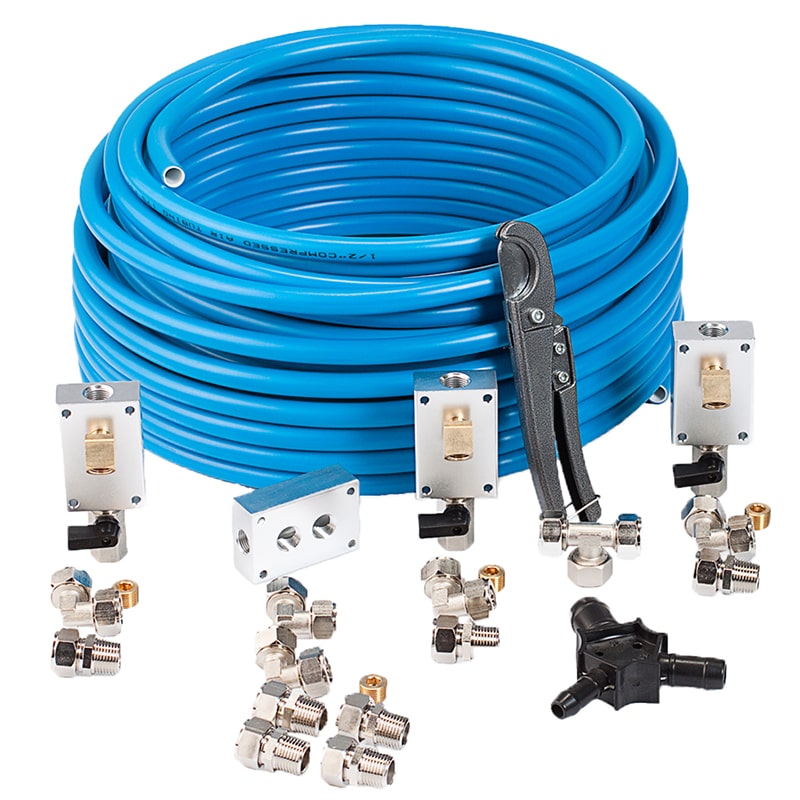
A cheap, kinked, undersized hose can choke a great compressor down to nothing. People spend thousands on the machine and then wonder why their impact wrench feels gutless, and half the time the culprit is the ten-dollar hose lying on the floor. Picking the right air compressor hose is not complicated, but it does come down to three things you have to get right: diameter, length, and material.
Nail those three and your tools get the air they were built for. Let's break them down.

Diameter: the one most people get wrong
The inside diameter (ID) of the hose decides how much air can actually flow through it. The two common sizes are 1/4 inch and 3/8 inch. A 1/4 inch hose is lighter and cheaper, and it's fine for small tools like brad nailers or an air chuck. But for anything thirsty, an impact wrench, a sander, a grinder, a 3/8 inch ID hose moves a lot more air and holds pressure at the tool. A wider ID means less friction loss, which means more usable CFM where you need it.
The rule of thumb: if your tool needs real CFM, go 3/8 inch. Undersize the hose and no compressor on earth will keep that tool happy.
Length: longer reach, lower pressure
Every foot of hose costs you a little pressure. Air rubbing against the inside wall creates friction loss, and the longer the run, the more you lose. So there's a trade-off: a longer hose gives you more reach, a shorter hose delivers more pressure at the business end.
For a home or shop, a 25 or 50 foot air compressor hose hits the sweet spot. On a job site, 50 to 100 feet makes sense. If you need a long run, step up the diameter to make up for the added friction loss, or better yet, run hard air pipe to the area and keep your flexible hose short.
Material: rubber, poly, or hybrid
Material decides weight, flexibility, and how the hose behaves in the cold. Here's how the common options compare.
| Material | Strengths | Trade-offs |
|---|---|---|
| Rubber | Lies flat, resists kinks, stays flexible in cold | Heavy, 30 to 40 percent heavier than the rest |
| Polyurethane | Lightweight, great in the cold, easy to drag | Tends to kink, coil, and stick to itself |
| Hybrid | Flexible, durable, good all-rounder | Middle-of-the-road on weight |
One thing to know: you should never confuse a cheap PVC air hose with these. For permanent piping, PVC is downright dangerous, but even as a flexible hose, quality rubber, poly, or hybrid will outlast and outperform a bargain-bin PVC line.
Don't skimp on the fittings
A great hose still leaks if the couplers are junk. Quick-connect fittings and plugs let you swap tools fast, but they're also the most common leak point in a shop. Match your couplers to one standard (industrial, automotive, ARO) so everything connects, and keep a few spares on hand. A good accessory kit covers the couplers, plugs, and blow gun in one shot.
Quick picks by job
- Garage and DIY: 3/8 inch, 25 to 50 feet, hybrid or poly. Light and easy to handle.
- Busy shop: 3/8 inch rubber, 50 feet, on a reel to keep it off the floor.
- Job site: 3/8 inch, 50 to 100 feet, hybrid for cold-weather flexibility.
- Small finish tools: 1/4 inch poly, short, for nailers and blow guns.
Frequently Asked Questions
What size air hose is best, 1/4 or 3/8 inch?
Use 1/4 inch for small, low-demand tools like nailers. Use 3/8 inch for high-CFM tools like impacts, sanders, and grinders, because the larger inside diameter delivers more air with less pressure loss.
Does hose length affect air pressure?
Yes. Friction loss increases with length, so a longer hose delivers less pressure at the tool. Keep runs as short as practical, or step up the diameter for long runs.
Rubber or polyurethane air hose, which is better?
Rubber lies flat, resists kinks, and handles cold well but is heavy. Polyurethane is much lighter and great in the cold but tends to kink and coil. Hybrid hose splits the difference.
Can I use a PVC hose for compressed air?
Avoid cheap PVC. It is never acceptable for permanent piping and performs poorly as a flexible hose. Choose rubber, polyurethane, or hybrid instead.
Bottom line
Get the air compressor hose right and your whole system feels stronger. Match the diameter to your tools, keep the length only as long as you need, pick a material that fits your climate and handling, and use quality couplers. It's a small part with a big effect on how your air tools perform.
Ready to upgrade? Shop air compressor hoses and accessories.


