


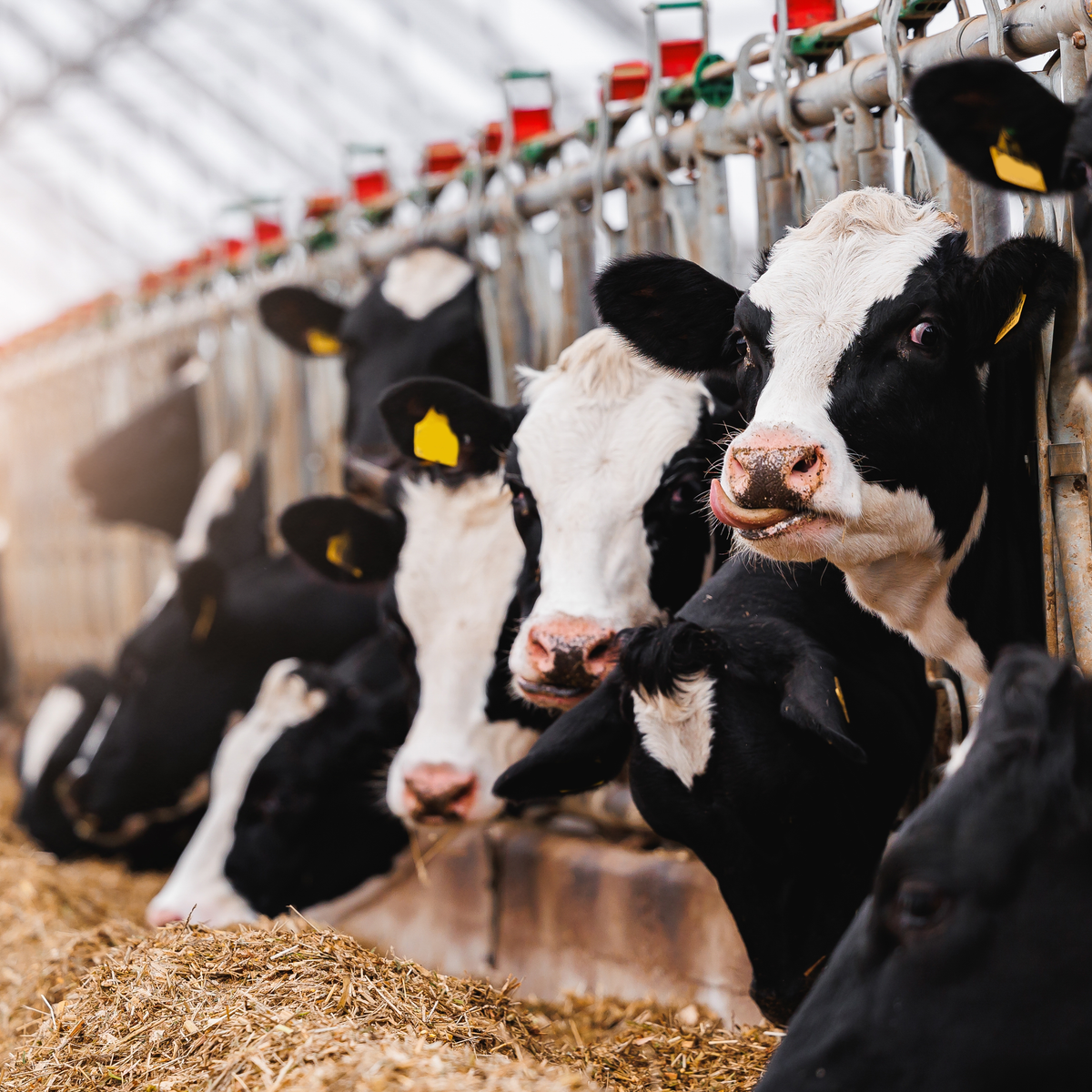
A dairy runs on two clocks: the cows and the inspector. Miss either one and the day goes sideways. The parlor has to cycle twice a day whether or not the compressor feels like starting, and the plant side has to answer to a regulator who cares a great deal about what touches the milk. That is why compressed air for dairy farms is not the same conversation as air for a machine shop. Half your air is dumb muscle for gates and takeoffs, and the other half is a food ingredient in everything but name.
We get this a lot from farms that grew. You start with a 60 gallon piston in the milk house running a couple of cylinders. Ten years later you have a double 20 parallel, a flush system, automatic takeoffs on every stall, and that same compressor is running 90 percent of the time and cooking itself. This guide covers both ends of the operation so you can size it once and stop patching.
What dairy air actually does
Walk a modern parlor and count the cylinders. On the farm side, compressed air is doing work like this:
- Entry and exit gates. Crowd gates, stall gates and sort gates run on air cylinders. Each stroke is short but there are a lot of them, and they all fire in a burst when the group changes.
- Automatic takeoffs (ACRs). The detacher that pulls the unit when milk flow drops runs on a small cylinder and a solenoid. These cycle constantly through milking.
- Sort gates and headlocks. Three way sorting after the parlor, plus pneumatic headlock release in the pen.
- Flush and wash systems. Air operated diaphragm pumps and valves on the parlor flush loop and the CIP skid.
- Feed and bin work. Air aerators on feed bins, pneumatic slide gates, and blow-off for cleaning augers.
- Shop air. Impact wrenches, tire inflation, blow guns and a grinder in the equipment shed. This is the load everybody forgets when they size.
One important clarification, because it trips people up. The vacuum on the milking unit is not compressed air. That comes from a separate vacuum pump. Your compressor does not make the milk move. It moves everything around the milk.
Sizing it: the math that keeps the parlor moving
Gates and takeoffs are intermittent loads with a nasty habit of firing together. The compressor sees a spike when a group rotates, not a steady draw, so tank volume matters as much as raw CFM.
Build the number from the bottom up. Count every cylinder, get the bore and stroke, and figure the free air per stroke. Most parlor equipment suppliers publish a per-unit air consumption figure, and it is worth asking for it. When you cannot get one, these are reasonable planning numbers to start from and then confirm:
| Load | Planning CFM at 100 psi | Notes |
|---|---|---|
| Automatic takeoff, per stall | 0.2 to 0.4 | Averaged over a milking, spikes higher |
| Parlor gate, per gate | 0.5 to 1.5 | Depends on bore and cycle rate |
| Sort gate, three way | 1 to 2 | Bursty, sized by cow flow |
| Air operated diaphragm pump | 5 to 20 | Check the pump curve, these are hogs |
| Half inch impact wrench | 4 to 5 | At 25 percent duty in a shop |
| Blow gun | 3 to 8 | Continuous while triggered |
Add them up, apply a realistic duty factor per group, then add 25 to 30 percent for leaks and growth. A double 12 parlor with takeoffs, gates, a flush pump and a shop line usually lands somewhere between 20 and 35 CFM. A double 20 with sorting and a CIP skid can push past 50. If you want to check your tool-side numbers, our air tool CFM chart lays out the common ones.
Then give it storage. A parlor that pulls 40 CFM in a two second burst every 90 seconds does not need a bigger compressor, it needs a bigger tank. Sizing a receiver at roughly 4 to 6 gallons per CFM of compressor output smooths those spikes and keeps the machine from short cycling itself to death. Browse air receiver tanks if you are adding capacity to an existing system.
Air quality: two different standards under one roof
This is where dairy gets its own chapter. Air that pushes a gate can be dirty. Air that touches milk, a product contact surface, or the inside of a clean tank cannot be.
The Grade A Pasteurized Milk Ordinance and the 3-A sanitary practices both address compressed air that contacts milk or product contact surfaces. The requirements are specific and your inspector knows them:
- The compressing equipment has to be designed so lubricant vapors and fumes cannot contaminate the air. In practice that means an oil-free compressor for product contact air, or a properly designed oil-lubricated machine followed by a filtration train that removes oil aerosol and vapor.
- Intake and pipeline filter media must be non-shedding and must not release volatiles that could carry flavor or odor into the product.
- Between the terminal filter and any product contact surface, the distribution has to be sanitary milk piping, fittings and gaskets. Not black iron, not shop-grade tubing.
- Intake filters carry a minimum efficiency requirement, and pipeline or disposable filters carry their own efficiency requirement measured by a DOP fog test.
The practical takeaway: keep the two systems separate, or treat the whole system to the higher standard. Running one dirty compressor and hoping a single filter at the end of a long iron header will save you is how plants fail audits. If you are building the treatment side, our breakdown of food grade compressed air requirements walks through what auditors actually look for, and the ISO 8573-1 class system gives you the language to spec it.
Drying: the part farms skip and pay for
A milk house is humid and often unheated at the edges. That combination produces liquid water in the air lines, which does three bad things: it rusts the inside of your gate cylinders, it freezes in an exposed run in January and locks a gate open, and it carries into anything touching product.
For farm-side air, a refrigerated dryer holding roughly a 38 to 40 degree F pressure dew point handles most of it, as long as nothing downstream ever gets colder than that. The moment you have air lines running through an unheated parlor addition or outdoors to a bunker, refrigerated is not enough and you want desiccant. Our comparison of refrigerated versus desiccant dryers covers where the line falls, and dew point explained covers why the number matters.
Either way, put in automatic drains. A manual petcock on a tank in a milk house gets cracked once in March and forgotten until the tank fails. Timer and zero-loss drains are cheap insurance.
Mistakes we see on dairies specifically
Some of these are unique to the trade:
- Sizing for the average and not the group change. Your compressor is fine 22 hours a day and gasping during the two hours that matter. Size for the milking burst, then add storage.
- Putting the compressor in the milk house. It is warm, humid and full of wash chemical mist. All three shorten compressor life and load the dryer. Give it its own ventilated room with outside intake air if you can.
- One compressor, no backup. A parlor with no air does not milk. On a farm with 800 cows that is not an inconvenience, it is a welfare problem by hour six. A second smaller machine, even an old piston kept plumbed in, is worth having.
- Running product contact air off the gate compressor. Covered above. Separate it or treat all of it.
- Undersized line to the far end of the parlor. Long half inch runs to the last gate cause enough pressure drop that the cylinder gets lazy. Size the header up and drop to the cylinders. Our air piping section has the materials worth using.
- Ignoring winter. An exposed drop leg full of water at 10 degrees F is a broken fitting waiting to happen. Slope the header, drip leg the low points, and dry the air.
What to buy
For most working dairies, a two-stage piston compressor in the 5 to 10 HP range on an 80 or 120 gallon tank covers the parlor and shop with room left. Bigger operations with sorting, a CIP skid and continuous demand are better served by a rotary screw, which is built to run loaded for hours instead of cycling.
On the plant side, if you have product contact air, start from oil-free and build the filtration and drying train to match the class your process requires, then document it. Inspectors ask for the spec, not the intention. We go through that side in detail in oil-free air compressors for dairy plants, including which air is actually in scope, scroll versus oil-free screw, and the terminal filter and sanitary piping auditors check.
Frequently Asked Questions
What size air compressor does a milking parlor need?
Count the cylinders and add them up rather than guessing by parlor size. A double 12 with takeoffs, gates and a shop line typically lands in the 20 to 35 CFM range, which is a 5 to 7.5 HP two-stage piston or a small rotary screw. The bigger factor is receiver capacity, because parlor loads come in bursts at group changes.
Does compressed air on a dairy need to be oil-free?
Only the air that contacts milk, product contact surfaces or the inside of cleaned equipment. Gate and takeoff air does not. The safest design is to keep those two systems separate. If you run one system for everything, it all has to meet the higher standard, which usually means an oil-free machine plus a full filtration train.
Can I run the milking vacuum pump off my air compressor?
No. Milking vacuum comes from a dedicated vacuum pump sized to the number of units and the system volume. The air compressor handles cylinders, valves and shop tools. They are separate machines with separate jobs.
Why do my parlor gates get slow in the winter?
Usually water. Liquid condensate collects in the cylinder or freezes in an exposed line and the gate loses stroke speed. Fix the drying first, then check for a drip leg at the low point and a clogged exhaust muffler on the valve.
How often should I drain the tank on a milk house compressor?
Daily if it is manual, which is exactly why almost nobody keeps up with it. In a humid milk house the tank will collect water fast, so put an automatic drain on it and inspect the tank annually for rust at the bottom seam.
Get the sizing and the air quality right up front and dairy compressed air becomes the most boring system on the farm, which is the goal. If you are not sure which side of the oil-free line your plant falls on, call us before you buy, not after the audit.


