


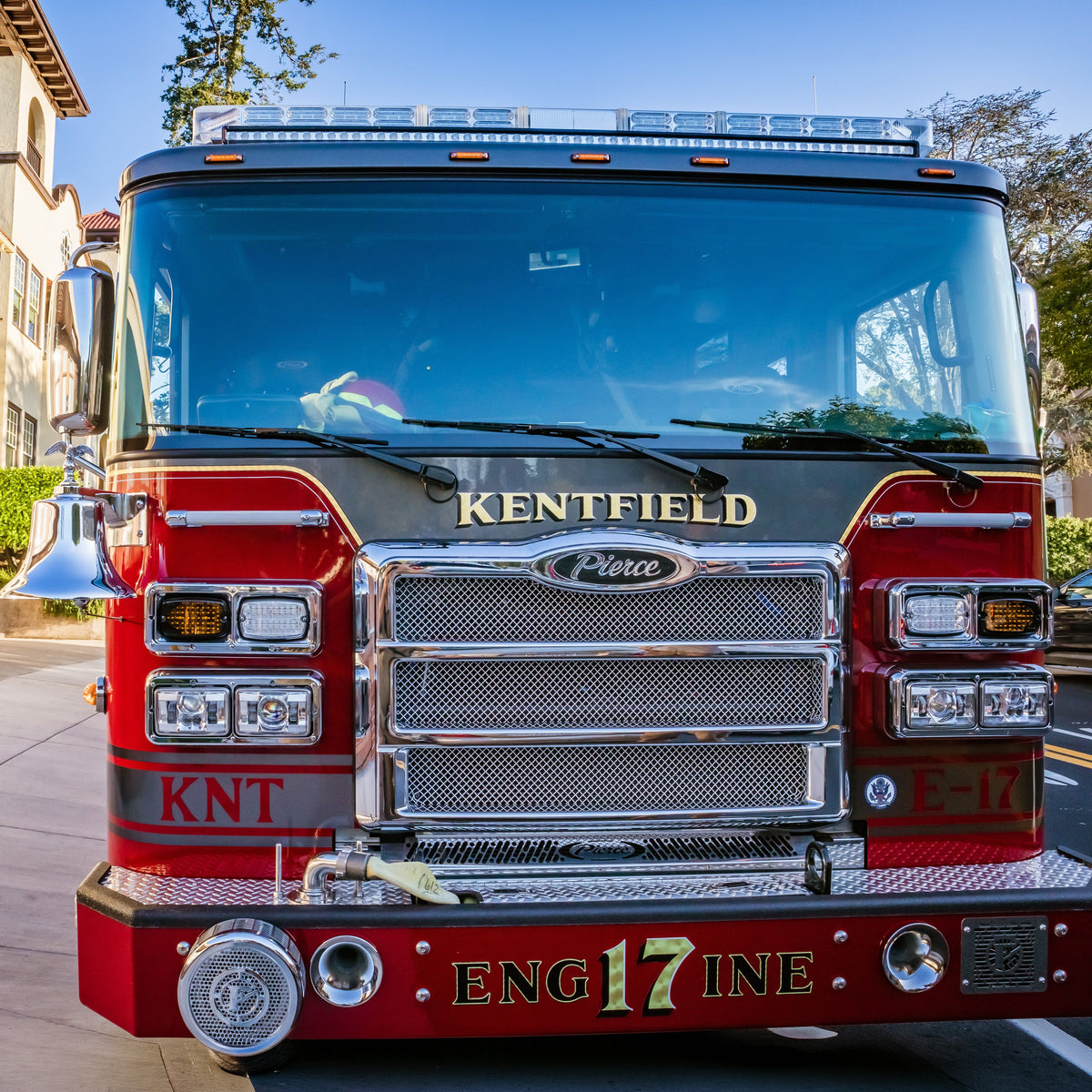
Picture the station at 2 a.m. The tones drop, the engine rolls, and the one thing nobody thinks about is the little air line plugged into the side of the rig. If that line has been feeding the brake system the whole time the truck sat in the bay, the apparatus pulls out with full air. If it hasn't, someone is waiting on the governor to build pressure while the clock runs. That is the part of compressed air for fire stations that most buyers never hear about until they've had a bad night.
Before we go further, one honest note. When people search for a fire department air compressor, a lot of them mean the high-pressure breathing air compressor that fills SCBA cylinders. We don't sell those, and you shouldn't buy one from a general shop-air supplier. That machine is its own category with its own air quality standard. What we do sell is everything else in the station: the shop air, the bay air, the hose reels, the filtration and the dryers. This article covers that side, and it tells you where the line is.
What a Fire Station Actually Uses Air For
A station is a strange mix of a garage, a small fleet shop, and a place where people sleep. The air demand is low most of the day and then spikes without warning. Here is where it goes.
- Apparatus air systems. Engines, ladders and rescues run air brakes, and a typical air brake system operates around 120 psi. A shoreline connection (an air hookup that mates to the truck and releases when it pulls out) keeps that system topped up while the rig is parked. Federal brake rules require a low air warning at 60 psi, so a rig that sat all weekend and lost pressure is a rig that is not ready.
- Tire inflation. Heavy apparatus run big tires at high pressure, and they sit in the bay for days. Checking and topping them off is a weekly job, and an underinflated tire on a loaded truck is a real problem.
- Air tools for apparatus maintenance. Impacts, ratchets, die grinders, and a blow gun at the bench. Most stations do light work and send the heavy stuff out, but the tools get used.
- Rescue equipment. Lifting airbags generally run below 150 psi, and the controllers on many setups are factory-limited to around 175 psi. Those usually run off a cylinder or a dedicated source, not the shop compressor, but plenty of departments top off or test them from station air.
- Cleanup and prep. Blowing down equipment, cleaning gear after a call, drying hose.
Sizing the Shop Air Side
Fire station air is a diversity problem. You almost never run two impact wrenches and a die grinder at once. You run one tool for a minute, then nothing for an hour. That points to a modest compressor with a big receiver, not a big compressor.
Most tool manufacturers recommend around 90 psi at the tool, and you lose some of that between the regulator and the end of the hose. A 3/8 inch impact wrench typically wants somewhere in the 4 to 5 CFM range at 90 psi while it is working. A die grinder wants more. Check the tool's own data plate, because the numbers vary a lot, and our air tool CFM chart lays out the common ones.
| Station type | Typical setup | What it covers |
|---|---|---|
| Small volunteer station, one or two bays | 5 to 7.5 HP two-stage piston, 60 to 80 gallon receiver, single phase if that is all you have | Tire fill, shoreline, hand tools, a blow gun |
| Career station, three to four bays, light maintenance | 7.5 to 15 HP piston or small rotary screw, 120 to 240 gallon receiver, dryer | All of the above plus a small shop and a couple of drops |
| Fleet maintenance garage for the department | 15 HP and up rotary screw, refrigerated dryer, filtration, drop piping | Full tool use, painting prep, multiple technicians |
Treat that table as a starting point, not a quote. Add up the tools you really run together, apply a sensible diversity factor, and size from there. We wrote about why adding up every tool buys too much compressor in our piece on diversity factor.
The Shoreline Is the Part That Matters
A shoreline feeds the apparatus brake and auxiliary air systems from station air so the truck's own compressor doesn't have to build pressure after every return. That is also where many stations get into trouble, because the truck's brake system hates water. If the station air carries moisture, it goes straight into the rig's air tanks, and in winter it freezes in valves and lines.
So the shoreline branch needs three things.
- Dry air. A refrigerated dryer is the minimum for a heated bay. If any of the piping crosses an unheated space, or the station is in a cold climate, move up to a desiccant dryer so the pressure dew point stays well below the coldest air that line will see.
- A filter in front of the connection. Oil aerosol and rust scale don't belong in a brake system. A coalescing filter plus a particulate filter at the branch is cheap protection for a truck that costs several hundred thousand dollars.
- A regulator and a check valve. The branch should hold a known pressure and keep the rig from back-feeding the station line if the hose is damaged.
If the connection is the kind that releases automatically when the truck pulls out, treat that coupling as a wear part and inspect it. A stuck or half-released connection is how hoses get torn off and lines get cut.
Hose Reels, Drops and the Bay Layout
Apparatus bays are tall, wide and busy. A hose lying on the floor is a trip hazard and a tire-crush hazard. Overhead or wall-mounted reels solve both, and for a station they are the single most useful accessory. Put a reel at each bay, at the tire-fill position and near the bench. Our hose reel buyer's guide covers reel types, hose length and the pressure rating you should check on the label.
For the piping, run a main loop around the bay and drop from the top so condensate doesn't run into your tools. Aluminum pipe is a good fit because it doesn't rust and goes up fast, which matters for a station that does the work with its own people on a short budget.
Where the SCBA Fill Station Fits (and Doesn't)
Here is the line. Self-contained breathing apparatus cylinders are filled from a high-pressure breathing air compressor, typically at 4,500 to 5,500 psi, with purification and cascade storage built in. The air has to meet a breathing air standard. The CGA G-7.1 Grade E spec calls for 20 to 22 percent oxygen, no more than 10 ppm carbon monoxide, and no more than 1,000 ppm carbon dioxide, and NFPA 1989 for fire service breathing air is stricter on carbon monoxide and dew point and expects regular testing by an accredited lab. Grade E air isn't automatically NFPA 1989 compliant, so don't assume.
That is a sealed, purpose-built system. Do not try to build one out of a shop compressor, a booster and a few filters. We don't sell fill stations, and if your department needs one, buy it from a company that builds and certifies them. If you want to understand what Grade D breathing air for a supplied-air respirator involves, our Grade D breathing air guide explains the ladder, but it is not a substitute for the fire service spec.
Mistakes We See in Station Installs
- No dryer on the shoreline branch. The brake system pays for it in the first hard freeze.
- Compressor in the apparatus bay. Diesel exhaust, dust and heat all feed the intake. Give it a clean, cool room. See our compressor room requirements.
- Undersized receiver. A tiny tank means the compressor cycles every time someone checks a tire.
- Single phase because it was easy. Fine for a small station, but check the amp draw against the circuit. Our wire and breaker guide has the numbers.
- Forgetting the relief valve and the drain. An old tank with a rusted drain is an inspection finding waiting to happen. Federal workplace guidance for air tanks calls for a pressure gauge, spring-loaded safety valves and a drain at the lowest point.
A Simple Station Package
If you want a short version, here is what we would put in a typical three-bay career station. A 10 to 15 HP rotary screw or a good two-stage piston with a 120 to 240 gallon receiver. A refrigerated dryer with a coalescing filter ahead of it and a particulate filter behind. Aluminum piping in a loop with drops at every bay. A reel at each bay and at the tire position. A dedicated, filtered and regulated shoreline branch. An electronic drain at the receiver and the dryer. That covers nearly everything except the SCBA fill.
When you're ready to build the bay, start with the reels. Shop hose reels and size the rest around where they go.
Frequently Asked Questions
Can I fill SCBA cylinders from a regular shop air compressor?
No. SCBA fills use a high-pressure breathing air compressor with purification, and the air has to meet a breathing air standard such as CGA G-7.1 Grade E or NFPA 1989. A shop compressor is neither the right pressure nor the right air quality.
What is a shoreline connection on a fire truck?
It is an air hookup between the station and the apparatus that keeps the brake and auxiliary air system charged while the truck is parked. Many release automatically when the truck pulls away.
How big a compressor does a small fire station need?
Most small stations do fine with a 5 to 7.5 HP two-stage piston compressor and a 60 to 80 gallon receiver. The demand is intermittent, so storage matters more than raw horsepower.
Does station air need a dryer?
Yes, especially on the shoreline branch. Moisture in the brake system causes corrosion and winter freeze-ups. A refrigerated dryer is the minimum for heated bays, and a desiccant dryer makes sense where lines run through cold space.
What pressure do rescue airbags run at?
Most lifting airbags operate below 150 psi, and many controllers are factory-limited to about 175 psi. Always follow the manufacturer's rating for your specific bag.


