


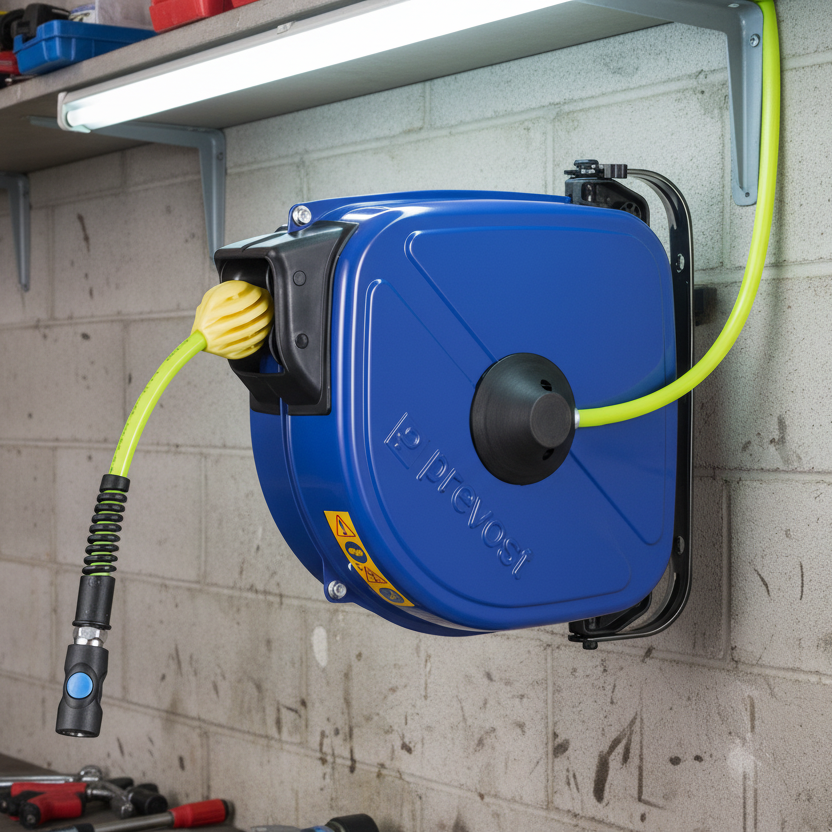
Coiled hose on the floor is the number one thing people trip over in a shop, and it is the number one reason hoses die young. Drag a hose across concrete, run it over with a cart a few hundred times, and the jacket cracks. An air hose reel fixes both problems at once. It keeps the hose up off the ground, feeds out only what you need, and pulls the rest back when you are done.
Reels are simple, but there are real differences between them, and buying the wrong one means a hose that will not retract, a mount that sags, or a reel that fights you all day. Here is how to pick one that works.
Why an air hose reel earns its keep
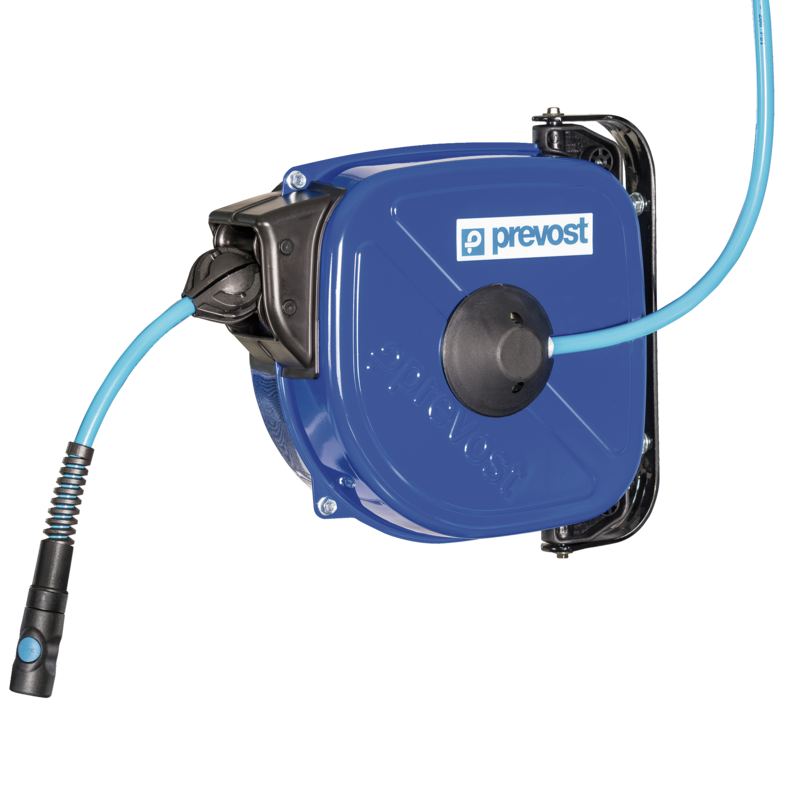
The obvious win is tidiness, but the real payback is in three places. First, hose life. A reeled hose is not getting stepped on, run over, or kinked, so it lasts years longer. Second, safety. Nobody catches a toe on a hose that lives on the ceiling. Third, leaks. Every time a hose drags and yanks at the fitting, that connection works a little looser. Up to a third of the air a shop makes can leak away at bad connections, and a reel takes a lot of that strain off the coupling. Keep the air feeding that reel clean and dry with a water separator and you protect the hose from the inside too.
The three kinds of air hose reel
Almost every reel falls into one of three buckets. Pick based on how often you use it and how long the hose is.
| Type | How it works | Best for |
|---|---|---|
| Spring-driven (retractable) | A spring pulls the hose back in. Pull to length, a ratchet locks it, tug to release. | Daily use at a fixed station where you want hands-free retraction |
| Manual hand-crank | You wind it back by hand with a crank handle. | Long, heavy hose runs and outdoor or wash-down work where a spring is overkill |
| Motorized | An electric or air motor reels it in. | Very long or large-diameter hose that is too much to crank or spring back |
For most shop benches and bays, a spring-driven retractable reel is the sweet spot. For a 100 foot run you only use now and then, a hand-crank reel is cheaper and there is no spring to wear out.
Sizing the hose: diameter and length
The reel is only half the decision. The hose on it has to deliver enough air to your tool, and this is where people quietly starve their tools without realizing it. Air loses pressure over distance, and a skinny hose makes it worse.
- Inside diameter: 3/8 inch is the workhorse for most air tools. Drop to 1/4 inch only for light, low-volume work like blow guns and small staplers. Hungry tools like grinders and sanders do better on 3/8 inch or larger.
- Length: buy the length you actually need and not a foot more. Common reel hoses run 25 to 50 feet, with 75 and 100 foot options for big spaces. Every extra foot is more pressure drop and more weight on the spring.
- Material: rubber takes abuse and stays flexible in the cold. Hybrid polymer is lighter and lays flat. PVC is the cheapest and the stiffest, especially when it is cold.
If you are not sure your tool is getting the air it is rated for, that is worth chasing down before you blame the tool. The right hose on the reel matters as much as the compressor feeding it.
Mounting matters
A full reel with 50 feet of rubber hose is heavy, and it whips when the spring snaps it back. Bolt it into studs, joists, or steel, not just drywall. Mounting overhead and slightly off to the side of where you stand gives you the cleanest pull and keeps the hose from dropping right on your head. Many reels swivel at the base so you can feed hose to either side of the bay.
Features worth paying for
A few upgrades are genuinely worth the money, and a few are not. Worth it: a smooth ratchet lock that catches where you want it, an adjustable hose stop so the end does not slam into the reel, a four-roller guide arm that lets you pull from any angle, and a powder-coated or stainless frame if the reel lives somewhere damp. Skip it: oversized reels for a hose you will never run that long, and bargain reels with a weak spring that cannot pull a full hose back up off the floor.
Frequently Asked Questions
What size air hose reel do I need?
Match it to your hose. Pick the hose diameter and length your tools need first, then choose a reel rated for that hose size and capacity. A reel built for 3/8 inch by 50 feet will not happily hold 1/2 inch by 100 feet.
Spring-driven or manual?
Spring-driven for a station you use every day and want hands-free. Manual hand-crank for long, heavy, or occasional runs where you do not want to babysit a spring.
What hose diameter is best for air tools?
3/8 inch inside diameter handles most air tools well. Use 1/4 inch only for light-duty work, and step up to 1/2 inch for high-volume tools or very long runs.
Can I put my own hose on a reel?
Often yes, as long as the hose diameter, length, and pressure rating are within the reel's spec. Going over the reel's hose capacity is what causes poor retraction and binding.
Where should I mount it?
Overhead and slightly to the side of your work area, anchored into solid framing or steel. That gives a clean pull, keeps the walkway clear, and handles the weight of a loaded reel.
Get the reel type right for how often you use it, put the correct hose on it, and bolt it down somewhere solid. Do that and the reel disappears into the background, which is exactly what a good air hose reel should do. Need a hand matching hose to your tools? The crew is happy to walk through it with you.


