


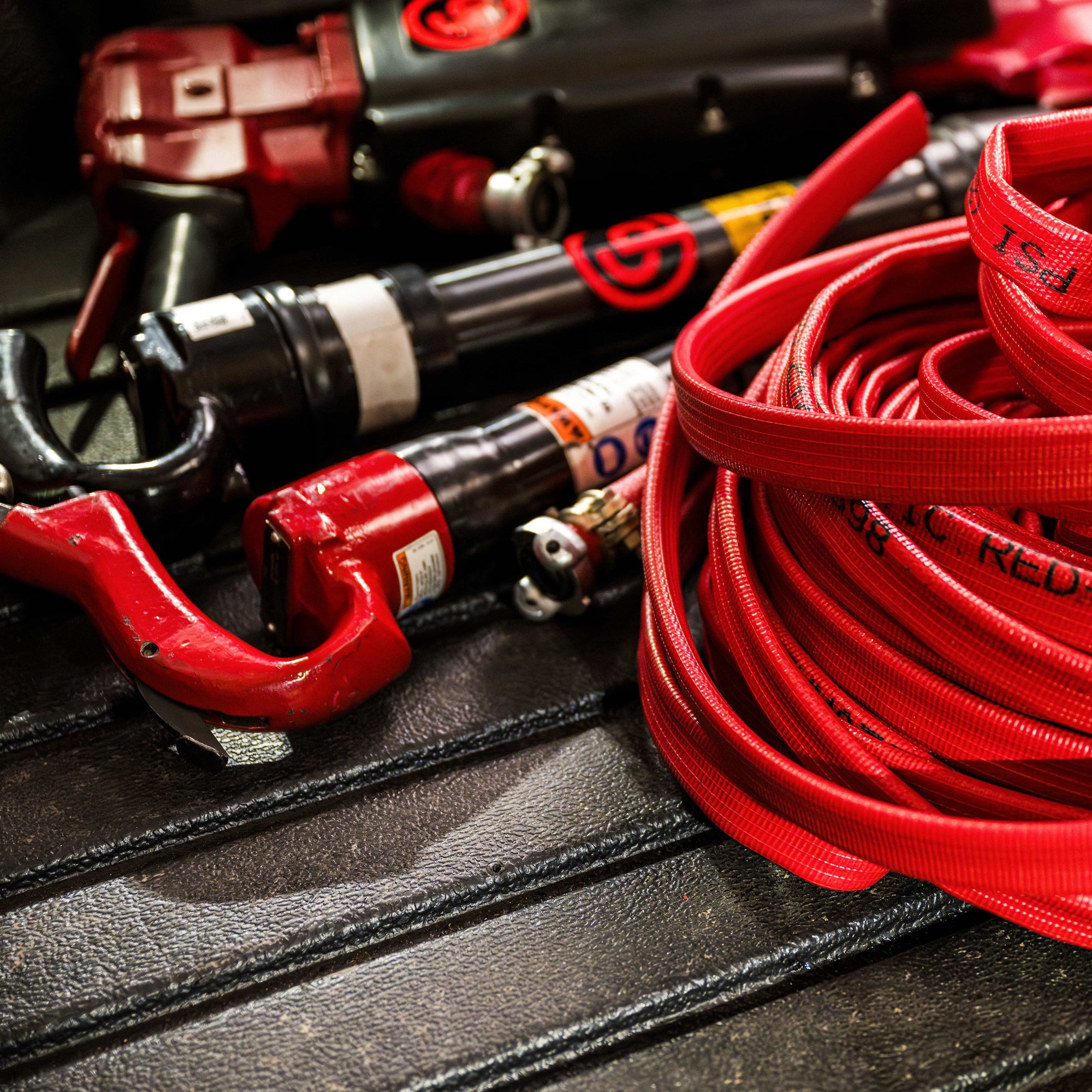
Ask an old-timer in a truck shop what impact he trusts and there is a good chance he points at something stamped CP. Chicago Pneumatic has been building air tools since 1901, and that name still shows up on wrenches, grinders, and demolition hammers that outlive the guys who bought them. If you are sorting out which CP tools fit your shop and how much air you need to run them, this guide breaks down the lineup and the numbers that matter.
Who Chicago Pneumatic is
The company started in Chicago in 1901, founded by John W. Duntley, who lined up steel magnate Charles Schwab as a backer and patented the first single-valve pneumatic hammer that same year. CP tools built a reputation in heavy industry and auto shops through the last century. One of their impact wrenches, the CP611, was even used driving steel during the construction of the original World Trade Center towers. In 1987 Chicago Pneumatic became part of Atlas Copco, the Swedish industrial group, which is one reason CP air tools and compressors share engineering with some of the best compressed air gear made.
What that history means for you as a buyer: CP is not a bargain-bin brand and it is not boutique either. It sits in the professional middle, tools built to run in a working shop day after day without babying.
The tool families worth knowing
Chicago Pneumatic makes a wide catalog, but most shops care about a handful of families. Here is where each one fits and roughly what it pulls for air, so you can check it against your compressor before you buy.
| Tool family | What it is for | Typical air demand |
|---|---|---|
| Impact wrenches | Breaking loose and running fasteners, from 3/8 up to 1 inch drive and bigger | Around 4 to 7 CFM at 90 PSI depending on size |
| Air ratchets | Tight-spot fastening where a wrench will not swing | Around 4 to 5 CFM at 90 PSI |
| Die grinders | Porting, deburring, weld cleanup, cutoff wheels | Around 4 to 6 CFM at 90 PSI, often more sustained |
| Sanders and polishers | Body work and finishing | Around 6 to 12 CFM at 90 PSI, high and continuous |
| Chippers and rivet busters | Concrete demo, rivet removal, heavy breaking | Around 4 to 10 CFM at 90 PSI |
| Compressors | CP builds piston and rotary screw units too | N/A, this is the air source |
Impact wrenches
This is the tool CP is famous for. Their impacts run from compact 3/8 inch drive guns for interior work up to big 1 inch drive units for truck and equipment service. The thing to match is torque to your fasteners and drive size to your sockets, then check the CFM. A 1/2 inch impact typically wants 4 to 5 CFM continuously, and a 1 inch monster can pull double that. Buy the torque you need, but make sure your compressor and hose can actually feed it, because a starved impact just spins slow and disappoints you.
Air ratchets and die grinders
Ratchets are the tool you reach for when a socket wrench will not fit and an impact is too bulky. They are light on air, so almost any shop compressor runs one. Die grinders are the opposite kind of demand: not a burst but a steady pull, because you hold the trigger down while you work. That continuous draw is where a lot of guys find out their compressor is undersized. If you plan to run a grinder or a cutoff tool for real stretches, size your compressor for sustained CFM, not just the peak.
Chippers, rivet busters, and demolition
CP has deep roots in the heavy demolition world, and their chipping hammers and rivet busters carry that DNA. These are big-air tools that hit hard, used for breaking concrete, busting rivets on steel, and scaling. If demolition is your work, our rivet busters collection carries CP demolition gear, and you will want a compressor with serious CFM behind it.
Sizing your air to feed CP tools
Here is the part people skip and regret. A Chicago Pneumatic tool is only as good as the air behind it. Every air tool is rated in CFM at 90 PSI, and your compressor has to make more than the tool needs, with headroom. The classic mistake is buying a great impact and choking it with a little pancake compressor and a skinny hose.
Read the tool's CFM rating, then make sure your compressor delivers that at 90 PSI with margin, roughly 1.5 times the tool for intermittent use and more if you run the tool continuously like a grinder or sander. Then match your hose and fittings to the flow. A 3/8 inch hose feeds most impacts and ratchets fine, but a hungry sander or a long run wants 1/2 inch to avoid pressure drop. And do not neck everything down through undersized quick-connects. Standardize your couplers so every tool clicks in and gets full air.
CP compressors, not just hand tools
People forget that Chicago Pneumatic builds the air source too. Their piston compressors cover the small and mid range for shops and garages, and their rotary screw line runs up into industrial sizes for plants that need steady air around the clock. Being part of Atlas Copco means the rotary screw units in particular share airend and control engineering with serious industrial gear. If you are outfitting a shop from scratch, there is a real case for buying the compressor and the tools from the same house so the CFM math lines up and you have one brand to call for parts. Whatever brand you land on, start by figuring out how much air your tools pull, then size the compressor above that.
How to pick your first CP tool
If you are just starting to build out a set, buy in the order you actually use air. Most shops start with a 1/2 inch impact, because it earns its money the first day. Add a 3/8 ratchet for the tight spots an impact cannot reach. A die grinder comes next for cleanup and cutoff work, and that is usually the tool that tells you whether your compressor is big enough, since it pulls air continuously instead of in bursts. Sanders and heavy demolition tools come last, because they are the hungriest and most shops do not need them every day.
Match each one to your air before you buy, not after. It is a lot cheaper to size the compressor and hose correctly up front than to buy a great tool and then discover it starves on the air you have. A good air compressor hose in the right diameter is part of that math, not an afterthought.
Chicago Pneumatic against the other brands
Buyers usually cross-shop CP against a couple of other names. Against the budget import tools, CP wins on durability and parts support, and those two things decide whether a tool is still working in five years. Against the very top boutique brands, CP usually costs less while giving up little that matters in a normal working shop. That professional-middle spot is exactly why so many truck shops and fleet garages standardize on it. You are paying for a tool that runs hard, takes rebuild parts, and does not get orphaned.
Are Chicago Pneumatic tools worth it?
For a working shop, yes. CP sits at a price and quality point that makes sense when a tool has to earn its keep. They are not the cheapest, and if a tool only comes out twice a year you can get by with less. But if you turn wrenches for money, the durability and the parts availability that come with an Atlas Copco brand pay off over the life of the tool. The full Chicago Pneumatic range, from impacts and ratchets to grinders, demolition tools, and compressors, is worth a look if you want gear that holds up. Browse the collection below and match the tools to the air you have.
Frequently Asked Questions
Are Chicago Pneumatic tools good quality?
Yes. Chicago Pneumatic has built air tools since 1901 and has been part of Atlas Copco since 1987. The tools sit in the professional middle, made to run daily in a working shop, with good durability and parts support.
What size compressor do I need to run Chicago Pneumatic air tools?
It depends on the tool. A 1/2 inch impact wants around 4 to 5 CFM at 90 PSI, while sanders and grinders can pull 6 to 12 CFM continuously. Size your compressor to deliver more than the tool needs at 90 PSI, with headroom of about 1.5 times for intermittent use.
Does Chicago Pneumatic make air compressors?
Yes. Along with hand tools, Chicago Pneumatic builds piston and rotary screw air compressors. Because CP is an Atlas Copco brand, those compressors share engineering with some of the better industrial air gear on the market.
What is Chicago Pneumatic best known for?
Impact wrenches and demolition tools. CP made its name on air impacts in industry and auto shops, and its chipping hammers and rivet busters have long been used in heavy construction and steelwork.
Where can I get parts for Chicago Pneumatic tools?
Because CP is a major Atlas Copco brand, service parts and rebuild kits are widely available, which is a real advantage over off-brand tools that get orphaned. Keep your model number handy when you order.


