


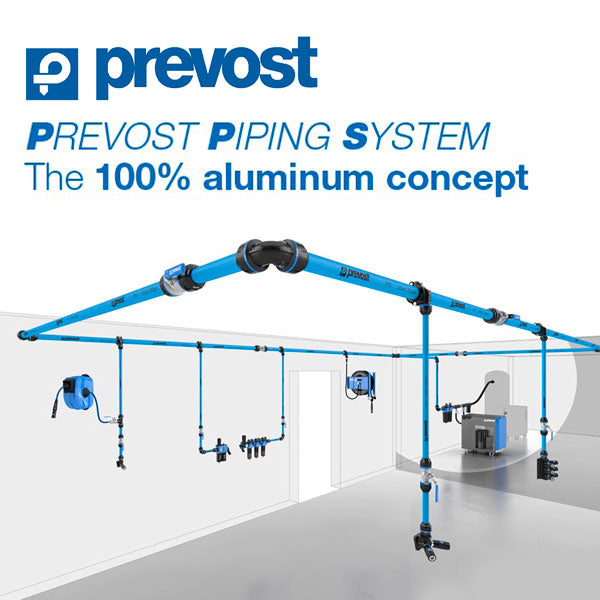
Cut open a ten-year-old black iron air line sometime. What pours out will change how you think about shop piping. Rust flakes, water, and a brown crust narrowing the inside of the pipe like plaque in an artery. That gunk ends up in your tools, your paint, and your filters. It is the number one reason shops call us about switching to aluminum air pipe, and once they make the change they rarely look back.
Aluminum piping used to be an oddball choice. Now it is what most new shop air systems get built with, and plenty of older shops are tearing out steel to install it. This article covers why, where aluminum wins, where it does not, and how to figure out whether it is worth the cost for your shop.
Why aluminum air pipe took over
The short version: it does not rust, it goes together fast, and the air comes out cleaner. Here is the longer version.
Black iron and galvanized steel corrode from the inside. Compressed air carries moisture, and moisture plus steel equals rust. As rust builds up, it does two bad things. It narrows the pipe, which chokes airflow and drops your pressure, and it breaks loose in flakes that travel downstream into your tools and filters. Aluminum does not corrode that way. The bore stays smooth and full-diameter for the life of the system, so your pressure stays put and your air stays clean.
The smooth bore matters more than people expect. A rough, scaled interior creates friction, and friction is pressure drop. Pressure drop is wasted energy you pay for every hour the compressor runs. Aluminum starts smooth and stays smooth, so it is more efficient on day one and still efficient years later. If pressure drop is costing you air, our guide on compressed air pipe sizing is worth a read alongside this one, because pipe diameter and pipe material work together.
Aluminum vs black iron: the honest comparison
We sell both, so we have no reason to oversell one. Here is how they actually stack up.
| Factor | Aluminum | Black iron / steel |
|---|---|---|
| Corrosion | Does not rust, bore stays clean | Rusts from the inside, scales up over time |
| Air quality | Clean, no rust carryover | Rust flakes travel to tools and filters |
| Pressure drop | Low, smooth bore stays efficient | Rises as scale builds and narrows the pipe |
| Weight | About a third the weight of iron | Heavy, needs strong hangers and anchoring |
| Installation | Push-to-connect, modular, cut with a saw. Big labor savings | Threaded or welded, needs a skilled installer |
| Changes and additions | Add a drop or move a line in minutes | Cut, re-thread, or weld |
| Up-front cost | Higher per foot | Lower per foot |
The pattern is clear. Steel wins on one line, the up-front price. Aluminum wins on everything else, and most of those wins keep paying off long after the install is done.
What about the cost?
This is the real question, so let us be straight about it. Aluminum pipe costs more per foot than black iron. But the total installed cost often lands close, because the labor to install aluminum runs roughly half that of threaded steel. The pipe shows up ready to use, it is light enough for one person to handle, and the push-to-connect fittings go together without a torch or a pipe threader.
Then there is the cost you pay after the install. Lower pressure drop means the compressor works less to deliver the same air at the tool, and that shows up on the power bill month after month. Add in the maintenance you skip because there is no rust to chase, and most shops recoup the price difference in a handful of years and come out ahead after that.
Where black iron still makes sense
Aluminum is not the answer for every situation, and we will not tell you it is. If you are running a very short line, patching a small section of an existing steel system, or the budget simply will not stretch, black iron is still a legitimate choice. It also handles extreme heat near a compressor discharge better than plastic ever could. Just go in knowing you will be dealing with rust and pressure drop down the road, and never use PVC for compressed air, since it can shatter under pressure. For the full rundown on materials, see our post on picking your compressed air pipes.
Sizing and layout basics for aluminum air pipe
Switching to aluminum air pipe does not change the rules of good piping design. You still size the pipe for your CFM and the length of the run, and bigger is almost always safer than smaller when it comes to pressure drop. Aluminum systems are commonly available from about 3/4 inch up to several inches in diameter, so there is a size for everything from a one-drop hobby shop to a full production plant.
Lay the system out as a loop where you can, so air can reach any drop from two directions and pressure stays even across the shop. Take your drops off the top of the main so condensation does not run down into your tools, and put a drain at the low points. Our guide on ideal compressed air piping layouts covers the loop-versus-dead-end question in detail. The nice part about aluminum is that if you get a drop in the wrong spot, moving it is a five-minute job instead of a re-threading project.
Frequently Asked Questions
Is aluminum air pipe better than black iron for compressed air?
For most shops, yes. Aluminum does not rust, so the bore stays clean and full-diameter, pressure drop stays low, and no rust flakes reach your tools. It also installs faster and is easy to modify. Black iron costs less per foot but corrodes from the inside over time. The main reason to stay with iron is a tight up-front budget or a very short run.
How much does aluminum air piping cost compared to steel?
Aluminum costs more per foot than black iron, but the installed cost is often close because aluminum labor runs about half that of threaded steel. Factor in lower energy use from reduced pressure drop and near-zero rust maintenance, and most shops recover the difference within a few years.
Can I connect aluminum pipe to my existing steel lines?
Yes. Aluminum systems use transition fittings that let you tie into existing steel or connect to your compressor, dryer, and drops. Many shops phase in aluminum by starting with the main line or the dirtiest sections and expanding from there.
What sizes does aluminum air pipe come in?
Aluminum air piping is commonly offered from about 3/4 inch up through several inches in diameter, which covers everything from a single-drop garage to a large plant. Size the pipe to your CFM and run length rather than just matching your old pipe, since undersized pipe causes pressure drop no matter the material.
Is aluminum air pipe safe for high pressure?
Quality aluminum compressed air systems are rated well above typical shop pressure, with many rated for several hundred PSI. Always check the manufacturer's pressure rating for the specific system and fittings you buy, and never substitute PVC, which is not safe for compressed air at any pressure.
The bottom line
If you are building a new shop air system or you are tired of chasing rust and pressure drop in an old steel one, aluminum air pipe is usually the smart long-term buy. It costs more per foot, but it installs faster, delivers cleaner air, wastes less energy, and stays maintenance-free for years. Size it for your CFM, lay it out as a loop, and it will outlast the compressor feeding it. Take a look at our aluminum piping systems and match a kit to your shop's layout and air demand.


