


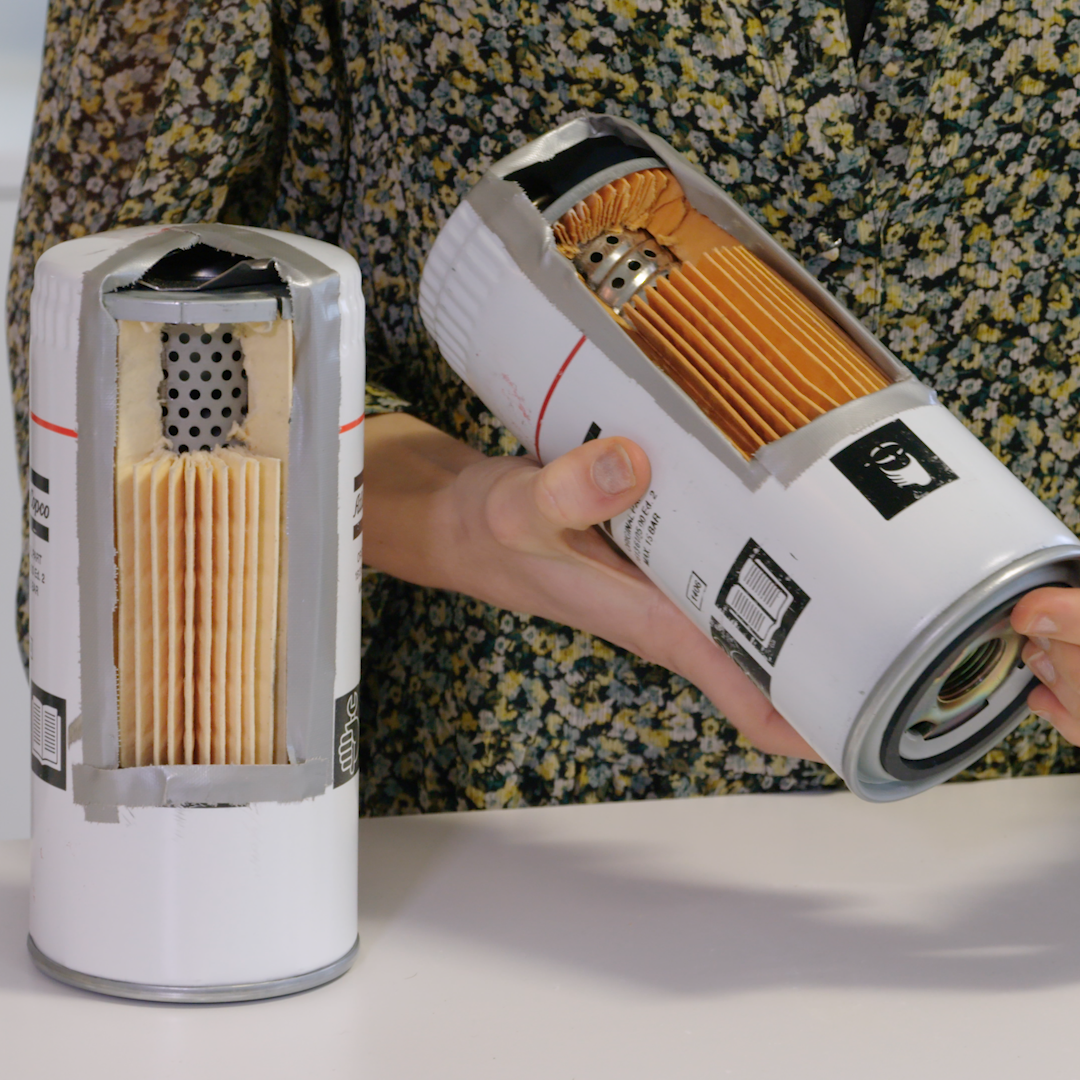
A customer called last week with a good question. His rotary screw was running hot and the oil on the dipstick looked like day-old coffee. Was that the oil filter? Short answer: probably part of it. The air compressor oil filter is one of those parts that does its job silently for thousands of hours, then quietly becomes the reason your airend is cooking.
If you run an oil-flooded rotary screw or a lubricated piston compressor, this part matters more than most people give it credit for. Here is what it does, how often to swap it, and the warning signs worth catching early.
What an oil filter does in a compressor
In a lubricated compressor, oil is not just there to reduce friction. It cools the airend, seals the clearances, and carries away the junk that builds up inside. The air compressor oil filter is what keeps that oil clean. It strains out dirt, wear metal, rust, and carbon before the oil circulates back through the machine.
That last part is the key. On a rotary screw, the oil is in constant contact with hot, compressed air, and it picks up contaminants the whole time. Left in the oil, that grit acts like sandpaper on your bearings and rotors. The filter pulls it out on every pass. Clean oil also keeps the discharged air cleaner, which protects everything downstream.
Micron rating and the bypass valve
Most compressor oil filters use a fine pleated media, often around a 10 to 12 micron rating, that traps the vast majority of particles above that size. That is tight enough to catch damaging grit without choking oil flow.
Inside many filters there is a spring-loaded bypass valve, and it is a feature, not a flaw. On a cold start, thick oil struggles to push through the media. The bypass opens so the machine gets lubrication right away instead of running dry while the oil warms up. Once the oil reaches operating temperature and thins out, the valve closes and sends everything back through the filter. The catch is that a filter left in too long can force that bypass open all the time, and then unfiltered oil is circulating through your compressor.
How often to change the oil filter
The honest answer is that it depends on your oil, your temperature, and how dirty your air is. But here are the numbers most shops work from.
| Situation | Typical oil filter interval |
|---|---|
| Standard duty, mineral oil | Around every 2,000 hours, with the oil change |
| Clean shop, quality synthetic | Up to the OEM interval, sometimes 8,000 hours |
| Hot or dusty environment | Sooner, often 1,000 hours or less |
| Break-in on a new or rebuilt unit | Early first change, often around 500 hours |
The simplest habit: change the oil filter every time you change the oil. They are cheap, and a fresh filter with tired oil, or fresh oil through a clogged filter, defeats the point of either job. If your compressor runs hot, lean toward the shorter end of every range. Heat is the enemy of oil life.

Why a neglected filter costs real money
When the filter plugs and the bypass stays open, contaminated oil runs through the machine unfiltered. That is how you end up with varnish, which is one of the leading causes of airend failure in oil-injected rotary screws. Varnish is a sticky, baked-on residue that forms when hot, contaminated oil breaks down. It gums up valves, restricts oil flow, hurts cooling, and in a bad case it can lock up an airend. Replacing a filter costs a few dollars. Replacing an airend costs thousands and parks your compressor for days.
Signs your oil filter needs attention
Rising discharge temperature is the big one, because a restricted filter cuts the cooling the oil provides. Dark, thick, or burnt-smelling oil is another flag, and so is oil that foams. If your unit has an oil pressure or filter restriction gauge, watch for the reading creeping up. Any of these mean it is time to pull the filter and the oil together and take a hard look.
Oil filter versus air-oil separator
These two get mixed up constantly, so let's be clear. The oil filter cleans the lubricating oil as it circulates inside the machine. The air-oil separator does a different job entirely: it pulls the oil back out of the compressed air before that air leaves the compressor, so you are not blowing oil mist down your lines. Both live in the oil system on a rotary screw, both are wear items, and both have their own change schedule. Replacing one does not cover the other. If your discharged air suddenly smells like oil or your tools are coming out slick, that points at the separator, not the oil filter.
Changing the oil filter without making a mess
It is a straightforward job if you go in order. Here is the short version.
- Run the compressor briefly so the oil is warm and flows easily, then shut it down and lock it out.
- Relieve all pressure from the tank and the oil system before you touch anything.
- Set a drain pan under the filter, because it holds oil that will run out when you break it loose.
- Spin off the old filter, wipe the sealing surface clean, and make sure the old gasket came off with it.
- Wipe a film of fresh oil on the new gasket, thread the filter on by hand, and snug it per the instructions, usually about three-quarters of a turn past contact.
- Top off the oil, run the unit, and check for leaks around the base.
Do the oil change at the same time and you have knocked out the whole job in one shot.
Picking the right replacement
Match the OEM part number where you can. The thread size and the gasket have to seal correctly, the micron rating should match what the machine was built for, and the bypass setting matters on rotary screws. A generic filter that looks close but flows differently or opens its bypass at the wrong pressure is not worth the gamble on an expensive airend. While you are at it, remember the oil filter is only one piece of the oil system. If your unit uses an air oil separator, that gets replaced on its own schedule, and the right compressor oil makes all of this last longer.
You can find the right element in our oil filters collection, and if you are servicing a screw compressor, the matching parts live with our rotary screw air compressors.
Frequently Asked Questions
How often should I change my air compressor oil filter?
Most shops change it with every oil change, roughly every 2,000 hours on standard duty. A clean shop running quality synthetic can stretch toward the OEM interval, while a hot or dusty environment needs it sooner. Change it early on a new or rebuilt unit during break-in.
Can I change the oil without changing the filter?
You can, but you should not. Fresh oil poured through a clogged filter picks up whatever the old filter can no longer hold, and a tired filter may already be running on bypass. They are cheap. Do both together.
What is the bypass valve in an oil filter for?
It protects the compressor at cold start. When the oil is thick and cannot push through the media fast enough, the bypass opens so the machine still gets lubricated. Once the oil warms and thins, the valve closes and normal filtering resumes.
Does a piston compressor need an oil filter too?
Many small lubricated piston units rely on splash lubrication and do not use a spin-on oil filter, so you just change the oil. Larger pressure-lubricated pistons and all oil-flooded rotary screws do use one, and on those it is a must.
Treat the air compressor oil filter as part of the same job as your oil change and you will never think about it again. Skip it, and it will eventually get your attention the expensive way. Keep a spare on the shelf and swap it on schedule.


