


Here's a call we get a lot. A rotary screw compressor that ran clean for years suddenly starts putting oil into the air lines. Tools get slick, filters fill up fast, and the shop air smells faintly of compressor oil. Nine times out of ten the culprit is a tired air oil separator, and it's one of the cheaper parts on the machine to fix.
If you run an oil-flooded rotary screw compressor, this is the part that keeps your air usable. It's worth knowing what it does, how to tell when it's going, and how to replace it before it turns into a mess.
What an air oil separator actually does
An oil-flooded rotary screw compressor floods the airend with oil on purpose. The oil seals the rotors, carries away heat, and lubricates everything as the air gets squeezed. The trouble is that by the time the air leaves the airend, it's full of oil mist. You can't send that down the line to your tools.
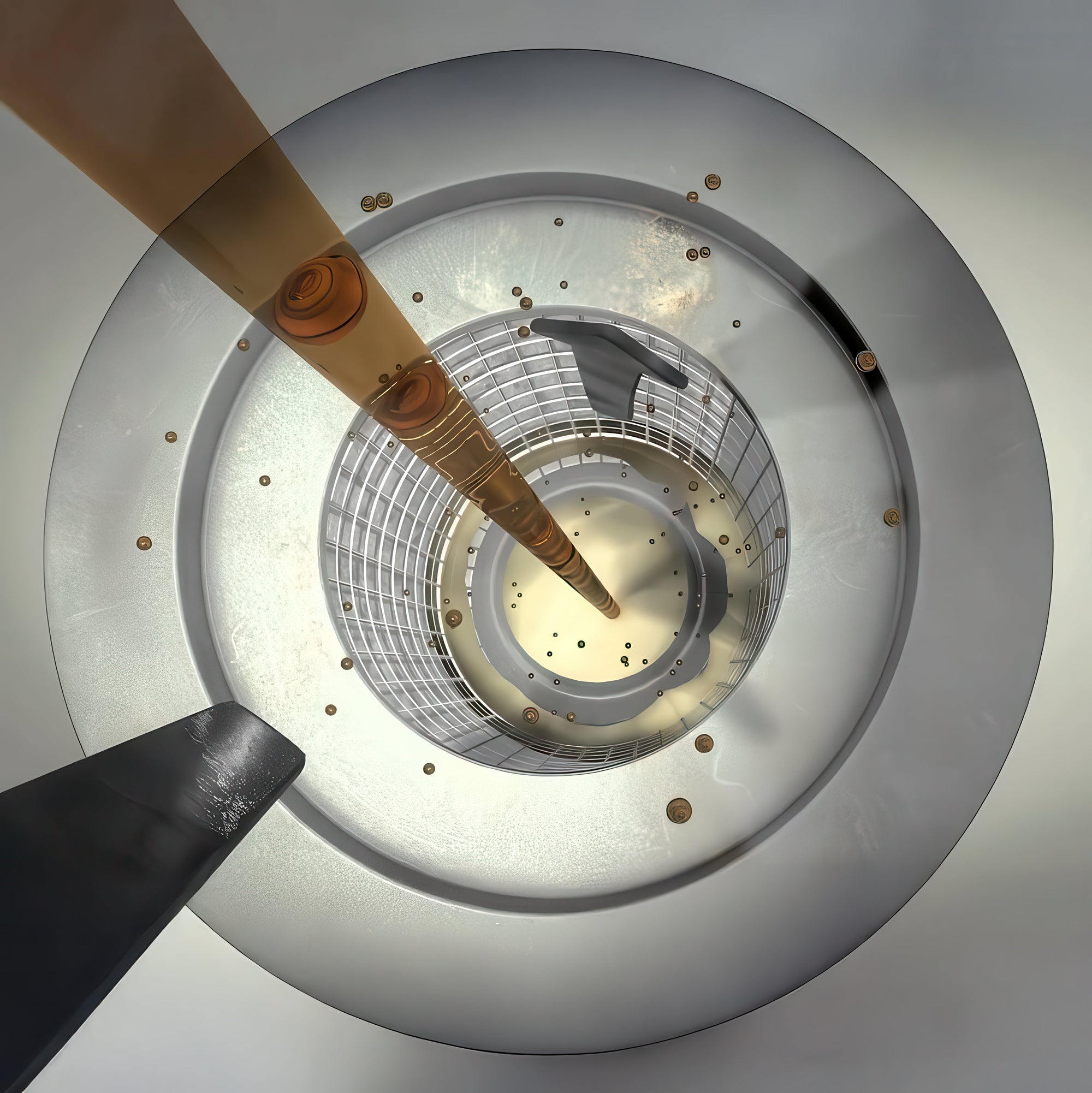
That's the job of the air oil separator. Compressed air and oil dump into the separator tank, where the heavy oil drops out by gravity and swirls to the bottom. What's left is a fine oil mist, and that mist passes through the separator element, a dense pack of glass fiber that catches the tiny droplets and coalesces them into bigger drops that drain back to the sump. A healthy separator gets oil carryover down to around 3 parts per million, which is clean enough for most general shop air.
So the separator is doing two things at once: it's recovering your oil so you're not burning through it, and it's keeping oil out of your air. When it fails, both jobs stop.
The signs your separator is on its way out
Separators don't usually fail all at once. They clog slowly, and the machine tells you if you're paying attention.
The clearest sign is oil in your air. If your point-of-use filters are filling with oil faster than they used to, or finished work is coming out oily, the separator element is either saturated or has a tear. Excess oil consumption points the same direction: if you're topping off the sump more often than normal, the oil is leaving through the air outlet.
The other big one is rising pressure drop across the separator. A fresh element costs you only a pound or two of pressure. As the fibers load up with dirt and varnish, that gap climbs. Most machines have a gauge or a service light for exactly this. When the differential across the separator hits about 8 to 10 psi, it's time. A clogged separator makes the compressor work harder to push air through it, which quietly raises your energy bill. Even a 2 psi jump in pressure drop can add roughly 1 percent to your power cost, and a badly plugged element can cost a lot more than that.
How often to replace it
The honest answer is that it depends on your air quality, your oil, and how hard the machine runs. That said, there are numbers most shops can plan around.
| Separator style | Typical replacement interval | Replace early if |
|---|---|---|
| Spin-on separator | About every 4,000 hours or once a year | Pressure drop over 8 to 10 psi, or oil in the air |
| Drop-in element | About every 8,000 hours or once a year | Pressure drop over 8 to 10 psi, or oil in the air |
Two rules override the calendar. Replace the element whenever the pressure drop climbs past the point above, and replace it any time you see oil carrying over into the air. Time in service is a guideline. Pressure drop and carryover are the real triggers.
One more habit worth keeping: change the separator along with the oil and the oil filter, and use the right compressor oil while you're in there. If your oil is breaking down or you're running the wrong grade, varnish builds up and plugs a separator early. Our compressor oil and air filter pages cover the matching parts, and it's cheap insurance to do the whole service at once.
Air oil separator vs oil water separator: not the same part
People mix these two up constantly, so let's be clear. An air oil separator lives inside your rotary screw compressor and pulls compressor oil out of the compressed air. An oil water separator sits at the other end of the system and cleans the condensate, the water and oil that drains out of your tank, dryer, and filters, so you can dispose of it legally. Different part, different job, different spot in the system. If you came here looking to treat your drain water, that's the oil water separator, not this.
Picking the right replacement
The safest way to get the right separator is by your compressor's make, model, and serial number, since the element has to match the housing and the flow. Match the physical style first (spin-on or drop-in), then confirm the gasket or O-ring kit comes with it. Cheap universal elements are tempting, but a poor fit lets air bypass the media, and bypassed air means oil in your lines. If you're not sure which one your machine takes, send us the model number and we'll match it.
While you're sourcing the part, it's a good moment to think about whether the machine itself is worth continued investment. If you're nursing an old unit through separator after separator, our rotary screw compressor lineup is worth a look.
Changing it without making a mess
The job isn't hard, but the tank is under pressure and the oil is hot, so respect it. Shut the compressor down, let it cool, and bleed off every bit of pressure before you touch a bolt. Confirm the sump gauge reads zero. Then swap the element, replace all the O-rings and gaskets that came in the kit, and check the scavenge line and its check valve while the tank is open, since a plugged scavenge line will flood a brand new separator with oil in a hurry. Top off the oil, run it up, and watch the pressure drop settle back to a couple of psi.
Why separators clog before their time
If you're replacing separators more often than the intervals above, something upstream is driving it, and swapping the element again won't fix the cause. The usual suspects are worth checking.
Old or wrong oil is the big one. When compressor oil oxidizes or you run a grade the machine wasn't built for, it forms varnish that bakes onto the separator media and plugs it fast. Keep the oil fresh and correct and your separators last their full life. A dirty intake is another driver, since every bit of dust that gets past the intake filter ends up loading the separator, so a neglected air filter shortens separator life right along with it. Running the compressor too hot has the same effect, cooking the oil and accelerating varnish, which is one more reason to keep the cooler clean and the ambient air moving. And a plugged or failed scavenge line lets oil pool on top of the element instead of draining back, which saturates a good separator in no time. Check that line every time you're in there.
Fix the root cause and the separator becomes the cheap, predictable service item it's supposed to be instead of a part you're forever chasing.
Frequently Asked Questions
How do I know if my air oil separator is bad?
The two clearest signs are oil showing up in your air lines and point-of-use filters, and a rising pressure drop across the separator. If the differential climbs past about 8 to 10 psi, or you're topping off oil more than usual, the element is due.
How often should an air oil separator be replaced?
Plan on about every 4,000 hours for spin-on types and about every 8,000 hours or annually for drop-in elements. Replace it sooner if the pressure drop gets too high or oil starts carrying over, whichever comes first.
What happens if I don't replace a clogged separator?
A clogged separator raises pressure drop, which increases your energy cost, runs the machine hotter, and eventually lets oil carry over into your air. Left long enough it can push oil through your whole system and ruin downstream filters and tools.
Is an air oil separator the same as an air filter?
No. The intake air filter keeps dust out of the compressor. The air oil separator pulls compressor oil back out of the compressed air on the way out. Both are wear parts, and both should be checked at every service.
Can I use a universal separator element?
It's risky. If the element doesn't seal correctly in the housing, air bypasses the media and carries oil into your lines. Match the separator to your compressor's make, model, and serial number, and make sure the gasket kit is included.
The bottom line
Your air oil separator is a small part with a big job: keep your oil in the machine and out of your air. Watch the pressure drop, change it on schedule, do it alongside the oil and filters, and match the part to your exact machine. Do that and you'll never be the shop chasing oil out of its air lines.


