


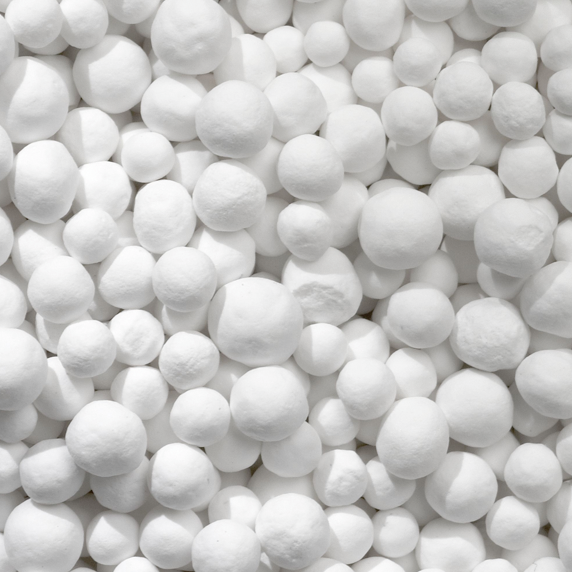
Desiccant almost never quits all at once. That's what makes it sneaky. A refrigerated dryer that dies tells you about it, usually with a puddle. A desiccant dryer that's lost half its capacity just quietly starts letting moisture through, and you don't find out until a paint job fisheyes or a pneumatic valve sticks on the third shift.
So the question of when to replace desiccant in an air dryer doesn't have a clean answer on a calendar. It has an answer based on hours, on what you're feeding the dryer, and on whether the dew point is still where it's supposed to be. Here's how to tell.
What the beads are actually doing in there
A twin tower desiccant dryer has two vessels packed with adsorbent media. Wet compressed air flows up through one tower and the media pulls the water vapor onto its surface. Meanwhile the other tower is regenerating, driving the collected moisture back off and venting it. Then they swap. That's the whole trick, and it's why these dryers can hit a minus 40 degree pressure dew point when a refrigerated dryer tops out around 35 to 40.
The media itself is usually one of two things, and sometimes layered:
- Activated alumina. The workhorse. Good capacity, tolerates a bit of liquid contact better than the alternative, handles most shop applications.
- Molecular sieve. Tighter pore structure, pulls water harder, used when you need a very low dew point. It's less forgiving of liquid water and more expensive.
Note that word adsorb, not absorb. The water clings to the surface of the bead rather than soaking into it. That distinction matters, because anything else that coats that surface, oil in particular, takes capacity away permanently.
How long desiccant actually lasts
Manufacturer literature and field reality don't always agree here, so treat published numbers as a starting point and verify with a dew point reading.
| Media and condition | Typical service life | Notes |
|---|---|---|
| Activated alumina, clean inlet air, good prefiltration | 3 to 5 years | The number most twin tower dryer makers quote |
| Activated alumina, general shop duty | 2 years or about 4,000 operating hours | A common conservative replacement schedule |
| Any media with oil carryover | Under 1 year, sometimes months | Oil coats the beads and kills capacity for good |
| Any media that has seen slugs of liquid water | Immediate inspection | Liquid can crush and dust the bed |
| Molecular sieve, low dew point duty | 2 to 4 years | Shorter if inlet quality slips at all |
If you want one rule of thumb, plan on replacement somewhere between 2 and 5 years and let the dew point decide exactly when. A dryer running 40 hours a week in a clean plant will go the long end of that range. A dryer in a dusty shop downstream of a tired oil separator will not.
The five signs your bed is finished
1. Dew point is climbing
This is the only measurement that actually answers the question, which is why a dew point monitor on the dryer outlet is worth having. If your dryer is rated for minus 40 and you're reading minus 10, you've lost most of your capacity. Don't wait for zero.
2. Moisture showing up downstream
Water in the filter bowls past the dryer, condensation on the outside of a cold pipe, water spitting from a blow gun, a paint booth that suddenly can't lay a coat. These are late signs. By the time you see liquid, the bed has been failing for a while.
3. Cycle timing gets strange
A healthy dryer switches towers on a steady rhythm. If it starts switching more often than it used to, or if the purge cycle sounds longer, the controls are trying to compensate for media that can't hold what it used to.
4. Pressure drop is rising
Fresh desiccant costs you a couple PSI across the dryer. As beads break down they produce fines, and those fines pack into the bed and choke flow. If differential pressure across the dryer has crept up noticeably, look at the media.
5. What you see in the sight glass
If your dryer has a sight glass or you can pull a plug and look, healthy media is uniform and dry looking. Discolored, darkened, or oily looking beads mean contamination. Powder and broken fragments in the bottom mean the bed is mechanically breaking down. Either way it's done.
What kills desiccant years early
Nearly always the same culprit: oil. A lubricated compressor puts a small amount of oil aerosol into the air stream all the time, and that's normal. What's not normal is letting it reach the desiccant. Oil films the bead surface, and unlike water, regeneration will not drive it back off. Every bit of oil that lands is capacity you never get back.
Which is why the filtration ahead of a desiccant dryer isn't optional:
- A general purpose particulate filter to catch rust, scale, and pipe debris.
- A high efficiency coalescing filter to strip oil aerosol and liquid water, with a working drain on the bowl.
- An afterfilter downstream of the dryer to catch desiccant fines before they reach your tools.
Change those elements on schedule. A coalescing element that's past its life stops coalescing and starts passing oil straight through to the beads, which is the expensive failure mode. People spend hundreds on new desiccant every year and never figure out that a twelve dollar element upstream is what's eating it.
Second most common killer is liquid water arriving in slugs. That usually means a failed drain somewhere upstream, or an aftercooler that isn't doing its job. Liquid water on activated alumina can shatter beads and turn the top of your bed into dust.
Replacing it: what the job involves
On a small dryer this is a reasonable afternoon of work. On a large twin tower it's a job for someone who's done it before.
The general sequence: isolate and fully depressurize both towers, lock out the power, open the fill and drain ports, vacuum or dump the old media out completely, inspect the support screens and diffusers, then fill with fresh media in the correct layering and quantity. Fill slowly and evenly so the bed settles without voids or channels, because a channeled bed will let air shortcut straight through and you'll never hit dew point.
A few things people get wrong:
- Topping off instead of replacing. Adding fresh beads on top of a spent bed gets you very little. Replace the full charge.
- Wrong media or wrong bead size. Match what the manufacturer specifies. Substituting a different mesh size changes pressure drop and flow distribution.
- Skipping the layering. Some dryers specify a layer of alumina under molecular sieve. That order exists for a reason.
- Not replacing the afterfilter element at the same time. The old one is full of fines from the bed you just pulled.
- Forgetting the mask. Desiccant dust is an irritant. Wear respiratory protection and eye protection while you're dumping and filling.
When replacing the media isn't the right call
Sometimes the honest answer is that the dryer isn't worth recharging. If the vessels are old, the valves are leaking, the controls are obsolete, and you're on your third media change, price a new unit before you buy another charge. Purge valves and switching valves are the other common wear items, and a dryer that's wasting purge air through a leaking valve is costing you compressor horsepower every hour it runs.
It's also worth asking whether you need a desiccant dryer at all. If your air lines never see freezing temperatures and you're not running a critical process, a refrigerated dryer at a 35 to 40 degree dew point does the job with far less fuss and no media to buy. Compare across our air dryers before you sink money into an old machine. If you do need the low dew point, our desiccant air dryers are listed by flow capacity.
Frequently Asked Questions
How often should desiccant be replaced?
Plan on 2 to 5 years for most shop dryers. A conservative schedule many operations use is 2 years or roughly 4,000 operating hours, whichever comes first. Clean inlet air with good coalescing filtration pushes you toward the long end, and any oil carryover pulls you well short of it.
Can desiccant be regenerated instead of replaced?
Your dryer already regenerates it on every cycle, which is how it drives off water. What regeneration cannot remove is oil, or restore beads that have physically broken down. Once the media is contaminated or dusting, it has to come out.
What happens if I just keep running old desiccant?
Your dew point rises and moisture goes downstream. Depending on your shop that means rust in the lines, sticking valves, ruined finishes, frozen air lines in winter, and scrap. You also tend to see rising pressure drop across the dryer, which costs you energy.
Do I really need a coalescing filter ahead of the dryer?
Yes. It's the single cheapest thing protecting your media investment. Oil aerosol that reaches the beads permanently destroys capacity, and a good coalescing filter with a working drain is what keeps it out.
Can I mix new desiccant with the old bed?
Don't. A partial charge of fresh media sitting on top of spent media gives you a fraction of the benefit and can create uneven flow through the bed. Dump the full charge and refill.
The short version on when to replace desiccant: watch your dew point, protect the bed with real coalescing filtration, and figure on a full charge every two to five years depending on how clean your air is. Get the filtration right and you'll be at the long end of that. Ignore it and you'll be buying media every year and never understanding why.


