


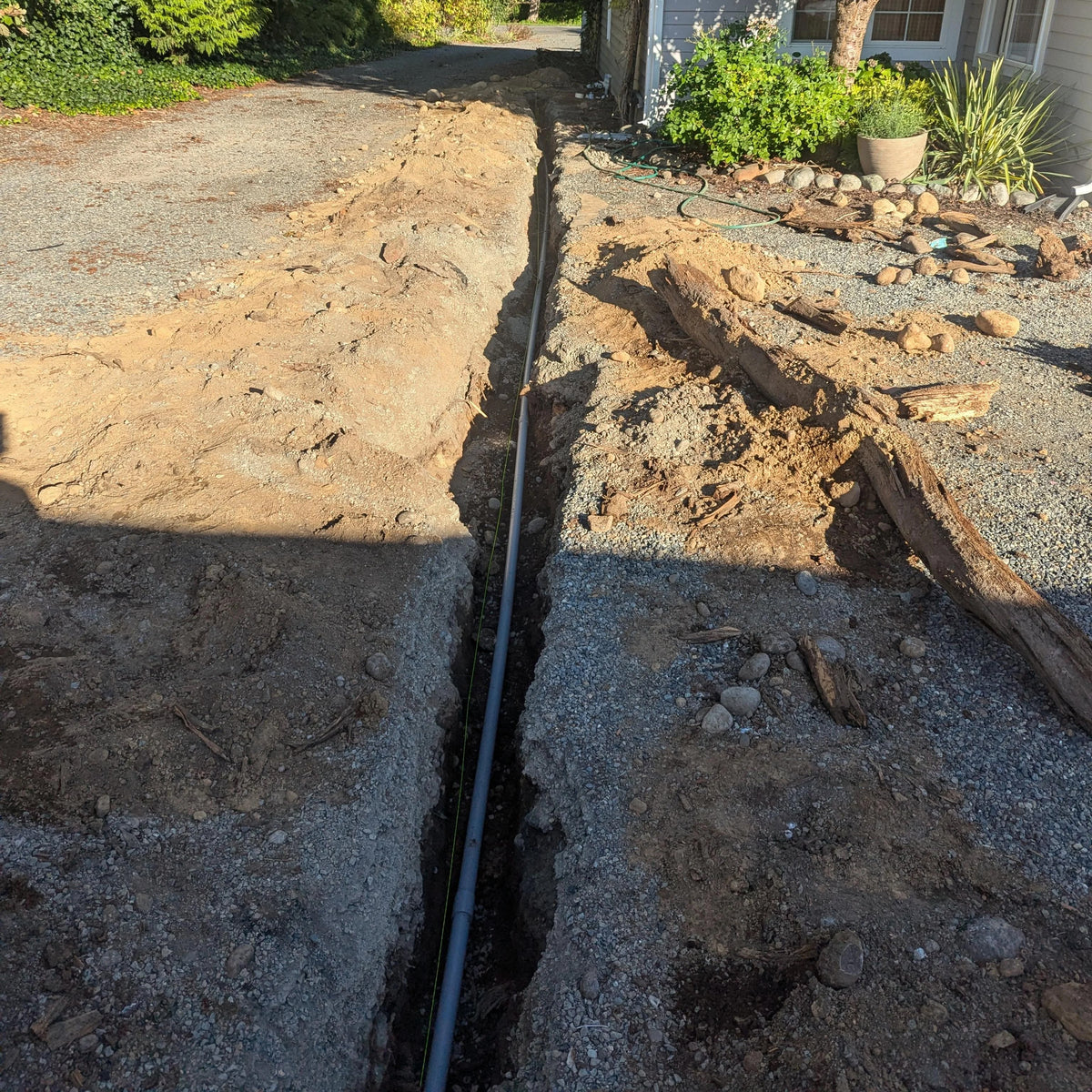
The crew gets to the handhole at seven in the morning, the sun is already on the pavement, and the first 1,500 feet of microduct is waiting. The cable goes in fast for the first few hundred feet. Then the jet slows, the tractor starts to labor, and the foreman asks the question every cable-blowing crew asks sooner or later: is it the duct, the machine, or the air?
Most of the time it is the air. This guide covers compressed air for fiber optic cable blowing: how much flow and pressure each duct size wants, why the air coming out of the compressor can hurt you, and what to put on the truck or trailer so the jetting machine gets what it was built to use.
What Makes Cable Blowing Different
A shop compressor fills a tank and rests. A cable-blowing compressor runs flat out for the whole pull, sometimes for an hour at a time, and the jetting machine uses every cubic foot you can give it. Nothing is stored and drawn down. The air is the force that carries the cable down the duct, so the compressor is the engine of the job.
That changes how you shop. Tank size barely matters. Delivered CFM at working pressure matters a great deal. Air temperature and moisture matter more than most crews expect. And you are working at pressures well above a normal 100 to 125 PSI shop machine.
The Numbers: PSI and CFM by Duct Size
Duraline, a conduit manufacturer that publishes guidance for installers, gives these ranges for jetting fiber. Treat them as a starting point and always check with the cable and jetting machine makers for your exact job.
| Duct type | Working pressure | Air volume |
|---|---|---|
| Microduct, 5.5 to 14 mm ID | 150 to 175 PSI | 10 to 60 CFM |
| Microduct, 16 to 20 mm ID | 150 to 175 PSI | 100 to 375 CFM |
| Standard conduit, 1 to 2 in. ID | 115 to 175 PSI | 150 to 425 CFM |
Two things jump out. First, the jump from small microduct to large microduct is huge. A crew doing FTTH drops can get by on a modest portable machine, while a crew pulling high-count cable in 20 mm duct needs a very different compressor. Second, the pressure ceiling is real. The same source notes microducts top out around 230 PSI, and that limit comes from the jetting machines themselves. Too much or too little pressure can damage conduit and couplers, and can make cable buckle in tight bends.
The rule of thumb that holds up in the field: if you are not sure what you will run next month, size the compressor for the largest duct you plan to install into.
Read the CFM Rating Carefully
This is where buyers get burned. Many compressors are advertised at a CFM figure measured at 90 or 100 PSI. Delivered flow drops as pressure climbs. A machine that makes 100 CFM at 100 PSI will not make 100 CFM at 175 PSI. When you shop, look for the CFM rating at your working pressure, not the biggest number on the first page of the brochure. If the data sheet does not give it, ask for it before you buy.
The Part Nobody Plans For: Hot, Wet Air
Compressing air makes heat. Run that air straight into a duct on a 90 degree afternoon and you are pushing hot air through a small plastic tube. The same Duraline guidance warns that heated air can shorten jetting distance and efficiency, and that ambient heat and humidity make it worse. It suggests an air cooler and water separator when conditions are hot and humid, especially above 77 degrees F (25 degrees C).
Here is why that matters in plain terms. Hot air heats the duct and the cable jacket, and a warmer duct has more friction. Water vapor that condenses inside a cold underground duct leaves droplets that add drag and can contaminate a pull. A good aftercooler pulls the discharge temperature down toward ambient, and a water separator drops the liquid water before it ever reaches the machine.
ELGI, which builds a compressor aimed at cable blowing, makes the same point from the manufacturer side. Its 35 CFM at 218 PSI unit comes with an integrated aftercooler and moisture separator so the air reaching the blower is cooled and drained. If your compressor does not have those built in, add them.
One caution: we are not claiming a specific dew point or ISO 8573-1 class for cable blowing, because the published guidance does not set one. The practical goal is simple. Keep the air cool and keep liquid water out of the line.
What to Put on the Truck
The Compressor
For small microduct and drop work, a portable or towable compressor in the right pressure class can do the job. For the 16 to 20 mm microducts and larger conduit, you are in the territory of high-flow portable units or rotary screw machines rated well above 100 CFM at working pressure. Our 175 PSI air compressors are the place to start, since 175 PSI sits right at the top of the normal jetting range. If the machine will live on a trailer, see our portable air compressors, and our guide to tow behind compressors covers the sizing side. Diesel drive makes sense when the crew works far from power, and the diesel air compressor guide walks through when that is the right machine.
Cooling and Water Removal
Add an aftercooler if the compressor does not have one, and a water separator downstream of it. Drain the separator on a schedule or fit an automatic drain, because a full bowl does nothing for you.
Hose, Couplers and Fittings
This is a safety item, not a convenience. Every hose, coupler and fitting between the compressor and the jetting machine needs a working pressure rating comfortably above the highest pressure you will run, not the nominal rating of a shop hose. Use whip checks on connections, keep hose runs short, and replace anything that is cracked or scuffed through the cover. A failure at 175 PSI is a lot more violent than a failure at 90.
A Small Receiver Helps, but It Does Not Replace CFM
A receiver smooths out pulses and gives the aftercooler a little more time to knock down moisture. It will not rescue an undersized compressor. A jetting pull uses air continuously, so a tank empties in seconds and the compressor is left to carry the load. Buy flow first.
What We Do and Do Not Sell
We sell the compressor side of this job: portable and stationary compressors, aftercoolers, water separators, receivers, hose and fittings. We do not sell cable jetting machines, tractors, or cable lubricant. Those come from your jetting equipment supplier, and your cable and duct maker will tell you which machine fits the product you are installing. Some jetting suppliers also rent coolers and separators, as Duraline notes, which can be a good option if you only do this work a few times a year.
Mistakes We See
- Buying on the 90 PSI CFM number. Check delivered flow at 150 to 175 PSI.
- Skipping the cooler in summer. The jet gets shorter exactly when the schedule is tightest.
- Using shop hose. Match every component to the real working pressure.
- Sizing for today's duct. Next year's job will be larger.
- Running the compressor hard in a hot enclosure. Give it clean intake air and room to breathe. Our air compressor room requirements article covers ventilation.
A Quick Sizing Walkthrough
Say your crew pulls cable into 16 mm microduct most days and 2 inch conduit a few times a year. Using the ranges above, the microduct work wants 100 to 375 CFM and the conduit wants 150 to 425 CFM. If you buy for the microduct only, you will be short on the big conduit days. If you buy for the 425 CFM case, you have headroom for both. Then check the CFM rating at 175 PSI on the data sheet, add the cooler and separator, and confirm the hose rating. That is the whole process, and it takes ten minutes with the data sheets in front of you.
Frequently Asked Questions
How much air does it take to blow fiber optic cable?
It depends on duct size. Published installer guidance puts small microduct (5.5 to 14 mm) at roughly 10 to 60 CFM, larger microduct (16 to 20 mm) at 100 to 375 CFM, and standard 1 to 2 inch conduit at 150 to 425 CFM, all at working pressures of about 115 to 175 PSI. Check with your cable and jetting machine makers for your exact job.
What PSI do you blow fiber at?
Microduct is typically blown at 150 to 175 PSI, with a maximum around 230 PSI set by jetting machine limits. Standard conduit is typically 115 to 175 PSI. Going too high or too low can damage conduit and couplers.
Do I need an aftercooler for cable blowing?
In hot or humid weather, yes. Installer guidance recommends an air cooler and water separator especially above 77 degrees F (25 degrees C), because hot air can shorten jetting distance and efficiency.
Will a bigger tank help my compressor blow cable farther?
Not much. Jetting uses air continuously, so a tank drains quickly. Delivered CFM at working pressure is what sets your capability. A receiver is still useful for smoothing flow and giving the aftercooler time to work.
Can I use an ordinary shop compressor?
Only for the smallest drop work, and only if it makes enough flow at the required pressure. Most shop machines are rated at 100 to 125 PSI and will not deliver jetting flow at 150 to 175 PSI.
Where to Start
For compressed air for fiber optic cable blowing, start with the duct you will pull into, pick the CFM at 175 PSI to match, and add cooling and water removal before you add anything else. Browse our 175 PSI air compressors and send us the duct sizes if you want a second opinion on the match.


