


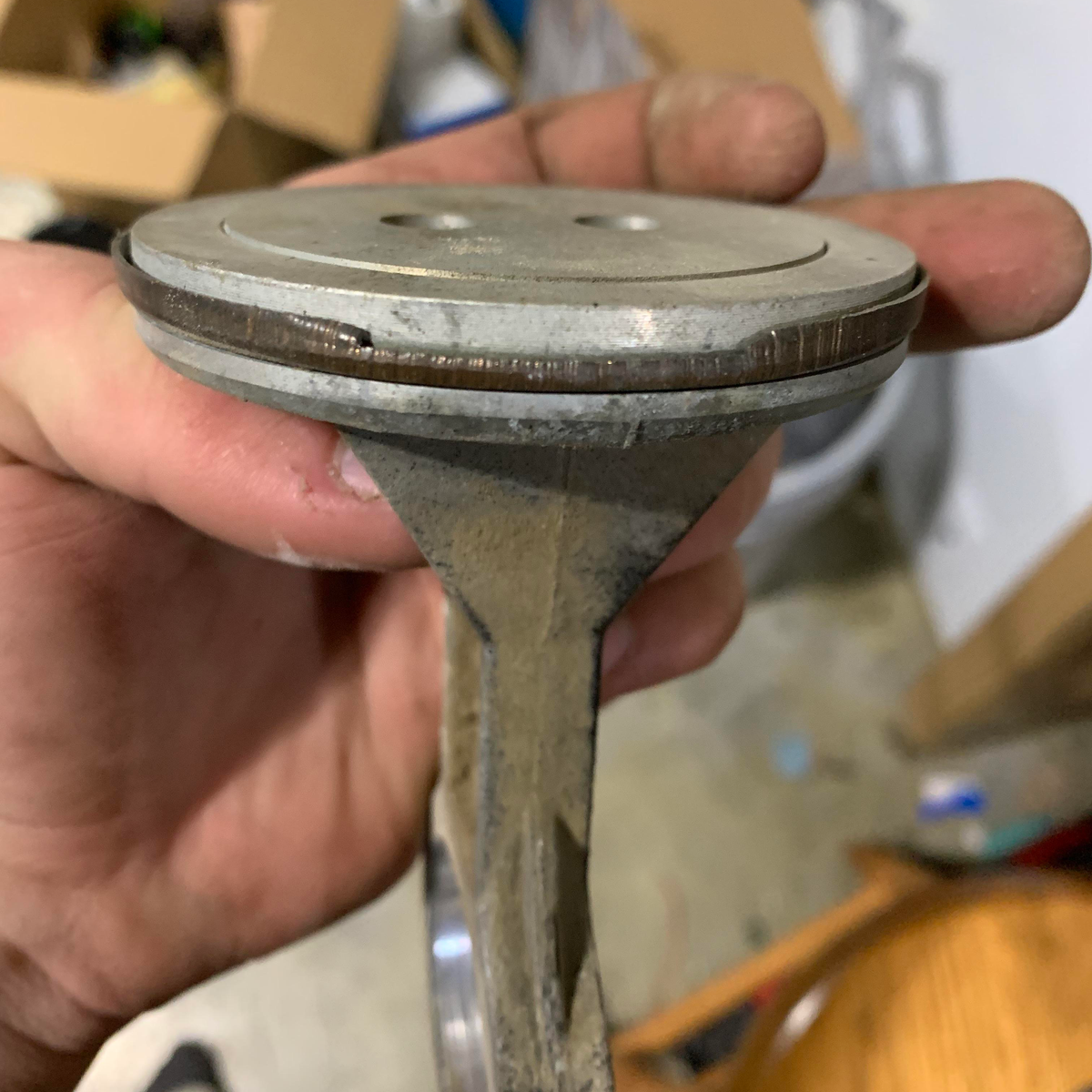
We get this call a lot. "The compressor still runs, it just takes forever to fill the tank, and now there is oil in my water trap." Nine times out of ten the caller has already replaced the pressure switch and the check valve. The tenth time, it is the air compressor piston rings, and nobody wanted to open the pump.
Rings are the part that wears slowly, hides inside the cylinder, and costs you for months before you find it. Here is how to tell if yours are done, how to rule out the cheaper suspects first, and what to do next.
What piston rings do
A piston in a lubricated reciprocating compressor does not touch the cylinder wall directly. Rings do that job. They sit in grooves around the piston and do two things. The compression rings seal the gap so air does not leak past the piston on the compression stroke. The oil control ring scrapes excess oil off the cylinder wall so it stays in the crankcase and not in your air.
When the rings wear, or the cylinder wall wears, or a ring sticks in its groove, you lose both jobs. Air leaks by, which cuts output. Oil climbs past, which pollutes your air and your lines. Most small and mid-size piston compressors follow this basic layout, though the number of rings and the details depend on the pump, so check your manual or the pump maker.
Symptoms of worn rings
No single symptom proves it, but a cluster of them points hard at the rings.
- Longer pump-up time. The tank takes noticeably longer to go from cut-in to cut-out than it used to, and eventually may never reach cut-out.
- Oil in the air. You find oil in the tank drain, the water separator, the filter bowls or downstream tools.
- Oil consumption. You are topping off the crankcase more often than the hours would suggest.
- Crankcase pressure. Oil mist or smoke from the breather, or oil being pushed out of the dipstick or fill cap, because compressed air is leaking past the rings into the crankcase. This is called blow-by.
- A hot pump. Air leaking back across the piston is compressed again and again, and the head runs hotter than it should.
Rule out the cheap stuff first
Before you pull the head, check the things that mimic worn rings. Most of these cost far less.
- Air leaks. A leaking drain valve, fitting, hose or safety valve makes the compressor run long and look weak. Spray soapy water on the joints with the system pressurized.
- Leaking check valve. If air bleeds back from the tank through the check valve, the pump unloads slowly and takes longer to refill. Our guide on the check valve walks through testing it.
- Bad reed valves or valve plate. Broken or carbon-coated reed valves cause the same long pump-up. They sit right under the head, so it is the first thing you see when you open it up.
- Clogged intake filter. A plugged filter starves the pump. It is a two-minute check.
- Blown head gasket. It can leak between cylinders or to the outside and look like a ring problem.
- Wrong oil or oil that is badly overfilled. Overfilling pushes oil up the cylinder walls and into the air.
If you have done all of these and the symptoms are still there, the rings or the cylinder are the likely cause.
How to test the pump
A simple pump-up test
Drain the tank, shut the valve to the system, and time how long the pump takes to raise tank pressure over a fixed range. Compare it to the pump-up time in the manual or a time you recorded when the compressor was healthy. A big increase with no leaks and good valves points at the pump.
A tank leak-down check
Fill the tank, shut off the compressor and watch the gauge. If the pressure holds, the tank, fittings and check valve are good. If it falls, find the leak first, because it is not the rings.
A look inside
With the power off and the tank at zero pressure, pull the head and valve plate. Look at the top of the piston and the cylinder wall. Heavy carbon, scoring, a visible ridge at the top of the ring travel, or oil pooling on the piston crown all tell you something. Pistons that are slightly loose in the bore or rings that are stuck in their grooves are common findings. Check the clearances and wear limits in the pump maker's service manual, because the numbers vary by model.
Rings, cylinder or whole pump?
Replacing rings only works if the cylinder wall is still in good shape. If the bore is scored, out of round or worn past the maker's limit, new rings will not seal and you will be back in a few weeks.
- Rings only. A fair choice when the cylinder is smooth and within spec and the piston grooves are not worn. Many pumps are sold with a ring or service kit.
- Rings and hone, or a new piston set. Some cast-iron cylinders can be honed lightly and fitted with new rings. Follow the maker's rules on hone finish and ring seating.
- Replace the pump. When the cylinder is damaged, parts cost adds up, or the compressor is old and you want a fresh start, a new or rebuilt pump is often the better deal. See our guide on sizing, replacing and rebuilding pumps.
Oil-free piston compressors are a different animal. They use low-friction rings, often PTFE or a similar material, and no oil in the cylinder. Those rings wear out too, and they are usually replaced as a set or as part of a rebuild kit. Follow the maker's service instructions, because oil-free pumps are fussy about parts and assembly.
Replacing the rings
- Shut off power, drain the tank to zero and lock out the starter.
- Remove the head, valve plate and gaskets. Note the order and orientation.
- Remove the piston and connecting rod assembly as the manual describes.
- Remove the old rings carefully and clean the piston grooves. Carbon in the groove will keep a new ring from seating.
- Check ring end gap in the cylinder against the maker's spec, and fit the rings in the right order with the gaps staggered and any top marks facing up.
- Lightly oil the piston and cylinder, compress the rings and slide the piston in carefully.
- Reassemble with new gaskets and torque the head bolts in sequence to spec.
A ring compressor tool makes this much easier, and a new set of gaskets is cheap insurance. If you do not have the manual, look it up before you start.
Break-in and what to expect
New rings need time to seat to the cylinder wall. Follow the pump maker's break-in instructions. As a general approach, start the compressor, let it run at light load for a few minutes, check for leaks and noise, then watch oil level and temperature for the first few hours of service. Many shops change the oil after a short initial run to flush out wear metal, which is a good habit unless the maker says otherwise.
Making the next set last
- Change the oil on schedule and use the right oil. See our guide to oil types and change intervals.
- Keep the intake filter clean. Dust is sandpaper for rings.
- Do not run the pump too hot. Overheating bakes oil into carbon.
- Drain moisture so water does not wash oil off the cylinder wall.
- Do not run the compressor above its duty cycle. See our duty cycle guide.
Frequently Asked Questions
How do I know if my air compressor piston rings are bad?
Look for a cluster of signs: longer pump-up time, oil in the air or water trap, frequent oil top-offs, oil mist from the breather and a hot pump. Rule out leaks, the check valve, reed valves and the intake filter first.
Can I replace compressor piston rings myself?
Yes if you are comfortable with basic mechanical work, have the service manual and the right parts, and the cylinder is in good condition. Shut off power and drain the tank before you open anything.
What causes air compressor piston rings to wear out?
Normal use over thousands of hours, dirty intake air, wrong or low oil, overheating and moisture in the cylinder. A pump that runs above its duty cycle wears faster.
Is it worth rebuilding a compressor pump with new rings?
It can be, when the cylinder is smooth and the rest of the pump is sound. If the bore is scored or the pump is worn out in other places, replacing the pump usually makes more sense.
Why is my compressor blowing oil into the lines?
Worn or stuck rings are a common cause, but overfilled oil, a bad separator on a screw compressor or a clogged breather can do it too. Check the simple items before opening the pump.
Ready to Shop
If you have confirmed the rings, find the right ring set, gaskets and service kit for your pump in our compressor parts collection. If the cylinder is damaged, browse our piston air compressors for a replacement unit, or our service kits for the maintenance items that keep the next set of rings alive.


