


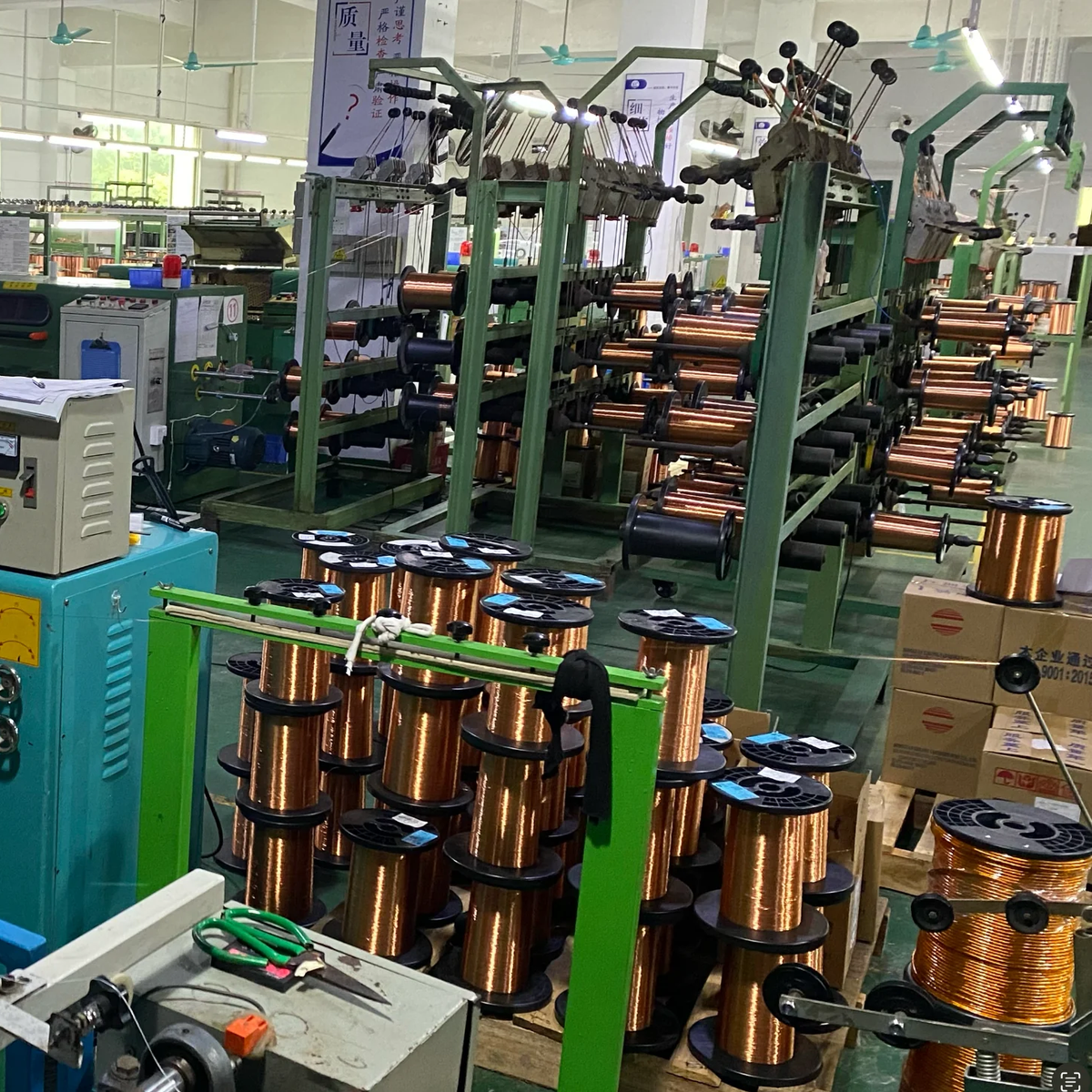
A cable plant ran two quarter-inch copper tubes at the end of a wash and rinse tank to blow water off wire under an eighth of an inch thick. Those two tubes pulled 60 SCFM at 85 PSIG, around the clock. When the plant ran an energy audit, the compressed air sub-audit swapped them for one half-inch split air wipe pulling 14 SCFM at the same pressure. They did it on the other nine lines too and shut off a 100 HP compressor. That's a published case study, and it's the quickest way to understand compressed air for wire and cable manufacturing: the air isn't doing anything fancy, but there's a lot of it doing small jobs on a lot of lines, and nobody is watching the total.
What makes a wire and cable plant different
A wire plant isn't a stamping shop where one big press eats air in bursts. It's a handful of continuous lines, each running for days: drawing, stranding, insulation or jacket extrusion, cooling, marking, spooling. Most of the air is steady flow, not spikes. That's good news for sizing and bad news for waste, because a leak or an open blow-off tube is on 8,000 hours a year, not 800.
The other difference is that the air touches the product. Not always, but often enough. Air that blows off the wire after a cooling trough, or dries it before a marker, lands on insulation that a customer is going to inspect. Oil mist from a tired compressor or water from a flooded drain can show up as a marking defect or a rejected reel, and a rejected reel of finished cable costs far more than the air.
Where the air actually goes
Walk a typical line from the pay-off to the take-up and you'll find air in a handful of places. We're describing the common ones here, and your lines will differ, so treat it as a checklist rather than a spec.
- Blow-off and drying after the cooling trough. Insulation comes out of the extruder hot and runs through a water trough. Something has to take the water off before the wire reaches a marker, a tester, or the take-up. That something is usually an air wipe or a pair of blow-off tubes. This is the biggest single consumer on most lines and the easiest place to save.
- Wire marking and printing. Ink-jet and similar markers want a dry, clean surface. Water or oil on the insulation shows up as smeared or missing print.
- Pneumatic brakes, clutches and tensioners. Pay-off and take-up stands often use air-operated brakes and dancer controls. These are low flow, but they're the parts that go wrong if the air is wet.
- Cylinders, cutters and spool handling. Cut-to-length stations, spool loaders, and guards run on small cylinders and valves.
- Cleaning and machine blow-down. Operators clean drawing dies, capstans and guides with hand guns. Fine until you count them.
The air quality target
There's no single regulation that governs air in a cable plant the way FDA rules govern a bakery. What you have is customer quality and your own scrap rate. So set the target by what the air touches.
For air that blows on insulation or feeds markers, we'd want it dry and free of oil aerosol. In ISO 8573-1 terms, a refrigerated dryer plus a coalescing filter puts you around the dew point and oil classes that most shop-grade work wants. If your line runs somewhere cold, or you've had condensation trouble in the trough area, a desiccant dryer is worth a hard look. Our refrigerated air dryers cover the standard case, and a coalescing filter at the drop protects the product. For pneumatic controls, dry air also keeps valves and brakes from sticking.
A quick note on what the target is not. Wire and cable plants don't normally need oil-free compressors because the air isn't a product ingredient. If a particular line prints on medical or aerospace cable with tighter customer specs, that's the exception, and your customer's quality manual will say so.
Blow-off is where the money is
Here's the part that surprises plant managers. Open copper tubes and drilled pipe blow-offs use a huge amount of air for the work they do. A split air wipe pulls in a lot of surrounding room air through a thin slot, so it moves the same water with far less compressed air. The numbers below come from the manufacturer's own published figures.
| Blow-off method | Pressure | Air use | Where the figure comes from |
|---|---|---|---|
| Two 1/4 inch copper tubes | 85 PSIG | 60 SCFM | EXAIR wire manufacturer case study |
| One 1/2 inch aluminum Super Air Wipe | 85 PSIG | 14 SCFM | Same case study |
| One 3/8 inch standard air wipe | 80 PSIG | 11.1 SCFM | EXAIR product data |
We don't sell air wipes, so don't read this as a pitch. We're telling you because it changes how you size the compressor. If you're buying air for 10 lines, the blow-off choice can be the difference between needing 600 SCFM for drying and needing 140.
A rough dollar figure helps. A fixed-speed rotary screw at full load takes roughly 18 kW for every 100 CFM it makes. That's a shop rule of thumb, so check your own data sheet. Saving 46 SCFM is then about 8 kW. At ten cents a kilowatt-hour and 8,000 hours, call it around $6,600 a year per line. Multiply by ten lines and you can see why that plant turned a compressor off.
The equipment, in the order we'd specify it
Compressor
Lines run continuously, so a rotary screw compressor is the right family. Duty cycle matters more than peak CFM. For plants with swings in demand as lines start and stop, a variable speed unit lets the machine follow the load instead of unloading and blowing down. If you only have two or three small lines and a couple of hand guns, a two-stage piston compressor can do it, but you'll be running it hard.
Dryer and filtration
Size the dryer for the compressor's full flow at your worst-case inlet temperature, not for the average. A cooling trough room is humid, and summer compressor-room air is hot. A dryer sized for the nameplate on a cool day will let water through in August.
Receiver and pressure control
A wet receiver near the compressor smooths load swings. A dry receiver near the lines that cycle hardest keeps a cutter or spool handler from dragging pressure down for the wipes. If your pressure runs at 100 PSI so that one hungry device is happy, a pressure flow controller keeps the rest of the plant from paying for it. We carry them in the pressure flow controller collection.
Drains
Every filter, dryer and receiver needs a drain that works. A timer drain that clogs gives you a flooded filter and water on your wire. Zero-loss electronic drains cost more and waste no air, and the rest of the system is easier to trust once you have them.
Sizing a plant, step by step
- List every blow-off, wipe, tube and gun on every line. Don't forget the hand guns at the dies.
- Get a real number for each. If you don't have a flow meter, use manufacturer SCFM at the pressure it actually runs, not at 100 PSI.
- Add the continuous consumers. Then add the intermittent ones at a realistic diversity, not 100 percent.
- Add 10 to 20 percent for leaks you haven't found yet, then plan to find them.
- Size the compressor with some headroom for a new line, and the dryer for the full compressor flow.
- Pick the lowest pressure that actually works. Wipes run at 80 to 85 PSIG in the published case figures above. Every 2 PSI you can drop is real money across a bank of screw compressors.
Mistakes we see in wire and cable plants
- Open tubes left in place because they work. They do work. They also cost four times the air of a wipe in the case above.
- Dryers sized for the compressor nameplate on a cool day. The trough room is the humid room.
- Running the whole plant at the pressure the pickiest machine wants.
- No flow meter. If you can't see consumption by line, nobody notices the day a hose fails and a blow-off runs open all weekend.
- Treating hand guns as free. A single open gun on a 1/4 inch line moves a lot of air.
What we can and can't do for you
We sell the air system: compressors, dryers, filters, drains, receivers, piping and controls. We don't make cable machinery, and we don't sell air wipes or marking equipment. If your question is which compressor and dryer feed a cable plant, we're the right call. If it's how to thread your die, it isn't.
Frequently Asked Questions
How much compressed air does a wire and cable line use?
It varies by line, but blow-off often dominates. In one published case, two copper tubes on a single line used 60 SCFM at 85 PSIG and a split air wipe did the same job on 14 SCFM. Measure your own lines before sizing.
Do I need oil-free air for cable manufacturing?
Usually not, because the air isn't a product ingredient. You do need dry air with oil aerosol removed where it touches insulation or feeds markers. A refrigerated dryer and coalescing filter handle most lines. Check your customer's quality manual for tighter specs.
Is a refrigerated or desiccant dryer better for a cable plant?
Refrigerated works for most indoor lines. Choose desiccant if you have cold areas, exposed lines, or condensation trouble that a refrigerated dryer's dew point can't prevent.
What pressure should a cable line run at?
Published figures for air wipes use 80 to 85 PSIG. Find the lowest pressure that still dries the wire and set the system there instead of at 100 PSI.
If you're building or rebuilding a cable plant's air system, start with the rotary screw compressor collection, and send us your line list. The 60 to 14 SCFM story isn't a one-off. Nearly every plant with open blow-offs has one waiting.


