


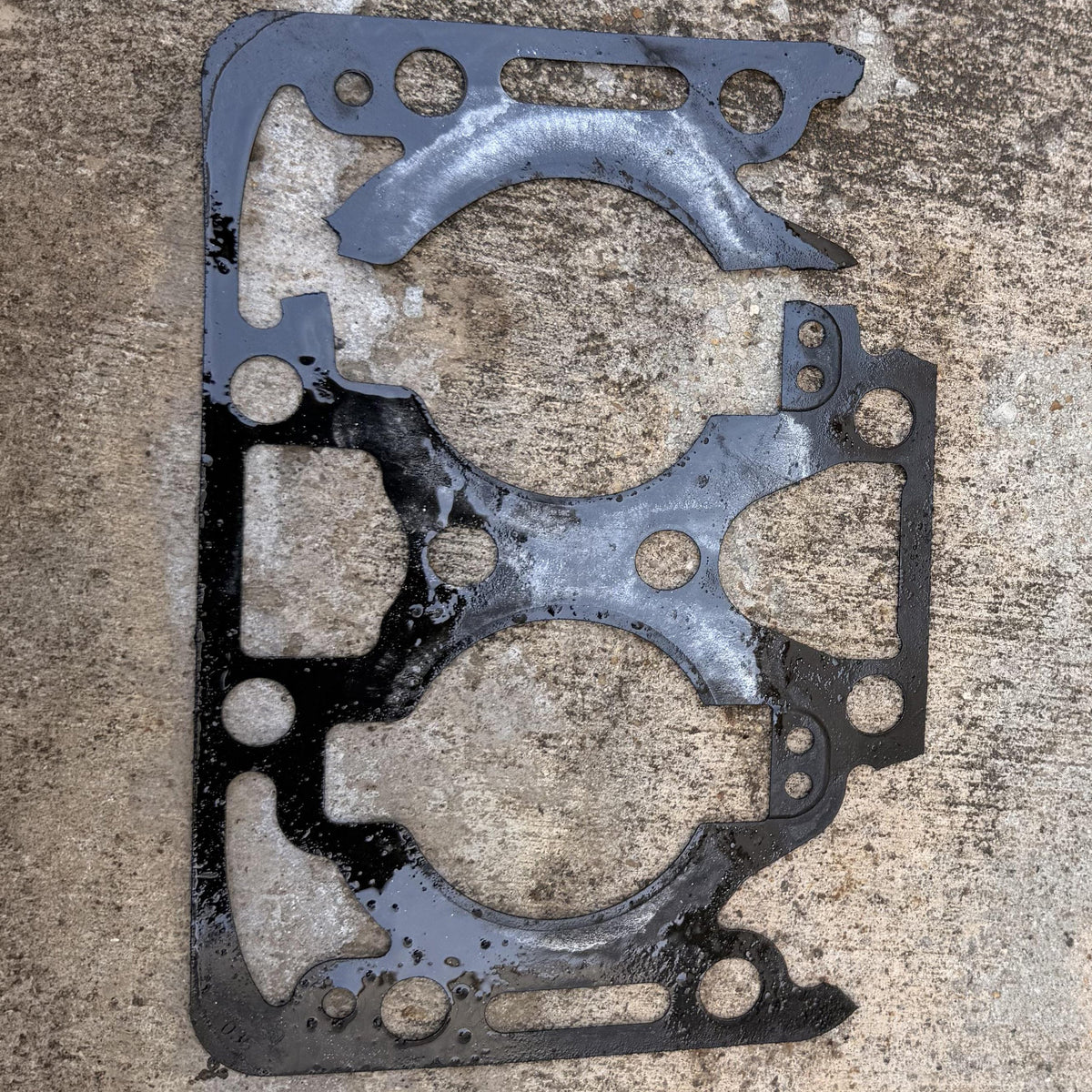
The compressor still starts. It still runs. It just takes forever to get to cut-out, and there is a thin, greasy line of black soot creeping out of the seam between the head and the cylinder. Your first thought is the pump is shot. Often it is not. It is a gasket that cost less than a pizza.
An air compressor head gasket is one of the cheapest parts on a piston compressor and one of the most commonly misdiagnosed. This guide covers how to confirm it is the problem, what usually kills it, and how to put a new one in so it lasts.
What the head gasket does
On a piston compressor, the cylinder head bolts on top of the cylinder, and a valve plate sits between them. The valve plate carries the intake and discharge reed valves. Gaskets seal the sandwich: one between the head and the valve plate, and one between the valve plate and the cylinder. Many replacement kits include both, plus a base gasket where the cylinder meets the crankcase.
The head gasket has two jobs. It keeps compressed air from escaping to the outside, and it keeps the intake and discharge chambers in the head separated from each other. When it fails, you can lose air outward, or you can lose it internally so that discharge air leaks straight back into the intake side. Both look like a weak pump.
Symptoms of a blown head gasket
- Slow pump-up. The tank takes much longer to reach cut-out than it used to, or never gets there.
- A hissing sound at the head while the pump is running, usually along one edge of the seam.
- Oil or black streaks on the seam. Air escaping carries a little oil mist and soot with it, and it leaves a trail.
- Pump runs hotter than usual. It is working harder to make the same pressure.
- Pressure builds, then stalls well below cut-out, especially on a two-stage unit.
- Visible movement. A head bolt that turns freely is a bad sign. Loose bolts lead to blown gaskets.
These are also symptoms of other things. A stuck reed valve, a worn piston ring, a failing check valve, and a leaking unloader can all give you a slow pump-up. That is why you confirm before you take anything apart. If you want the full list, our won't build pressure guide walks the diagnosis in order.
How to confirm it before you buy parts
- Shut it down and bleed it. Unplug the compressor or lock out the power, then drain the tank to zero. Do not work on a compressor under pressure.
- Look first. Wipe the head seam clean with a rag, then run the compressor for a minute and see where the oily streak returns. That is your leak.
- Soapy water test. Mix a little dish soap in water, brush it on the head seam and bolts while the pump runs, and watch for bubbles. Wear eye protection and keep your hands away from the belt.
- Check the check valve and the pressure switch. Rule out the easy things. A bad check valve can look just like a bad gasket.
No bubbles at the head but a slow pump-up? The leak may be internal, between the intake and discharge chambers. In that case you will not see anything on the outside, and you may have to pull the head and inspect the valve plate and gasket together.
Why head gaskets fail
- Heat. An overheating pump bakes the gasket and weakens the seal. If your gasket keeps failing, read our overheating guide. Replacing the gasket without fixing the heat is just paying for the same repair twice.
- Loose or uneven bolts. Vibration works head bolts loose over time. Uneven torque lets one side lift and leak.
- Carbon and debris. Oil-lubricated pumps can build carbon on the valve plate. That keeps the gasket from sitting flat.
- Age. Gaskets compress and harden over thousands of heat cycles.
- Overpressure. A stuck pressure switch lets the pump push past its rated pressure and can blow a seal outright.
Replacing it: the short version
This is a job a competent shop hand can do in an afternoon. The steps are simple but they have to be done in order.
- Get the right kit. Match it to the pump model number on the cylinder or the nameplate. Head gaskets are not universal, and a similar-looking one with a hole in the wrong place will cost you an afternoon. A kit with the gaskets and the valve plate is a good idea if the plate looks worn.
- Lock out and drain. Power off, tank empty.
- Remove the head bolts. Loosen them gradually in a crisscross pattern so the head does not warp. Keep the bolts in order.
- Inspect everything. Look at the valve plate for cracks, burned reeds, and carbon. Look at the cylinder wall and piston top. If the plate is cracked or the reeds are bent, replace it. See our guide on compressor parts and what each one does if you want a refresher on what you are looking at.
- Clean the mating surfaces. Scrape old gasket material off with a plastic scraper or a gentle razor blade, and wipe with a rag. Do not gouge the aluminum. A scratch is a new leak path.
- Install the new gaskets dry, unless the manufacturer says otherwise. Do not add sealant that can flake into the valves. Make sure the gaskets line up with all the ports.
- Torque in steps. Look up the torque value for your pump in the manual. Tighten the bolts in a crisscross pattern in two or three passes up to spec, not all the way on the first pass.
- Re-torque after a heat cycle. Run the pump to temperature, let it cool, and check the bolts again. New gaskets settle in.
If a pump has already blown more than one gasket, stop and look at the cause before you try a third. A warped head, a cracked valve plate, or a pump that is simply overheating will keep eating gaskets. When it is the whole pump, consider the cost of a new piston air compressor against the time you are spending.
What we stock
Our gaskets collection covers head gaskets, valve plate gaskets and base gaskets for a long list of compressor brands. Send us the model and serial number off the pump and we will match the part. Our service kit guide explains what comes in the kits so you can replace things at the same time.
Frequently Asked Questions
How do I know if my air compressor head gasket is blown?
Look for slow pump-up, a hissing sound at the head, and oily or sooty streaks along the seam. A soapy water test on the seam will show bubbles where air escapes.
Can I drive a compressor with a blown head gasket?
You can run it, but it will pump slowly, run hot, and may get worse. Replace it soon.
Should I use gasket sealant?
Usually not. Follow the manufacturer's instructions. Sealant can squeeze out and flake into the valves.
Should I replace the valve plate too?
If it is cracked, warped, or has burned or bent reeds, yes. Otherwise a good plate can be reused after cleaning.
Why does my head gasket keep blowing?
Overheating, loose or unevenly torqued bolts, carbon on the plate, and overpressure are the usual causes. Fix the cause or the next gasket will fail too.


