


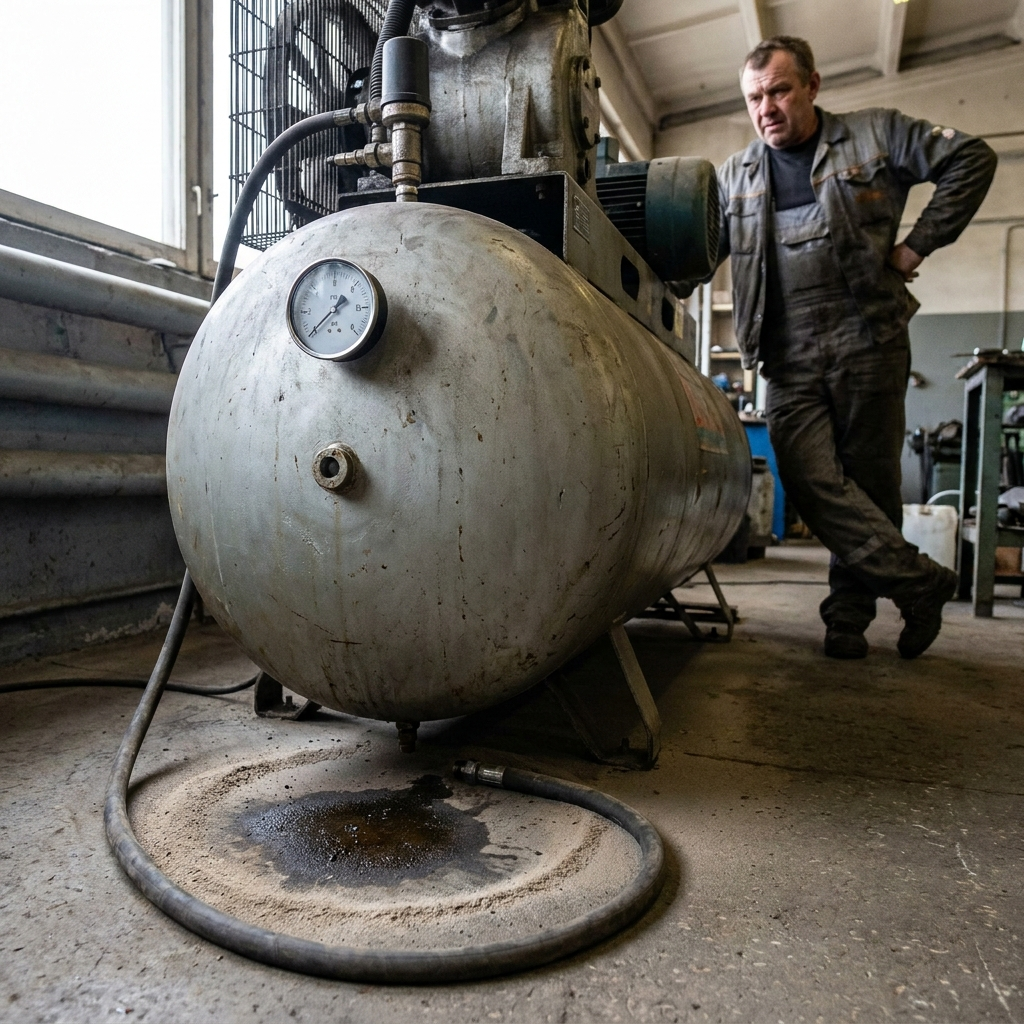
The motor runs, the pump spins, but the gauge just sits there or crawls up and stalls out. It's one of the most common problems we help people work through, and the good news is that when an air compressor won't build pressure, the cause is almost always one of a short list of usual suspects. You can find it yourself with a methodical check and a few basic tools.
Work through these in order, from easiest to hardest. Most of the time you'll find your answer in the first three.
Before You Start: Stay Safe
Anytime you're going to open a fitting or touch the pump, shut the compressor off, unplug it, and drain the tank to zero first. Compressed air holds a lot of energy, and hot pump parts can burn you. Let it cool, bleed it down, then dig in.
Start With the Easy Stuff
1. Air leaks
A compressor that builds pressure slowly, or builds and then loses it, is often just leaking faster than it can fill. Close the tank drain fully (a cracked-open drain is the number one silly cause). Then, with the tank pressurized and the unit off, brush soapy water on fittings, hoses, the drain, and connections. Bubbles show you the leak. Tighten or reseal what you find. It's a cheap fix and worth ruling out first. If you suspect leaks throughout your shop, our guide on finding and fixing air leaks goes deeper.
2. Dirty or clogged intake filter
The pump can't compress air it can't pull in. A filthy intake filter starves the pump and stops it from reaching full pressure. Pop the filter off and look. If it's caked, clean or replace it. Takes two minutes and sometimes that's the whole problem.
Then Check the Valves
3. Leaking check valve
The check valve holds tank air in and keeps it from flowing back into the pump. When it leaks, air escapes backward and out the unloader, so the pump fights a losing battle. The tell is a continuous hiss from the pressure switch or unloader after the unit shuts off, instead of one short burst. It's a cheap part and an easy swap once the tank is drained.
4. Stuck unloader valve
The unloader is supposed to bleed off the line briefly at shutdown, then close. If it sticks open, air keeps bleeding out continuously and the compressor can't build past a certain point. Listen for air that never stops hissing out near the pressure switch while the unit runs. A stuck or dirty unloader may clean up, or it may need replacing.
Then the Pump Itself
5. Bad reed valves or valve plate
Inside the pump head sit thin reed valves (also called flapper valves) that open and close to move air. Heat and time crack them, and warped or broken reeds let air slip back and forth instead of compressing. If your compressor builds a little pressure but stalls well below cut-out, and you've ruled out leaks and the check valve, worn reed valves are a prime suspect. This is a valve plate rebuild, a common and fixable job with the right kit.
6. Blown head gasket
The gasket that seals the pump head has to hold tight for the pump to compress air. A blown or leaking gasket lets pressure escape between the stages or out the head, and the compressor never gets there. Often you can hear or feel air puffing from the head seam. A gasket set is inexpensive, and replacing it usually goes hand in hand with checking the reeds since you're already in there.
7. Worn piston rings or cylinder
On a well-used compressor, worn rings or a scored cylinder let air blow past the piston so it can't build full pressure. This shows up on high-hour machines and often comes with oil consumption on lubricated units. At this point you're looking at a pump rebuild or replacement, and it's worth weighing that cost against a new unit.
Quick Diagnosis Table
| What You Notice | Likely Cause |
|---|---|
| Continuous hiss after shutoff | Leaking check valve |
| Continuous hiss while running | Stuck unloader valve |
| Builds slowly, or builds then drops | Air leak or open drain |
| Weak or slow build, dirty filter | Clogged intake filter |
| Builds partway then stalls | Bad reed valves or valve plate |
| Air puffing from pump head seam | Blown head gasket |
| High-hour unit, burns oil, weak | Worn rings or cylinder |
When to Fix vs Replace
Small parts like check valves, unloaders, filters, gaskets, and reed valves are cheap and usually worth fixing. When the fault is a worn-out pump on a high-hour machine, do the math. If rebuild parts approach the price of a new pump or a new unit, replacement often makes more sense. Either way, once you've traced the cause you can make that call with real information instead of a guess. For pump parts and rebuild kits, our pumps and pump parts collection is the place to start, and it's worth keeping a spare check valve on hand for the most common fix of all.
Frequently Asked Questions
Why does my air compressor run but not build pressure?
The motor and pump are working, but air is escaping somewhere or the pump can't seal to compress it. The usual causes, easiest first, are an open drain or air leak, a clogged intake filter, a leaking check valve, a stuck unloader, and then pump issues like bad reed valves, a blown gasket, or worn rings.
How do I know if it's the check valve or the pump?
Listen at shutoff. A continuous hiss from the unloader after the unit stops points to the check valve. If the check valve and leaks are ruled out and the compressor still stalls partway up, the pump's reed valves or gasket are the likely cause.
Can a dirty air filter stop a compressor from building pressure?
Yes. The pump can only compress the air it draws in, so a clogged intake filter starves it and limits pressure. Checking and cleaning the filter is one of the quickest things to rule out.
What are reed valves and why do they fail?
Reed valves are thin flapper valves in the pump head that open and close to move air through the compression cycle. Heat, age, and debris crack or warp them, and once they stop sealing, air slips back instead of compressing, so the compressor won't reach full pressure.
Is it worth repairing a compressor that won't build pressure?
Usually yes for cheap parts like valves, filters, and gaskets. For a worn pump on a high-hour machine, compare the rebuild cost to a new pump or unit. If they're close, replacement is often the better long-term move.
Take it one step at a time, start with the easy checks, and let your ears do some of the work. Most no-pressure problems come down to a leak or a cheap valve. When you're ready to fix it, our pump parts have you covered.


