


A customer called last week because his compressor "just quit," and he was sure the whole thing was junk. Twenty minutes later it turned out to be a five dollar check valve. That happens more than you would think. When you know the parts of an air compressor and what each one actually does, a dead machine stops being a mystery and starts being a list of things to check. So here is the shop-floor tour of what is bolted to your compressor and why it is there.
We will walk it in the order the air travels, from the motor that starts it all to the valve that drains the water out at the end.
The motor or engine
Everything begins with power. On most shop compressors that is an electric motor, single-phase on smaller units and three-phase on bigger ones. On a jobsite where there is no outlet, a gas engine does the same job. The motor spins the pump, either directly or through a belt and pulley. When a compressor will not start at all, the motor and its electrical parts are the first place to look, and that includes the capacitor on single-phase units and the motor starter or overload on larger ones. A motor that hums but will not turn is usually a capacitor, not a dead motor.
The pump, also called the air-end
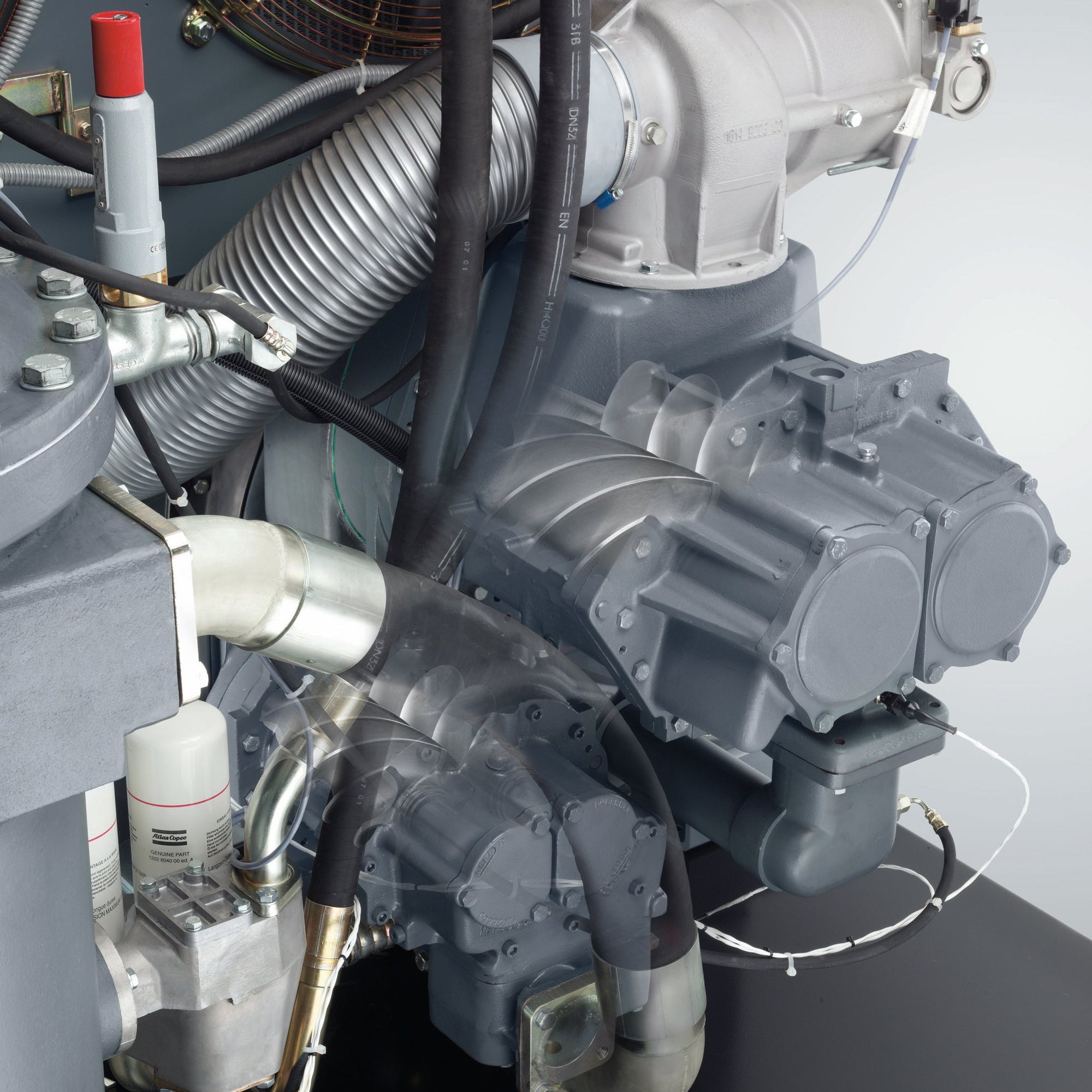
This is the heart of the machine, the part that actually makes air. On a piston compressor the pump is a set of cylinders, pistons, rings, and valves that squeeze air the same way an engine works in reverse. On a rotary screw it is called the air-end, a sealed pair of rotors that compress air continuously. Either way, this is the most expensive single component, and it is the one that outlasts everything else when the compressor gets its oil changes and clean intake air. Neglect those two things and the pump is also the part that fails first and costs the most to fix. If you are pricing a rebuild or a swap, start with the compressor pumps and match the model to your unit.
The intake filter
Before air gets compressed, it has to get pulled in, and it comes in through the intake filter. This is a simple paper or foam element that keeps dust, grit, and shop debris out of the pump. It is one of the cheapest parts of an air compressor and one of the most ignored. A clogged intake filter chokes the pump, drops your output, and lets fine grit slip past into the cylinders where it grinds away at the rings. Check it, and change it on a schedule.
The tank, or receiver
The tank is the big steel cylinder that stores compressed air so your tools get a steady supply instead of pulsing straight off the pump. It also lets the air cool and drop some moisture before it heads down the line. Tank size is why a small pump can still run a big tool for short bursts. The one thing every tank owner needs to know: water collects at the bottom, and if you never drain it, the tank rusts from the inside out. A rusted tank is a safety problem, not just a maintenance one.
The pressure switch
The pressure switch is the brain of a piston compressor. It watches tank pressure and tells the motor when to run and when to stop. Cut-in is the low pressure where it kicks the motor on, and cut-out is the high pressure where it shuts the motor off. When your compressor short-cycles, will not shut off, or will not start, the pressure switch is a prime suspect. It is a common wear part and a straightforward replacement. You can see the range of pressure switches and match the cut-in and cut-out to your machine.
The check valve
Remember the customer with the "dead" compressor? The check valve is a one-way gate between the pump and the tank. It lets compressed air into the tank and stops it from flowing back into the pump when the motor shuts off. When it fails, air leaks back, the pump cannot build pressure against a tank full of air, and the machine seems dead even though the motor runs fine. A bad check valve also makes the compressor struggle to restart under load. It is cheap, and it causes headaches far bigger than its price.
The unloader valve
Tied closely to the check valve is the unloader valve. When the compressor shuts off, the unloader bleeds the pressure sitting on top of the pump so the motor does not have to start against a load. You hear it as the little hiss right after the machine stops. If the unloader fails, the motor tries to start against full pressure, and on a piston unit that usually trips a breaker or stalls the motor. If your compressor trips the breaker every time it tries to restart, look here before you blame the motor.
The safety relief valve
This is the one part you never bypass. The safety relief valve is a spring-loaded valve set to pop open if tank pressure ever climbs past a safe limit, usually because a pressure switch stuck closed. It is the last line of defense against a tank that could otherwise burst. Test it now and then by pulling the ring, and if it is leaking or stuck, replace it immediately with one rated for your tank's pressure. Never plug it or crank it down to stop a leak.
The regulator and gauges
Tank pressure and the pressure your tool actually needs are two different numbers. The regulator lets you dial the delivery pressure down to what the tool wants, usually around 90 PSI, while the tank holds more in reserve. The gauges show you both numbers, tank pressure on one and regulated outlet pressure on the other. On a lot of shop setups the regulator lives in a filter-regulator-lubricator unit at the wall, so the air gets cleaned and set right before it hits the drop.
The drain valve
At the very bottom of the tank sits the drain valve, and it is the part that decides how long your tank lives. Every time you compress air, water condenses in the tank. The drain lets it out. A basic manual drain is a petcock you open by hand, while an automatic drain dumps the water on a timer or a float so you never have to remember. Skip draining and you get rust, water in your air lines, and eventually a tank you cannot trust. Two minutes of draining is the cheapest insurance on the whole machine.
Cooling parts
Compressing air makes heat, and a compressor has to shed it. On a piston unit that is the finned intercooler tube between stages and the cooling fan on the flywheel. On a rotary screw it is an oil cooler and often an aftercooler that drops the air temperature before it leaves the machine. Keep these fins clean. A compressor caked in dust runs hot, and heat is what kills pumps and cooks oil.
Putting it together
None of the parts of an air compressor work alone. Air comes in through the intake filter, gets squeezed by the pump, passes the check valve into the tank, and waits there while the safety valve stands guard and the drain sheds water. The pressure switch decides when to make more, the unloader makes restarts easy, and the regulator hands your tool exactly what it asks for. When something goes wrong, you now have a map. Start where the symptom points, check the cheap parts first, and you will fix most problems without replacing the machine. When you do need a component, the full air compressor parts catalog covers the wear items for nearly every unit out there.
Frequently Asked Questions
What is the most important part of an air compressor?
The pump, or air-end, is the heart of the machine and the most expensive to replace. It lasts longest when you give it clean intake air and change the oil on schedule, so the intake filter and oil are close behind in importance.
Why won't my air compressor build pressure?
The usual suspects are a failed check valve letting air leak back into the pump, worn pump valves or rings, or a tank leak. Start with the check valve, since it is cheap and a very common cause.
What does the unloader valve do?
It bleeds pressure off the top of the pump when the compressor shuts down, so the motor can start again without fighting a load. A failed unloader is why a compressor trips the breaker on restart.
How do I know if my pressure switch is bad?
Signs include short-cycling, failing to shut off at the cut-out pressure, or not starting at cut-in. It is a common wear part and a straightforward replacement once you match the cut-in and cut-out settings.
Can I run my compressor without the safety relief valve?
No. The safety relief valve is the last protection against an over-pressured tank. If it leaks or sticks, replace it with one rated for your tank pressure, and never plug it or tighten it down to stop a leak.


