


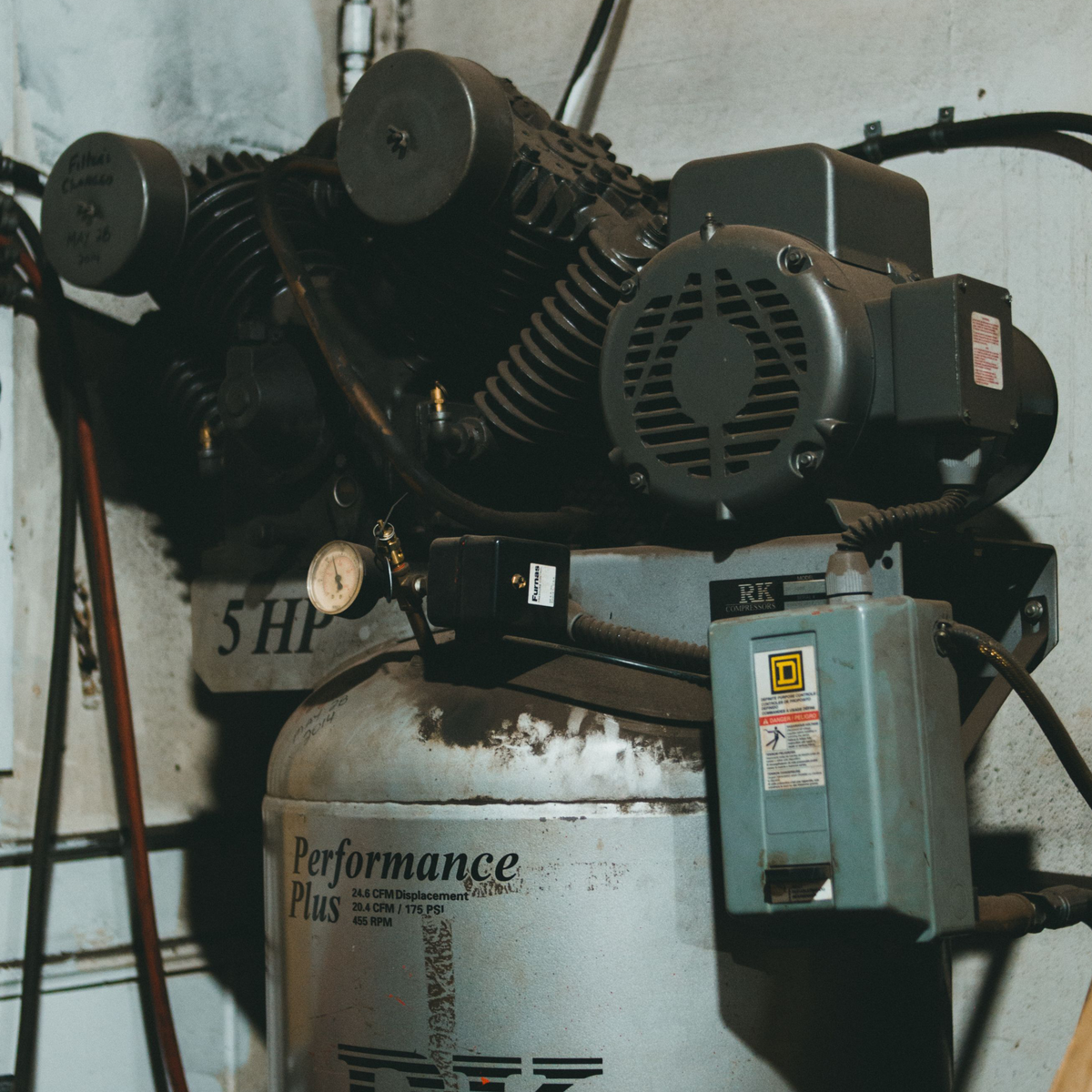
Ask a plant manager what happens if the compressor stops and you usually get one of two answers. Either a very specific number, because it has already happened to them, or a long pause. The pause is the expensive answer.
Most single-compressor plants have never actually priced the outage. They know a backup machine costs real money, so the conversation stops there, and the risk stays unpriced on the other side of the ledger. This is how to run the numbers properly, and it is worth saying up front that for plenty of shops the honest conclusion is that one compressor is fine. Air compressor redundancy is a calculation, not a rule.
Start With the Number You Are Actually Protecting
Before anything else, work out your cost per hour of no air. Not a feeling, a number.
- Idle labor. Everyone who cannot work, loaded rate, times the hours.
- Lost production margin, not revenue. If you can catch up on overtime, it is the overtime premium, not the whole order.
- Scrap in process. This is the one people forget and it can dwarf everything else. A heat treat load mid-cycle, a molding run, a batch that was being filled, anything curing.
- Restart cost. Purging, requalifying, reheating. In some plants getting going again is more expensive than the downtime itself.
- Customer consequences. Missed ship date, line-down charges from a customer, a contract penalty.
Now multiply by a realistic outage length, which is the part people get badly wrong. If your airend fails, you are not down for two hours. You are down for however long it takes to get a replacement machine or a rebuilt airend on site, which in normal conditions is days, and in a bad supply period can be weeks. Plan on the realistic number, not the optimistic one.
Cost per hour times realistic outage hours times probability per year is what you are comparing a backup machine against. For a two-bay shop that is a few thousand dollars and a bad week. For a plant running three shifts with product in process, it can exceed the price of a second compressor in a single event.
The Options, From Cheapest to Most Complete
| Approach | Cost | What it actually buys |
|---|---|---|
| Do nothing, accept the risk | Zero | Correct answer for a lot of small shops. Just make it a decision rather than an oversight. |
| Critical spares on the shelf | Low | Covers the common failures, not an airend. Biggest return per dollar. |
| Rental agreement arranged in advance | Low standing cost | Hours to a day of exposure instead of days, if the rental fleet has one. |
| Keep the old machine when you upgrade | Near zero | The most underrated option in this whole list. |
| Partial backup, smaller second unit | Moderate | Runs the critical loads only, not the whole plant. |
| True N+1, full capacity spare | High | Continuous operation through a failure, plus service flexibility. |
Critical spares: the cheapest thing on the list
Most compressor stoppages are not catastrophic. They are a failed solenoid, a pressure transducer, a motor starter contactor, a thermal valve, a belt, a blown separator. Those parts cost a fraction of a day of downtime and they sit on a shelf for years without expiring.
If you do nothing else after reading this, build a small critical spares kit for your specific machine. The faults it covers are the ones in rotary screw troubleshooting, and most of the contents live in a service kit you were going to buy eventually anyway.
Keep the old machine
When a plant upgrades, the old compressor usually gets traded in for a number that is well below what it is worth to you sitting in the corner as a standby. If you have the floor space and the electrical, leaving it piped in with an isolation valve is the cheapest meaningful redundancy that exists. It does not have to be efficient. It has to run on the day the new one does not.
Exercise it. A standby machine that has not turned over in eighteen months is a decoration. Run it monthly, under load, long enough to get up to temperature.
Rental, with a caveat
A rental contingency is cheap, and it genuinely works, with two honest caveats. First, availability is not guaranteed, and a regional weather event or a busy season can empty a fleet. Second, a portable unit needs somewhere to sit, a way to tie into your header, and power or fuel. Sorting that out in advance, including the fitting and the tie-in point, is the difference between a few hours and a few days.
Partial backup is the one most plants should consider
Full N+1 means buying a second machine the same size as your first, which is why most plants never do it. But very few plants genuinely need full capacity to keep the important part running.
Split your load. If 25 CFM of your 100 CFM feeds the things that must not stop (instrument air, process control, anything with product in process) and the other 75 feeds tools and blow-off that can wait a day, then a small second compressor plus a zone valve keeps you alive for a fraction of N+1 money. Zoning the distribution so the critical branch can be isolated is the enabling piece.
Two Machines Buy More Than Insurance
Worth noting, because it changes the economics: a second compressor is not purely a hedge.
- You can service either one without shutting down. That alone converts PM from a weekend job into a Tuesday job, and it means PM actually gets done on schedule.
- Two smaller machines often run more efficiently than one large one at part load, because the lead machine sits loaded while the lag machine only comes on when it is needed. See lead lag control for how to sequence them so they do not fight.
- You can match the machines to the shifts. Run the small one on nights and weekends instead of cycling a big one against a small load.
When you put those benefits against the hedge value, the second machine stops looking like pure insurance and starts looking like a normal capital decision. Browse air compressors when you get to sizing.
Sizing a Backup Without Overbuying
Three rules that keep this sensible:
- Do not duplicate your peak, duplicate your critical load. Measure what the plant actually needs to keep the important things running, which is usually far less than nameplate.
- Two at 60 percent beats one at 100 plus one at 100. If you are buying new anyway, two machines each covering roughly 60 percent of peak gives you full capacity normally and 60 percent capacity through a failure, for less than true N+1.
- Do not forget the treatment train. A redundant compressor feeding a single dryer with no bypass is not redundant. If the dryer is the failure, you are still down, or you are putting wet air into the plant. Dryer bypass with filtration, or a second small dryer on the critical branch, completes the job.
Also check the boring infrastructure: electrical capacity for a second starter, floor space, and ventilation for the additional heat rejection if both ever run together.
The Honest Answer for Small Shops
If you are a two or three bay shop and losing air means the techs do body work by hand for a day, do not buy a second compressor. Buy a spares kit, keep a number for a rental house in your phone, and put the money into maintenance that prevents the failure in the first place. Oil analysis, intake filters on schedule, and watching discharge temperature catches most of what would have shut you down. See oil analysis and the maintenance schedule.
Redundancy is for plants where the hourly cost is large or where product is in process when the air stops. Everywhere else, reliability is the better buy.
Frequently Asked Questions
Do I need a backup air compressor?
Work out your cost per hour of no air, multiply by a realistic outage of days rather than hours, and compare that to the cost of a second machine. If product is in process when air stops, or if your hourly cost is large, redundancy usually pays. For a small shop where losing air means slower work for a day, spares and a rental contact are the better spend.
What does N+1 mean for compressed air?
It means having one more compressor than you need to meet demand, so that any single machine can fail or be serviced without reducing capacity. True N+1 is expensive, which is why many plants use partial backup instead: a smaller second machine sized only for the critical loads, with the distribution zoned so that branch can be isolated.
Should I keep my old compressor when I upgrade?
Usually yes, if you have the space and the electrical. Trade-in value is typically well below what the machine is worth to you as a standby. It does not need to be efficient, only to start. Leave it piped in with an isolation valve and run it under load monthly, because a standby that has not turned in a year and a half is not a standby.
Does a backup compressor need its own dryer?
The treatment train needs to be covered somehow, or your redundancy is incomplete. If the dryer fails you are still down, or you are pushing wet air into the plant. Options are a dryer bypass with filtration for short-term operation, or a second smaller dryer dedicated to the critical branch.
Is renting a compressor a realistic backup plan?
It is cheap and it works, with caveats. Fleet availability is not guaranteed in a busy season or after a regional weather event, and a portable needs a location, a tie-in point and power or fuel. Arrange the connection details in advance rather than during the outage, which is what separates a few hours of downtime from a few days.
Where to Start
Write down your cost per hour of no air and your realistic time to get a machine. Two numbers, fifteen minutes. Most owners find the answer is obvious once those exist on paper, in one direction or the other. Getting air compressor redundancy right is not about buying a second machine, it is about knowing whether you should.


