


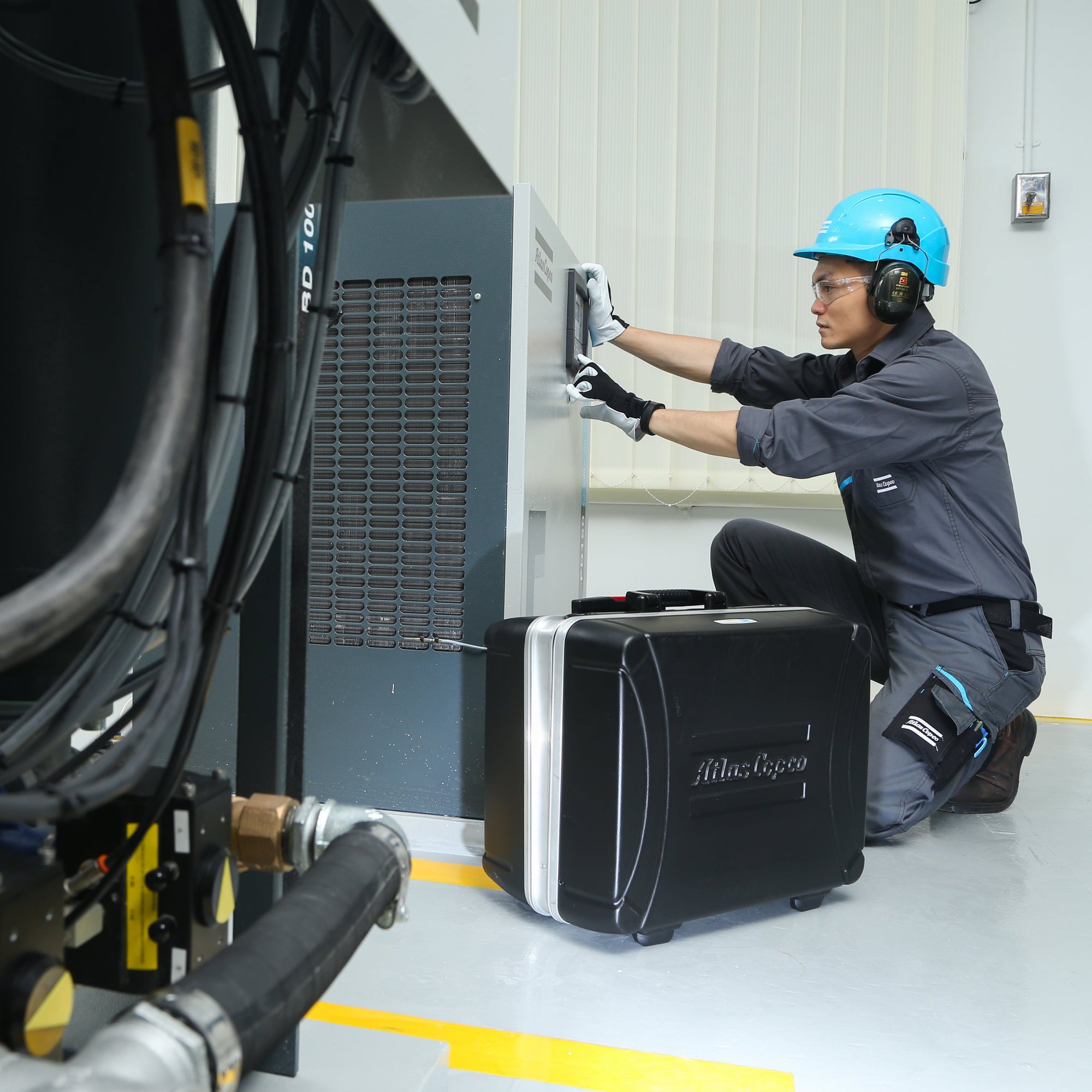
Most compressors don't die of old age. They die of neglect. The pump that seizes at 3,000 hours almost always ran low on oil, ate a plugged filter, or cooked itself because nobody blew the dust off the cooler. None of that is complicated to prevent. It just takes a little air compressor maintenance on a schedule you actually keep.
Here's the whole thing laid out plain: what to do daily, weekly, monthly, and once a year, plus the intervals that matter most for piston and rotary screw machines. Print it, tape it to the wall by the compressor, and you'll get years more out of the machine.

Why a schedule beats good intentions
Everybody means to keep up with maintenance. The reason it slips is that there's no trigger, so the little jobs pile up until something breaks. A written schedule fixes that by turning fuzzy good intentions into specific tasks tied to specific intervals. The payoff is real: a maintained compressor uses less energy, holds pressure better, and lasts far longer than one you run until it quits.
One note before the list. Compressors log hours, not calendar days, so if your machine runs hard, lean on the hour meter. If it runs a few hours a week, the calendar intervals below are the ones to watch. And always check your owner's manual, since the manufacturer's numbers win any time they differ from a general rule of thumb. The intervals here are a sensible starting point for a machine without a manual handy, not a replacement for the one that came with yours.
Daily air compressor maintenance
These take about two minutes and catch most problems early.
- Check the oil level and top off if needed. Low oil kills pumps faster than anything else.
- Drain the condensate from the tank, or confirm your automatic drain fired. Standing water rusts the tank and pushes moisture into your lines.
- Listen and look. Any new knock, squeal, or vibration, and any oil or air leak, gets noted now while it's cheap to fix.
Weekly air compressor maintenance
- Check the intake air filter and clean or replace it if it's dirty. A choked filter starves the pump and drives up your power bill.
- Test the safety relief valve by pulling the ring to confirm it's free and venting. It's the one part standing between you and a serious accident.
- Wipe the machine down and clear dust off the cooling fins and fan. A compressor buried in dust runs hot, and heat is what breaks things.
Monthly air compressor maintenance
- Inspect belts for wear and correct tension, and check that pulleys line up. A slipping belt robs you of output.
- Check hoses and fittings for cracks and leaks, and go after any leaks you find. Leaks are wasted money running around the clock.
- Clean the heat exchanger or aftercooler so it can actually shed heat.
- Tighten electrical connections and mounting bolts that vibration has worked loose.
Yearly and by the hours
This is where the schedule splits by machine type, because a piston compressor and a rotary screw are on very different clocks.
| Task | Reciprocating (piston) | Rotary screw |
|---|---|---|
| Oil change | Every 500 to 1,000 hours or 3 months | Every 4,000 to 8,000 hours or annually |
| Intake air filter | Inspect weekly, replace as needed | Every 2,000 hours or annually |
| Oil filter | With each oil change | With each oil change |
| Air oil separator | Not applicable | Every 4,000 to 8,000 hours |
| Full preventive service | Annually | Every 2,000 to 4,000 hours or annually |
A few of these deserve a closer look, and we've written full guides on each. Getting the right compressor oil and changing it on time is the single highest-value habit on this list. On rotary screw units, the air oil separator is a service item that quietly costs you energy when it clogs. And a working condensate drain is what keeps water out of everything downstream.
The piston vs rotary screw difference
The big takeaway from that table is how much more often a piston compressor needs its oil changed. Piston pumps run hotter and dirtier, so oil breaks down in hundreds of hours, not thousands. If you moved up from a piston unit to a rotary screw, don't assume the old short intervals still apply, and don't stretch a piston's oil to rotary screw intervals either. Match the schedule to the machine.
Whatever you run, buy the wear parts as a kit when you can. A matched maintenance kit gives you the right filters, separator, and gaskets in one box, so you're not hunting part numbers at 6 a.m. with the machine down.
A simple habit that saves the most money
If you do nothing else, do this: check oil and drain water every day, and change the oil and filters on schedule. Those two habits prevent the majority of catastrophic failures we see. Everything else on the list is important, but oil and moisture are what actually kill compressors. Stay on top of air compressor maintenance at that level and the machine will outlast the loan you took to buy it.
Keep a log, even a simple one
A maintenance log turns guesswork into facts. Write down the hour reading and the date every time you change oil, swap a filter, or drain a stubborn amount of water, and note anything that seemed off. It takes ten seconds and it pays off two ways. First, you stop wondering whether you're due, because the last service is written right there. Second, a log shows you trends. If oil consumption is creeping up, or the separator is clogging faster each cycle, the numbers on the sheet catch it before it becomes a breakdown. A cheap notebook zip-tied to the machine works fine. So does a note on your phone. The point is that it exists.
Watch the operating environment
Half of maintenance is the machine, and the other half is where it lives. A compressor in a hot, dusty, poorly ventilated room will wear parts faster no matter how faithful you are with oil changes. Heat is the enemy, because it breaks oil down and pushes the pump past its comfortable range, so give the machine room to breathe and keep intake air as cool and clean as you can. Dust is the other enemy, so if the shop is dirty, plan on cleaning coolers and changing intake filters more often than the intervals above suggest. In cold shops, watch the oil, since a cold-thick oil at startup is hard on a pump, and drain condensate carefully so a frozen drain doesn't leave you with a tank full of water and ice. Adjusting the schedule to the conditions is part of doing it right.
Signs you've fallen behind
Even if you don't have a log, the machine will tell you it needs attention. Longer run times to fill the tank, air that feels weaker at the tool, or the motor cycling more often than it used to all point to restricted airflow or worn parts. Oil showing up where it shouldn't, water in your lines, or a compressor that runs hotter or louder than you remember are all cues to stop and service it. Catching these early is the difference between a filter change and a rebuild.
Frequently Asked Questions
How often should I change the oil in my air compressor?
It depends on the type. Reciprocating piston compressors need an oil change every 500 to 1,000 hours or about every three months. Rotary screw compressors go much longer, typically 4,000 to 8,000 hours or once a year. Always check your manual for the specific interval.
What is the most important air compressor maintenance task?
Checking the oil level and draining the condensate daily. Low oil and standing water cause the majority of serious compressor failures, and both checks take under a minute.
How do I know when my air filter needs changing?
Inspect it weekly. If it's visibly dirty, discolored, or you notice the compressor working harder and putting out less air, replace it. A clogged intake filter starves the pump and raises your energy cost.
Can I do air compressor maintenance myself?
Most routine tasks, like checking oil, draining water, changing filters and oil, and testing the relief valve, are well within reach for any handy owner. Leave major electrical work and internal pump rebuilds to a technician, and always bleed off all pressure before opening anything.
What happens if I skip maintenance?
Skipped maintenance leads to overheating, oil breakdown, clogged filters, and eventually a seized pump or burned-out motor. It also quietly wastes energy through leaks and restricted airflow. Regular service is far cheaper than a rebuild or replacement.
The bottom line
Good air compressor maintenance isn't complicated. It's a short daily check, a few weekly and monthly jobs, and oil and filter changes tied to your machine's hours. Keep the schedule and you trade a couple of minutes a day for years of reliable air. Skip it and you'll pay for it in a repair bill that dwarfs every service you skipped.


