


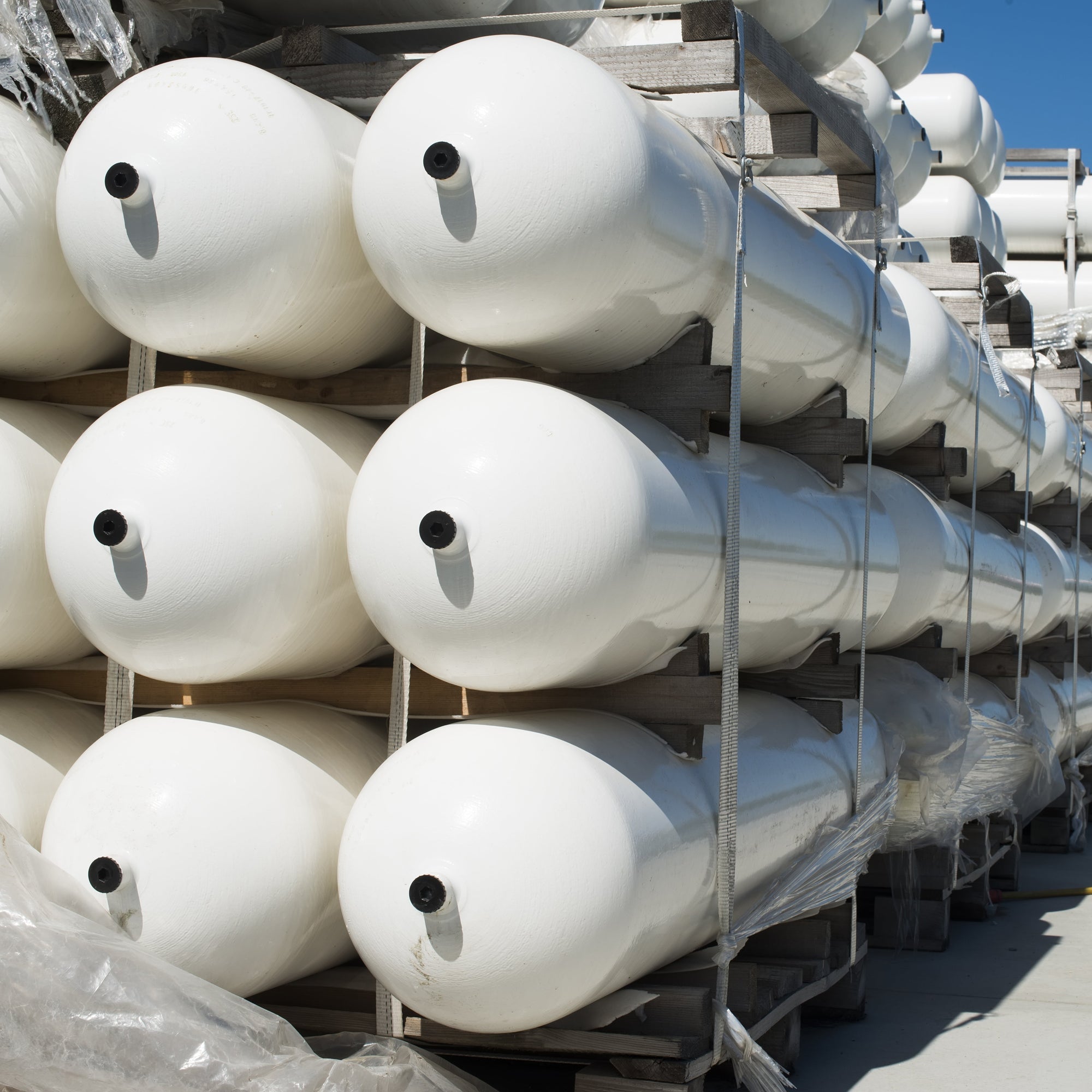
Here is a question we get a lot: my compressor is plenty big, so why does the pressure sag every time I hit the sandblaster or fire up a big impact? Usually the answer is not the pump. It is storage. An air receiver tank is the buffer between what your compressor can make and what your tools grab all at once, and a shop that is short on it will fight pressure swings no matter how much horsepower is bolted to the wall. Let's cover what the tank actually does, how big yours should be, and how to add one without overthinking it.
What an air receiver tank actually does
An air receiver tank is a pressure vessel that stores compressed air. That sounds obvious, but the tank does four real jobs, and most people only think about the first one.
It stores a reserve so short, heavy demands get pulled from the tank instead of straight off the pump. It smooths out pressure so your tools see a steady number instead of a saw-tooth. It cuts how often the compressor cycles on and off, which is the single biggest thing you can do to make a motor and pump last. And it gives moisture a place to cool and drop out before the air heads down your lines. Hot air straight off the pump is full of water. Let it sit in a tank and cool, and a lot of that water condenses out the bottom where a drain can dump it.
That last point is why the tank is the front line of your air quality, not just your storage. Water that drops out in the tank is water that never reaches your tools, your dryer, or your paint gun.
Do you even need to add one?
Every compressor already has a tank. The question is whether it is big enough for how you use air. You probably need more storage if any of these sound familiar. Your pressure drops noticeably when a big tool kicks on. Your compressor cycles on and off constantly during normal work, which is called short cycling and it beats up the motor. You added tools or a second bay since you bought the compressor. Or you run a demand that comes in big bursts, like sandblasting, plasma cutting, or a big impact gun.
If your air is steady and the compressor loafs along with long, relaxed cycles, you are fine. Adding a tank there just gives you a little extra reserve and a bit more moisture drop-out, which never hurts but is not urgent.
How to size an air receiver tank
Sizing is not fussy, but the right number depends on what kind of compressor you run. The rule of thumb everyone quotes is gallons of storage per CFM of compressor output, and it changes a lot between compressor types.
| Compressor type | Storage rule of thumb | Why |
|---|---|---|
| Reciprocating (piston) | 10 to 20 gallons per CFM | Piston units cycle hard and benefit from lots of buffer |
| Fixed-speed rotary screw | 1 to 2 gallons per CFM (minimum) | Screws run loaded, so they need less, but more storage cuts cycling |
| Variable speed drive (VSD) | 2 to 4 gallons per CFM | The drive ramps to match demand, so storage steadies the swings |
A broader shop rule that works for mixed use is three to five gallons of storage per CFM. So a 25 CFM piston setup wants a lot of tank, easily 120 to 240 gallons, while a 25 CFM rotary screw might do fine with an 80 gallon receiver plus whatever is already on the unit. When in doubt, go bigger. You cannot really have too much storage, and the extra tank pays you back in fewer motor starts and drier air.
Vertical or horizontal?
Both hold the same air. The choice is about your floor and your plumbing. Vertical tanks stand up on a small footprint, so they are the default when floor space is tight, which is most shops. Horizontal tanks are lower and easier to reach for draining and inspection, and they make a natural base to bolt a compressor on top of. If you are tucking a receiver into a corner, go vertical. If you want a mounting platform or the tank sits somewhere you will service often, horizontal earns its space.
Wet tank and dry tank: where to put storage
In shops that care about dry air, you will hear about wet receivers and dry receivers, and it is worth understanding even if you only run one tank. A wet receiver sits before the dryer and catches hot, moisture-laden air right off the pump. Its job is to let the air cool so water drops out, so size it for cooling and separation, figure two to three gallons per CFM. A dry receiver sits after the dryer and carries the main buffer for your tools, sized to the bigger four to six gallons per CFM guideline.
You do not have to run two tanks. But if you already have a dryer and you are adding storage, putting the new tank on the dry side gives your tools the cleanest, steadiest air. Pair the wet tank with a good water separator and, if you need truly dry air, an air dryer, and you have a system that stops water at every stage.
The safety stuff you cannot skip
An air receiver tank is a pressure vessel, and it deserves respect. In the U.S., any tank operating above 15 PSI in a commercial or industrial setting should be ASME certified, which means the tank was built and inspected to a code that keeps it from becoming a bomb. Every receiver needs a safety relief valve rated at or below the tank's maximum working pressure, and that valve is not optional. Most shop receivers are rated to 200 PSI working pressure, so make sure whatever pressure you run stays under the tank's stamped rating.
Drain it. This is the one maintenance job people skip and regret. Water pools in the bottom of every receiver, and a tank left undrained rusts from the inside until the steel thins and fails. A manual drain works if you are disciplined. A timer or zero-loss automatic drain works if you are human. Either way, get the water out.
Adding a receiver to an existing system
Plumbing in a second tank is straightforward. Tie it into your air line downstream of the compressor with pipe sized for your flow, put a shutoff and a drain on it, and make sure it has its own relief valve. You do not need to plumb it in a special loop; it just becomes extra volume on the line. The one thing to get right is the drain, since a remote tank is easy to forget about. If you are shopping sizes and configurations, our air compressor tanks collection runs from small portable receivers up through big vertical ASME units.
Bottom line: an air receiver tank is one of the cheapest upgrades you can make, and it fixes pressure swings and short cycling that no amount of extra horsepower will. Size it to your compressor type, keep it drained, and it will quietly make everything downstream work better. See the full range below.
What a bigger tank will and will not fix
Let's be clear about what storage buys you, because people expect a tank to solve problems it cannot. A receiver fixes pressure sag on short bursts, it cuts short cycling, and it drops out moisture. Those are real wins and they matter. What a tank will not do is raise your continuous output. If you run a sandblaster or a big sander that pulls more CFM than your pump makes, all day, a tank just delays the moment the pressure falls off. It gives you a bigger bucket, but if the faucet is smaller than the drain, the bucket still empties. For steady high demand, you need pump CFM. For bursty demand, storage is the cheap fix. Knowing which problem you have saves you from buying the wrong thing.
A quick way to tell: if pressure holds fine until a big tool kicks on and then recovers quickly after, you have a burst problem and a tank helps. If pressure slowly bleeds down the longer you run a tool and never recovers until you stop, you are out of CFM and no tank saves you.
Frequently Asked Questions
Can an air receiver tank be too big?
Practically, no. A larger tank gives you more reserve, fewer compressor cycles, and more moisture drop-out. The only downside is that it takes longer to fill on the first startup and it costs more up front. For most shops, bigger is the safer mistake.
Does adding a tank increase my CFM?
No. CFM is what the pump makes continuously, and a tank does not change that. What a tank does is store air so you can pull big short bursts above your pump's output without the pressure sagging. For steady high-demand tools, you still need enough CFM at the pump.
Do I need an ASME tank?
In a commercial or industrial shop, yes. Any tank running above 15 PSI should be ASME certified so it is built and inspected to code. It is about safety, and many insurers and inspectors require it.
Where should the receiver tank go in my system?
A single tank usually sits right after the compressor. If you run a dryer and want the cleanest air, put added storage on the dry side, after the dryer, so your tools draw from treated air. A wet tank before the dryer helps water cool and drop out.
How often should I drain my air receiver tank?
Manually, at least once a day of use, more in humid weather. Water collects fast and rusts the tank from the inside. An automatic timer drain or a zero-loss drain takes the job off your hands and is worth it on any tank you might forget.


