


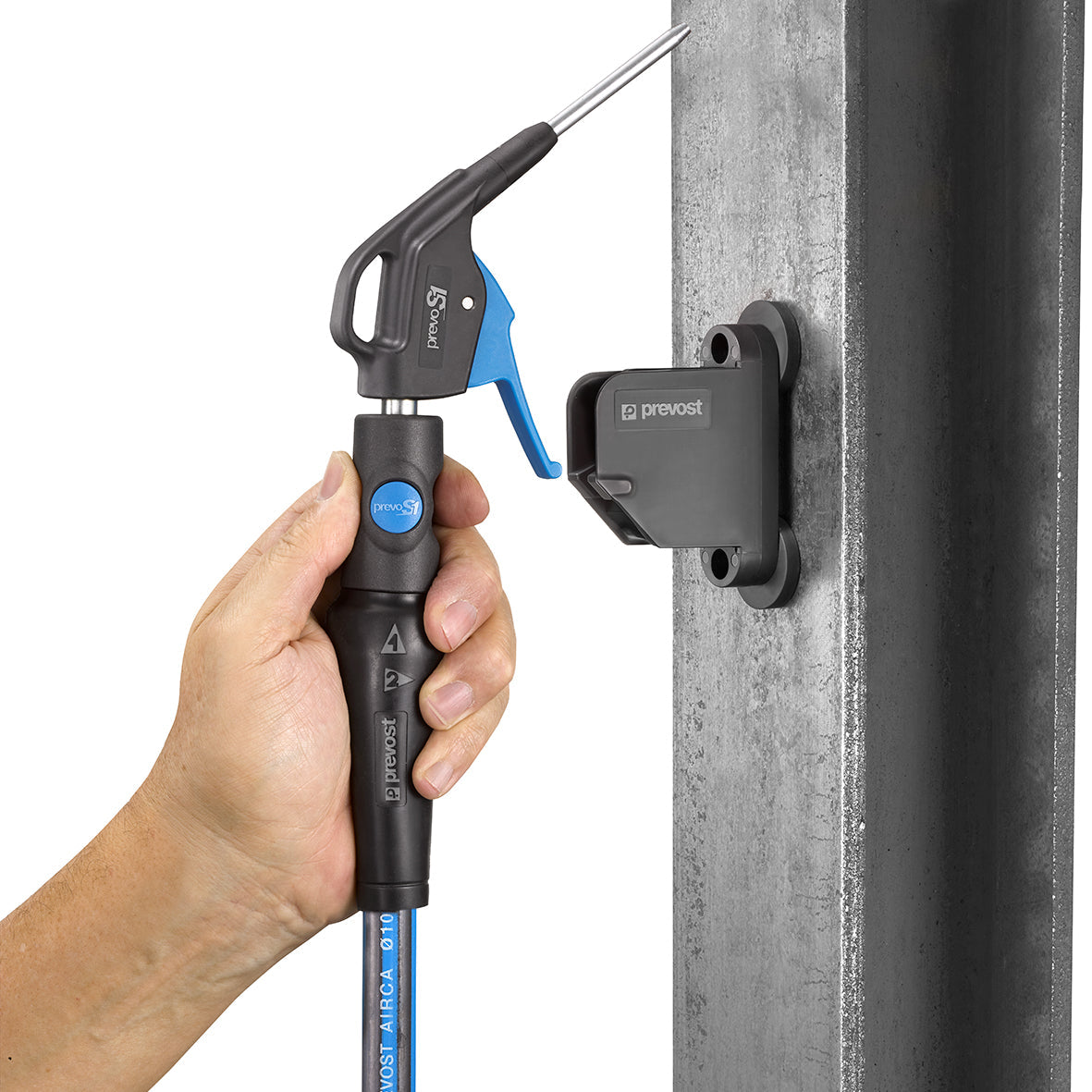
Air Blow Gun Buyer's Guide: Pick One That's Actually Safe
Everybody's got an air blow gun hanging by the workbench. It's the tool you grab fifty times a day to clear chips, dry a part, or blow the dust off a bench. Because it's cheap and simple, most people never think twice about it. That's a mistake, because the wrong blow gun is one of the few shop tools that can actually put you in the hospital, and a lot of the ones sold at the hardware store don't meet the rule that keeps you out of it.
Let's fix that. Here's what a blow gun really needs to do, the safety rule that governs it, and how to pick the right one for your work.
The OSHA rule you need to know first
OSHA standard 1910.242(b) says compressed air used for cleaning must be reduced to less than 30 PSI at dead-end, and only used with effective chip guarding and eye protection. Dead-end means the moment the tip gets blocked, like when it presses against your skin. The pressure trapped behind that tip has to stay under 30 PSI.
Why 30? Because at that pressure and above, air pressed against bare skin can force its way in and enter the bloodstream. That's an air embolism, and it's not a scare story. It can cause serious injury or death. This is the whole reason a proper air blow gun is built the way it is.
Now here's the part that trips people up. Your shop air runs at 90, 100, maybe 125 PSI. So how does a gun stay legal at 30 PSI dead-end while still blowing hard? The answer is in the nozzle. A compliant blow gun has relief ports or a nozzle design that bleeds pressure off the instant the tip is blocked, so the dead-end pressure drops below 30 PSI even though your line pressure is much higher. You still get a strong stream in normal use. You just can't build up dangerous pressure against skin. A plain open-tube gun with no relief does not do this, and that's the kind to avoid.
Nozzle types and what they're good for
Not every job wants the same tip. Here's how the common styles shake out.
| Nozzle type | Best for | Notes |
|---|---|---|
| Safety relief tip | General cleaning, everyday use | Bleeds pressure at dead-end, meets the OSHA rule |
| Rubber tip | Delicate parts, finished surfaces | Soft tip won't scratch, less bounce-back |
| Extension / long reach | Deep bores, machinery, hard spots | Get airflow where your hand won't fit |
| Venturi / high flow | Drying, moving chips fast | Pulls in surrounding air for more push, quieter |
| Needle tip | Blind holes, tight passages | Focused stream, good for precision work |
A shop that does a bit of everything usually ends up with two or three: a safety tip for daily work, a long extension for machinery, and maybe a rubber tip for finished parts.
Noise is a real factor
An open blow gun screams. Run one for a full shift and it adds to the hearing damage that shop noise is already doing. Engineered venturi nozzles cut the noise a lot by moving air more efficiently instead of just blasting a raw jet. If your crew leans on the blow gun all day, a quieter high-flow nozzle is worth the few extra dollars, and your ears will thank you.
Build quality and fittings
Blow guns are cheap enough that there's no reason to buy junk. Look for a metal body over thin plastic if the gun gets daily use, a comfortable trigger that doesn't cramp your hand, and a smooth valve that doesn't stick. The inlet is almost always 1/4 inch NPT, which drops straight onto a standard air hose coupler.
Speaking of couplers, standardize them. If half your shop is one coupler style and half is another, somebody's always hunting for an adapter. Pick one profile and stick with it across your air accessories so every tool clicks onto every hose.
How much air does a blow gun use?
More than you'd guess. A typical blow gun run wide open can pull 15 to 30 CFM depending on the nozzle, which is a real draw. It's intermittent, so a small compressor handles quick bursts fine. But if you've got several people blowing off parts at once, or someone drying a whole assembly for minutes at a time, that adds up and can pull your pressure down. If air keeps sagging when the guns are going, the fix is usually more storage or a bigger compressor, not a smaller gun. Our air tools section lists the CFM draw so you can add up your real demand.
Metal vs plastic, and where each belongs
The body material sounds like a small thing until a gun hits the concrete for the tenth time. A plastic-body gun is light and cheap, and it's fine for a home garage or a spot that sees light use. In a production shop where the gun gets dropped, stepped on, and left in a puddle of coolant, a metal body with a metal trigger lasts a lot longer and doesn't crack when it lands wrong. Spend the extra couple of dollars where the tool takes abuse, and save the plastic ones for the light-duty benches.
One more thing worth checking is the trigger feel. A stiff or sticky trigger you squeeze hundreds of times a shift wears out your hand. A smooth progressive trigger lets you feather the airflow, which is handy when you're clearing a delicate part instead of blasting a casting. It's a small comfort that adds up over a full day.
Simple safety habits that matter
The gun is only half of it. The other half is how you use it.
- Wear eye protection, every time. Chips and grit come back at your face faster than you can blink.
- Never point it at yourself or anyone else, and never clean yourself off with it. That's exactly the dead-end skin contact the rule is written to prevent.
- Use chip guarding where required, so debris doesn't fly back at you or a coworker.
- Keep the tip clear of your body and check that the relief ports aren't plugged with grime.
Bottom line
A good air blow gun is a few dollars of insurance you use every single day. Buy one with a real safety relief nozzle so it stays under 30 PSI at dead-end, add a long tip or a rubber tip if your work calls for it, and standardize the coupler so it fits your hoses. Skip the bare open-tube gun no matter how cheap it is. Browse our blow guns to find one built to the rule.
Frequently Asked Questions
Are all air blow guns OSHA compliant?
No. Plenty of cheap open-tube guns have no relief design and can hold full line pressure against skin, which breaks the rule. Look for a gun with a safety relief nozzle that keeps dead-end pressure under 30 PSI.
How does a blow gun stay under 30 PSI if my line is 100 PSI?
The nozzle does it. Relief ports or a special tip bleed off pressure the moment the tip is blocked, so the dead-end pressure drops below 30 PSI even though your supply is much higher. You still get a strong stream in normal use.
What size fitting does a blow gun use?
Almost always 1/4 inch NPT at the inlet, which matches a standard air hose coupler. Standardize on one coupler style across your shop so every gun and tool fits every hose.
Why is my blow gun so loud?
A raw open jet is just noisy. A venturi or engineered high-flow nozzle moves air more efficiently and runs quieter while still hitting hard. If you use a blow gun all day, a quieter nozzle is worth it for your hearing.
How much air does a blow gun need?
Wide open, a blow gun can use 15 to 30 CFM depending on the nozzle. It's intermittent, so short bursts are easy on a small compressor. Continuous use or several guns at once can pull your pressure down and may call for more storage or a bigger unit.


