


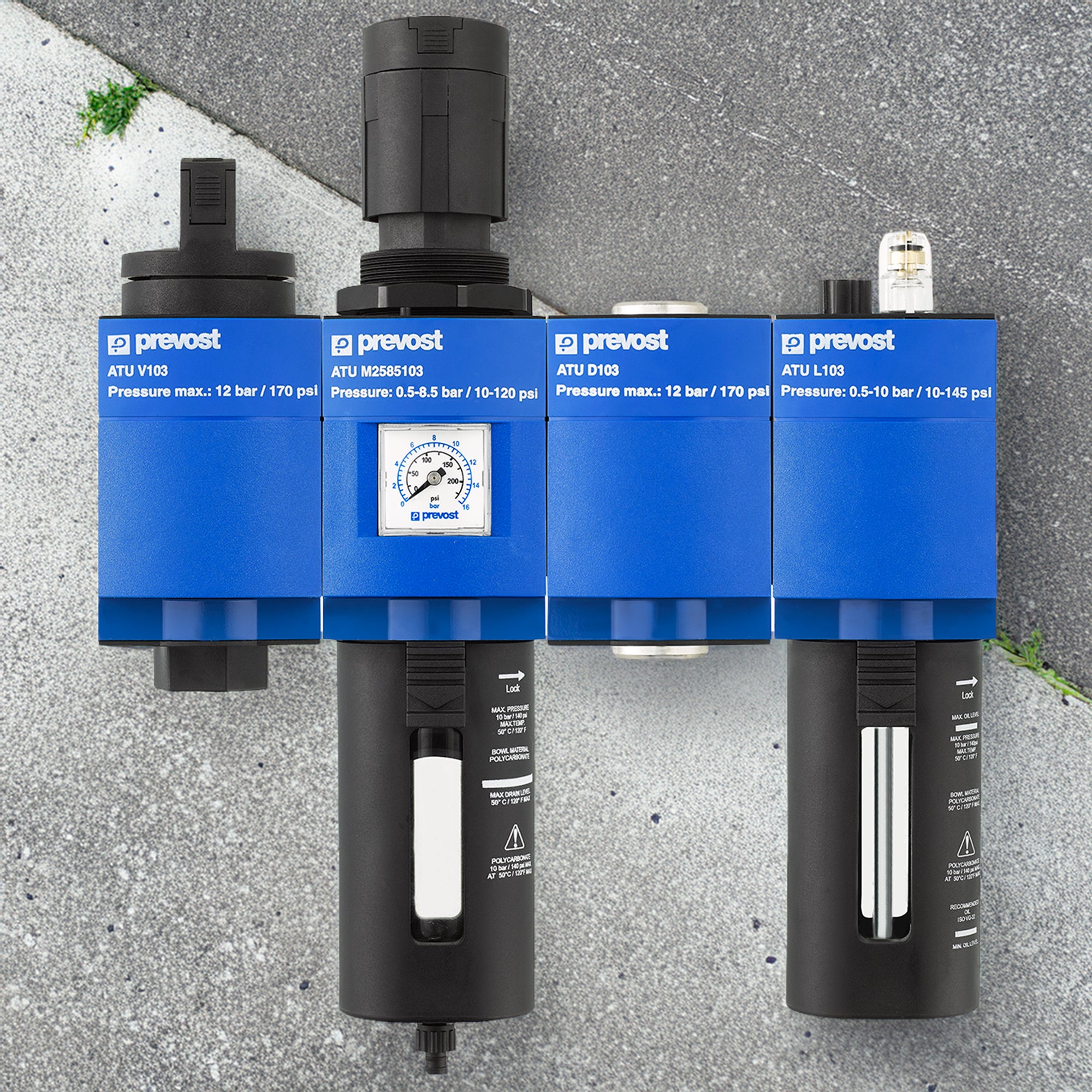
A customer called last week frustrated that his brand new air ratchet felt gutless and kept dying. His compressor was plenty big, his hose was fine, and the tool was good. The problem was sitting between them, or rather it was missing. He had no air prep at the tool at all. He was feeding a precision tool raw compressor air: wet, dirty, and running at whatever pressure the tank happened to be. That is a recipe for slow tools and short tool life, and it is exactly what a filter regulator lubricator is built to fix.
People shorten it to FRL, and you have seen these hanging on the wall near the drops in any well run shop. Three small bodies bolted together in a row. It looks simple, and it is, but getting the pieces in the right order and dialed in correctly is what separates air that helps your tools from air that slowly wrecks them.
What a filter regulator lubricator actually does
Compressor air comes off the tank in rough shape for a delicate tool. It carries water that condensed as the air cooled, plus rust, pipe scale, and a little oil mist. It sits at full tank pressure, which is usually higher than your tool wants. And it has no lubrication, so an air tool with moving parts runs dry. A filter regulator lubricator deals with all three problems in one compact unit, right at the point of use. That last part matters. You can treat air at the compressor all you want, but the last few feet of pipe pick up more moisture, so a final cleanup at the tool is where the FRL earns its spot.
Each stage has one job:
- Filter. Strains out solid particles like dust, rust, and scale, and knocks liquid water out of the stream so it drains off instead of blowing down to your tool.
- Regulator. Drops the pressure to a steady set point you choose, so your tool sees the same pressure every time instead of whatever the tank is doing.
- Lubricator. Meters a fine, controlled mist of oil into the air to keep the moving parts inside air tools slick and protected.
Order matters: filter, then regulator, then lubricator
The name tells you the order, and it is not random. Air flows filter first, regulator second, lubricator last, and here is why each spot is chosen.
The filter goes first because you want to strip water and grit out before the air touches anything else. No sense feeding dirt into your regulator. The regulator sits in the middle so it can set pressure on air that is already clean. The lubricator goes dead last, closest to the tool, because once you have added oil mist you do not want it getting caught in the filter or gumming up the regulator. Oil in, then straight out to the tool. Put the lubricator anywhere but last and you are just oiling your own air prep instead of your tool.
The one time you skip the lubricator
Not every tool wants oil in its air, and this is the mistake that ruins paint jobs. If you are spraying paint, running a plasma cutter, or using any tool or process that needs clean, oil free air, a lubricator upstream will blow a fine oil mist onto your work and contaminate it. For those drops you want a filter and regulator only, and often an extra coalescing filter to strip oil out rather than add it. Keep your oiled drops and your clean air drops separate. Blasting and painting on the clean side, impact tools and air motors on the oiled side.
Picking the right FRL for your shop
A few numbers decide which unit fits. Get these right and the rest is easy.
| Spec | What to look for |
|---|---|
| Port size | Match your line and tool feed, commonly 1/4, 3/8, or 1/2 inch NPT. Too small a port chokes airflow to thirsty tools. |
| Flow rating (CFM) | The unit has to pass at least as much air as your tool pulls. An undersized FRL causes pressure drop under load. |
| Filter micron rating | General purpose units run around 5 to 40 micron for particles and water. For finer cleanup, add a coalescing filter rated near 0.01 micron. |
| Regulator range | Most shop units adjust from 0 up to around 125 PSI, which covers nearly every air tool. |
| Bowl type | Metal bowls for durability and higher pressure, clear polycarbonate bowls so you can see water building up and drain it. |
| Drain | Manual is fine if you remember it. Auto drains dump collected water on their own so the filter does not fill and pass water through. |
Size the FRL to the tool it feeds, not to the pipe it hangs on. A big impact wrench pulling serious CFM needs a full size FRL with matching ports, while a blow gun drop can run a small one. If in doubt, go one size up on the ports so you are not strangling airflow. You can shop the pieces in our air filters and air treatment section, and match them to the drop.
Setting it up right
Mount the FRL vertically with the bowls hanging down, so gravity helps the water and oil collect where they should. Put it as close to the tool as is practical, since that final stretch of hose is where the last of the moisture shows up. Set the regulator to the tool's rated pressure, which for a lot of air tools is 90 PSI, and no higher, because extra pressure just wears the tool faster and eats energy. Then dial the lubricator to drip slowly, roughly one or two drops per minute of tool use is a common starting point, and check that the tool exhaust shows a light film of oil, not a puddle. Too much oil is as bad as too little.
Keep an eye on the bowls. When the filter bowl collects water, drain it. When the lubricator runs low, top it with the right air tool oil, not motor oil. A quick glance during the day is all it takes. If your air tools suddenly feel weak, the filter bowl full of water or a plugged element is the first thing to check.
One habit saves a lot of headaches: replace the filter element on a schedule instead of waiting for it to plug. A clogged element causes pressure drop, so your tool loses power even though the regulator is set right, and folks often blame the tool or the compressor when the real culprit is a five dollar element choked with dirt. Check it a couple of times a year in a clean shop, more often if your air is dirty or you run a lot of hours. Same with the lubricator oil level. A tool run dry because the oiler ran empty wears out fast, and that is a far more expensive fix than a bottle of air tool oil.
How the FRL fits your whole air system
Think of air treatment in layers. Big picture drying and filtration happens back at the compressor, where an air dryer pulls out the bulk of the moisture for the entire shop. The FRL is the last line of defense at each individual drop, cleaning up what is left and setting the pressure for that specific tool. One does not replace the other. The dryer protects your whole system and your pipe from rust, and the FRL protects the tool in your hand. Run both and your tools last longer, hit their rated power, and stop dying young.
Frequently Asked Questions
What does FRL stand for?
Filter, regulator, lubricator. It is a point of use air prep unit that cleans the air, sets it to a steady pressure, and adds a controlled oil mist for air tools, all in one assembly mounted near the tool.
What is the correct order for a filter regulator lubricator?
Air flows filter first, then regulator, then lubricator. The filter cleans the air before anything else touches it, the regulator sets pressure on the now clean air, and the lubricator adds oil last so it goes straight to the tool instead of getting caught in the filter or regulator.
Do I always need the lubricator?
No. Tools with moving parts like impact wrenches and air motors want the oil mist. But paint spraying, plasma cutting, and anything needing clean oil free air should skip the lubricator, since oil mist will contaminate the work. Keep separate oiled and oil free drops for those jobs.
Where should I mount the FRL?
As close to the tool as practical, mounted vertically with the bowls pointing down so water and oil collect properly. The last few feet of hose pick up moisture, so treating the air right at the tool is where the FRL does the most good.
What pressure should I set on the regulator?
Set it to the tool's rated pressure, which is 90 PSI for a lot of air tools, and no higher. Extra pressure does not make the tool work better, it just wears it out faster and wastes energy. Check the tool's specs and dial the regulator to match.
Wrap up
A filter regulator lubricator is a small unit that does a big job: clean, correctly pressurized, properly lubricated air right where your tool needs it. Keep the order filter, regulator, lubricator, skip the oiler on your clean air drops, size the ports to the tool, and set the pressure to what the tool actually wants. Do that and your tools run stronger and last a whole lot longer.


