


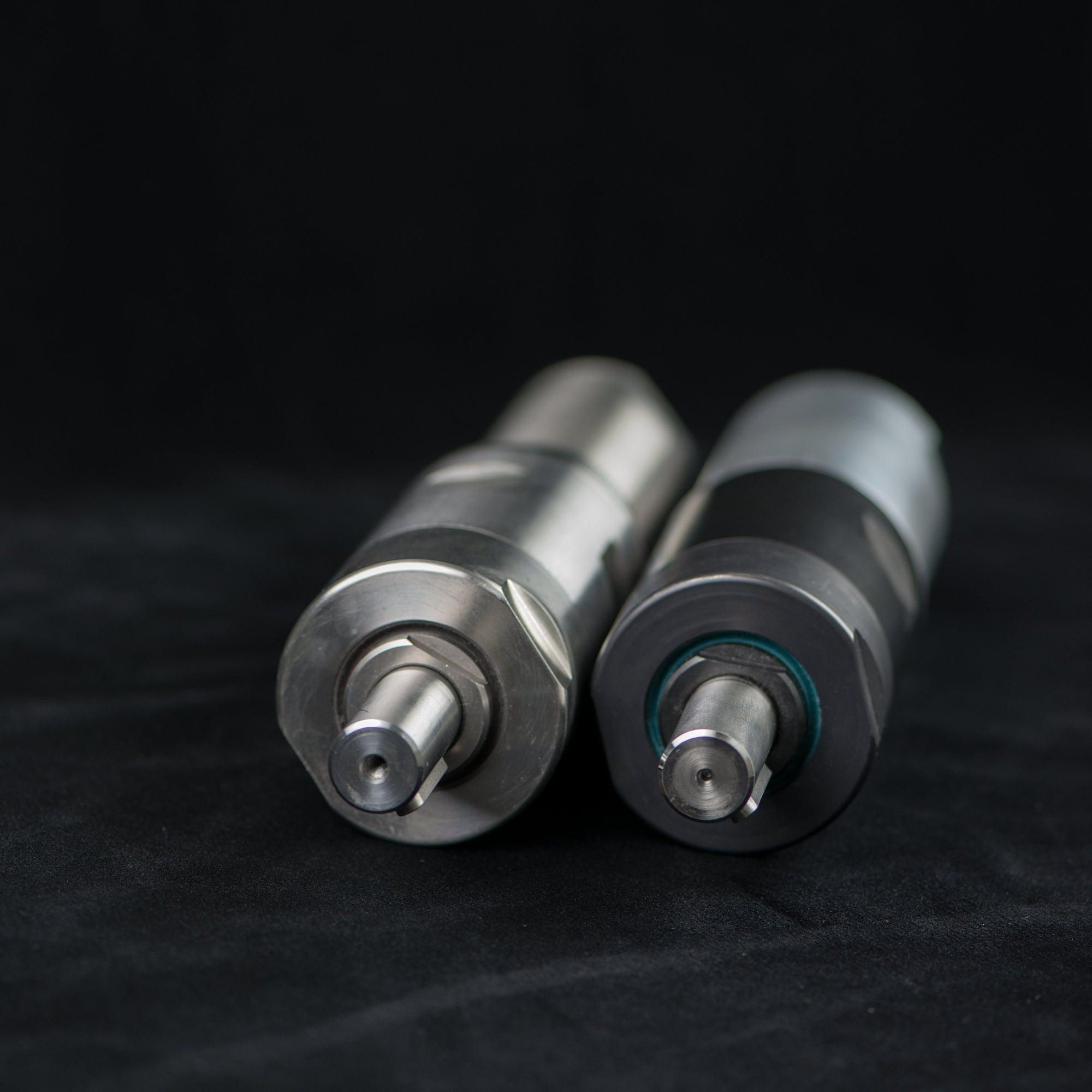
Electric motors hate three things: overloads, explosive atmospheres, and getting hosed down. An air motor shrugs at all three. That's why you'll find them spinning mixers in paint plants, driving winches on offshore rigs, and running conveyor rollers in washdown food lines where an electric drive would need a small fortune in enclosures. If you've never specced one before, here's how they work, where each type shines, and how to size one without guessing.
What an Air Motor Actually Is
An air motor converts compressed air into rotary motion. Feed it air, it spins; choke the air, it slows; block the shaft, it just stops and waits. No windings to burn, no sparks, no heat buildup. That last part is the big one: an air motor can run anywhere on its torque curve, from free speed all the way down to a dead stall, without damage. Stall an electric motor under load and you're shopping for a new motor. Stall an air motor and you're just holding torque on the shaft until the load moves.
They're also light for what they do. A vane motor delivers several times the power of an electric motor of the same size and weight, which matters when the motor hangs on the end of a tool, a hoist, or a tensioning arm.
The Three Designs You'll Choose Between
| Type | Starting torque | Speed range | Sweet spot |
|---|---|---|---|
| Vane | Moderate, builds as it spins | Medium to high RPM | General duty: mixers, conveyors, hoists, pumps, tools |
| Piston | Very high, right from standstill | Low RPM, tightly controllable | Heavy loads that must start under load: winches, turntables |
| Turbine | Low | Very high RPM | High-speed spindles, grinders, dental and lab drives |
Vane motors: the default answer
A vane motor uses a slotted rotor riding off-center in a cylindrical chamber. Air pushes on the vanes, the rotor spins, done. It's compact, simple, and covers low to medium power jobs, which is most jobs. One honest caveat: a vane motor makes more of its power once it's turning, so its starting torque is variable and depends on where the vanes happen to sit at rest. Spec sheets list a minimum starting torque; treat that as the guaranteed number, not the typical one. Browse the range in our vane air motor collection and you'll see everything from fractional horsepower up to serious industrial drives.
Piston motors: grunt from a dead stop
A radial piston motor puts its cylinders around a crankshaft, and that geometry gives it the highest starting torque of any air motor design. It breaks heavy loads into motion immediately and holds precise control at crawl speeds where a vane motor would stutter. The trade is size, cost, and an appetite for oil lubrication. If your load has to start under full weight, like a winch or a loaded turntable, start your search in our piston air motor collection.
Turbine motors: pure speed
Turbine motors skip the sliding contact entirely and spin a wheel with a jet of air. Very high RPM, very little torque. You meet them in grinding spindles and lab equipment, not on winches.
The Trick That Makes Air Motors Worth It: Control
Here's the part that surprises people coming from electric drives. You control an air motor with air, and only air. Throttle the inlet and the speed drops. Regulate the pressure and the torque drops. Pipe the supply through a cheap regulator and you have a variable speed, variable torque drive with no electronics, no VFD, and no programming. Reverse the air connections on a reversible model and it runs the other way.
And because stalling is harmless, you can use the motor itself as a tensioner or clamp: run it against the load until it stalls, and it will sit there applying steady torque all day. Stall torque runs roughly double the torque at rated working speed, which is worth knowing when you size couplings and mounts, because everything downstream of the shaft sees that peak.
Lubricated or Lube-Free?
Traditional vane motors want a few drops of oil in the air supply, usually from an inline lubricator. That oil eventually exits with the exhaust, which is fine in a fab shop and completely unacceptable in food, pharma, or cleanroom work. For those jobs, lube-free air motors use vane materials that run dry. You give up a little service life at maximum load in exchange for clean exhaust and one less maintenance item. Stainless housings are available for washdown duty on top of that.
How to Size an Air Motor
Sizing comes down to four questions:
- What torque does the load need, and at what RPM? Pick a motor that makes the required torque at roughly the middle of its speed range, not at the ragged edge. An air motor's power peaks near half of free speed, so a motor working around its midpoint runs efficient and lasts.
- Does it start under load? If yes, check the minimum starting torque against your breakaway requirement, and lean toward piston designs for heavy breakaway.
- How much air do you have? Air motors are rated at a supply pressure, commonly 90 PSI at the inlet. Consumption scales with size and speed, and a motor that's starved makes a fraction of its rated torque. Check the CFM figure on the spec sheet against what your compressor actually delivers, not its peak number.
- What's the environment? Explosive atmosphere, washdown, or food contact pushes you toward lube-free and stainless options; plain factory air lets you buy the standard version and save money.
One more habit worth stealing from the pros: if the duty cycle is rough, size the motor to do the job at 60 to 70 percent of your available line pressure. That leaves you headroom to turn the regulator up as vanes wear, instead of replacing the motor the first time it slows down.
Feeding It: The Air Supply Side
Every air motor problem we troubleshoot ends up in the same three places. Undersized supply lines that starve the motor at speed. Missing filtration that lets rust and water eat the vanes. And missing lubrication on motors that need it. The fix list is short: full-bore fittings and hose, a filter ahead of the motor, and a lubricator if the motor isn't lube-free. Do those three things and these motors run for years with nothing but occasional vane inspections.
Frequently Asked Questions
Can you really stall an air motor without damaging it?
Yes. With no windings to overheat, an air motor can sit at stall indefinitely, holding torque on the load. It will restart on its own the moment the load lets go. This is a designed-in feature, not an abuse case.
How do you control the speed of an air motor?
Throttle the air flow for speed and regulate the pressure for torque. A simple needle valve and regulator give you full control from free speed down to stall, with no electronics involved.
What pressure do air motors run on?
Most industrial air motors are rated at about 90 PSI inlet pressure, and torque falls off quickly below that. Measure pressure at the motor inlet while it's running; a long skinny hose can easily drop 15 or 20 PSI on the way there.
Vane or piston air motor: how do I decide fast?
Starting load decides it. If the motor must break a heavy load loose from standstill or crawl with precision, go piston. For everything else, a vane motor is smaller, cheaper, and simpler.
Do air motors need oiled air?
Standard vane motors do, usually via an inline lubricator. Lube-free models run on dry, filtered air and keep the exhaust clean, which is required in food, pharma, and cleanroom settings.
An air motor is one of those components that solves a whole category of headaches at once: overload-proof, spark-free, washdown-tolerant, and controllable with a ten dollar regulator. If a job keeps burning electric motors or the environment makes electric drives painful, it's time to spec one. Start with our full air motor collection and match the torque curve to your load.


