


The call usually starts the same way. Somebody's 50 HP rotary screw has 42,000 hours on it, the airend is howling, and a service company just quoted them a number that made their eyes water. They want to know if they're getting hosed.
Usually they aren't. But whether that money is well spent depends on things nobody mentions in the quote, and a rotary screw airend rebuild is one of those repairs where the right answer swings hard depending on the rest of the machine.
What actually wears out in there
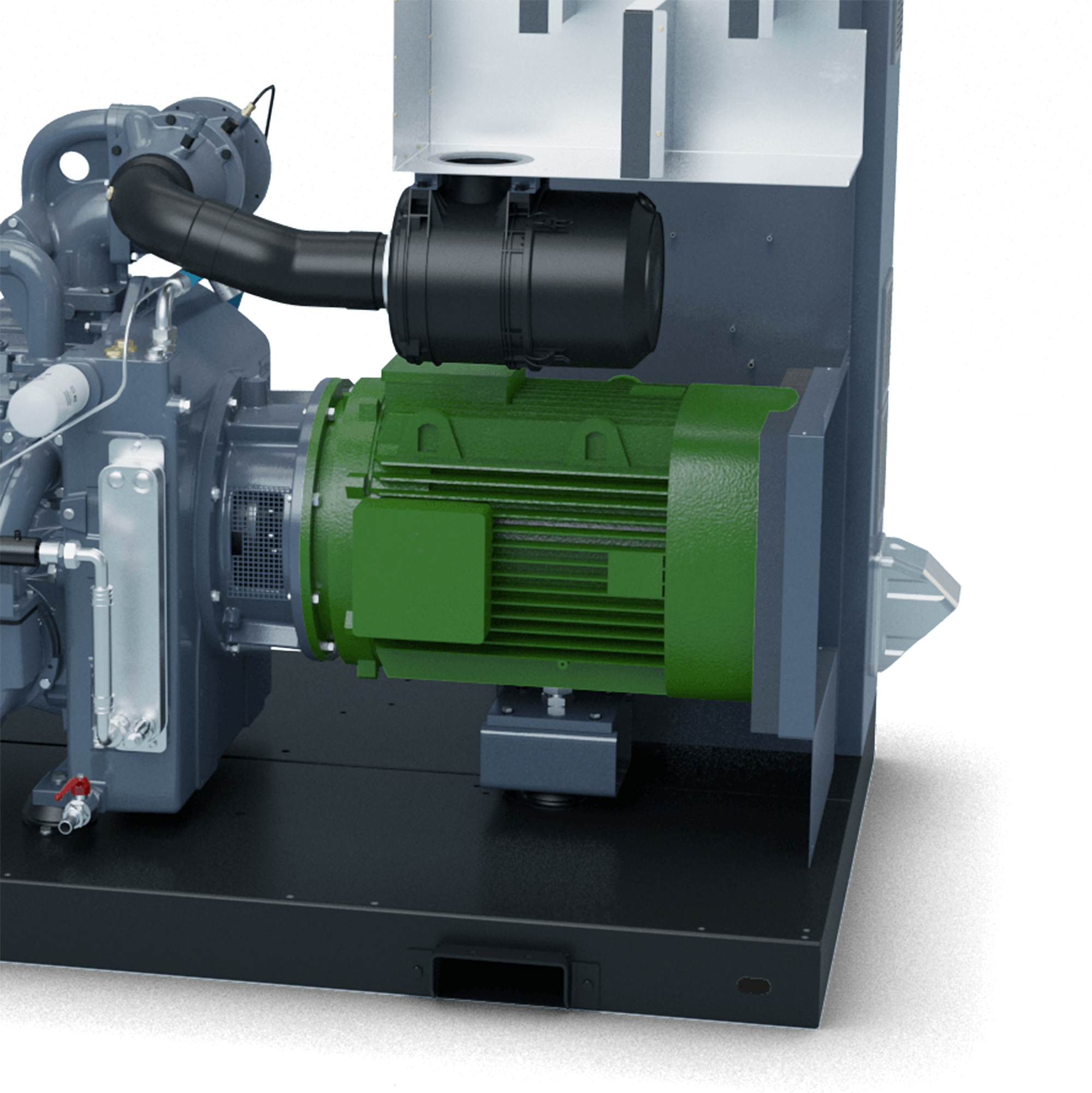
The airend is the compression module: two mating rotors turning in a housing, riding on bearings, with shaft seals keeping the oil where it belongs. The rotors themselves barely wear in normal service because they never touch each other or the housing. They ride on a film of oil.
The bearings are what die. Oil lubricated screw airend bearings run somewhere in the 20,000 to 40,000 hour range, and most manufacturers plan a major overhaul around 35,000 to 40,000 hours. When those bearings lose their clearance, the rotors start moving where they shouldn't. That's when you get contact, and contact is what turns a bearing job into a scrap airend.
This is the whole reason to pay attention to the noise. A bearing that's getting loose gives you warning, usually months of it. Catch it there and you're replacing bearings and seals. Ignore it until the rotors kiss the housing and you're buying a new airend.
What the numbers actually look like
| Item | Typical range |
|---|---|
| Bearing service life before overhaul | 20,000 to 40,000 hours |
| Rebuild cost vs new airend | Roughly 50 percent less |
| Typical rebuild or replacement spend | $2,000 to $8,000 depending on frame size |
| Life gained from a proper rebuild | 30,000 to 50,000 hours |
| Shop turnaround | 5 to 14 working days |
Read the last row twice. That downtime is the part people forget to price. If your production stops when that compressor stops, two weeks is not a repair schedule, it's a crisis. Which is why the real question is often not rebuild versus replace, it's what you do about coverage while the airend is on a bench three states away.
The break-even, and it is not subtle
The rule most of the industry works from: replacement starts making sense when repair cost passes 50 to 60 percent of what a new unit costs. Under that, rebuild. Over it, you're paying most of new-machine money for a used machine.
Applied to an airend specifically, run through this:
Rebuild when the rest of the machine is sound
Motor is good, cooler is clean and not leaking, controller works, cabinet isn't rotted, oil analysis has been reasonable. You're buying 30,000 to 50,000 hours of runtime for about half of a new airend. That's a good trade almost every time.
Replace the airend when the core is damaged
If the rotors are scored or the housing bore is damaged, a rebuild stops being a bearing job. Machining rotors and housings pushes cost toward new-airend territory fast, and a rebuilt airend with marginal clearances will not hold efficiency. Get the teardown inspection before you commit to a price.
Replace the whole machine when the hours and the efficiency are both against you
Past roughly 60,000 hours on the airend, with a tired motor and an old fixed-speed control scheme, you are pouring money into a machine that also costs more per CFM than anything currently sold. This is the case people resist and it's often the right call. A 20 year old fixed speed unit running a plant with variable demand is bleeding money on the electric bill regardless of how healthy the airend is. Compare against current rotary screw air compressors before you sign off on a big repair.
Get a teardown inspection, not a phone quote
Any number quoted before somebody opens the airend is a guess. A real rebuild quote comes after teardown and includes what they found: bearing condition, rotor surfaces, housing bore measurements, seal condition, and rotor clearances against spec.
Things worth asking for in writing:
- Are rotor clearances being set back to factory spec, and what are the measured numbers?
- New bearings from the original supplier, or aftermarket?
- Are shaft seals and the gear set included, or extra?
- What's the warranty, and does it cover hours or just months?
- Is there an exchange unit available so you're not down for two weeks?
That last one matters more than most people realize. Plenty of rebuilders keep exchange airends on the shelf for common models. You bolt in the reman unit, they rebuild yours on their time, and your downtime is a day instead of two weeks.
Why it failed early, if it did
If an airend gave up well before 30,000 hours, something caused it, and rebuilding without finding the cause means doing it again.
Oil. Wrong type, stretched change intervals, or mixed brands. Compressor oil carries the bearing load and takes the heat out. Cheap oil or old oil is the single most common reason airends die early. Use what the manufacturer specifies and change it on hours, not on how it looks.
A plugged separator. When the air oil separator loads up, differential pressure climbs and the airend works against it while oil carries over downstream. Watch that dP.
Heat. A dirty cooler, a hot room, or blocked airflow raises oil temperature, and hot oil thins out and stops protecting bearings. Compressor room ventilation is not optional.
Ingested dirt. A neglected inlet filter feeds abrasive straight into the compression chamber. Filters are cheap.
Fix the cause with the rebuild and you'll get the full 30,000 to 50,000 hours. Skip that and you'll be back.
What we tell people to do first
Before you spend anything, gather four numbers: hours on the airend, hours on the motor, your actual air demand versus the machine's rated output, and last year's power cost for that compressor. Then get a teardown quote.
If the machine is under 40,000 hours with a healthy motor and it's reasonably matched to your demand, a rotary screw airend rebuild is usually the cheapest good decision you'll make that year. If it's over 60,000 hours, oversized for what you actually use, and you have no redundancy, the repair quote is really a down payment on the wrong thing.
Frequently Asked Questions
How many hours should a rotary screw airend last?
Oil lubricated screw airend bearings typically run 20,000 to 40,000 hours, and most manufacturers plan a major overhaul at 35,000 to 40,000. Well maintained units with good oil, clean coolers, and a moderate duty cycle regularly go past that. Neglected oil is the usual reason one fails early.
Is rebuilding an airend cheaper than replacing it?
Yes, generally about half the cost of a new airend, and a proper rebuild adds another 30,000 to 50,000 hours of service life. The exception is when teardown finds scored rotors or a damaged housing bore, because the machining involved pushes the total toward the price of a new unit.
When should I replace the whole compressor instead?
A common rule is that replacement makes sense once repair cost exceeds 50 to 60 percent of a new unit. Beyond that, look at total hours (past roughly 60,000 on the airend), motor condition, and whether the machine still matches your demand. An oversized fixed speed unit on a variable load may cost more in power than the repair saves.
How long does an airend rebuild take?
Most rebuilds take about 5 to 7 working days, and larger or more damaged units can run 10 to 14 days. Ask whether the rebuilder offers an exchange or reman airend, which cuts your downtime to roughly a day instead of weeks.
What kills an airend early?
Oil problems lead the list: the wrong oil, stretched change intervals, or mixing types. After that it is heat from a dirty cooler or a poorly ventilated room, a plugged air oil separator raising differential pressure, and dirt ingested through a neglected inlet filter. Find the cause before you rebuild or you will repeat the repair.


