Some filters could not be applied and were reset.
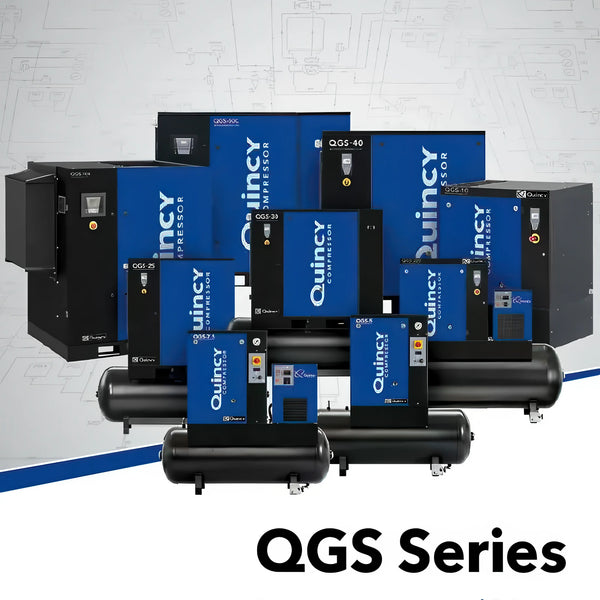
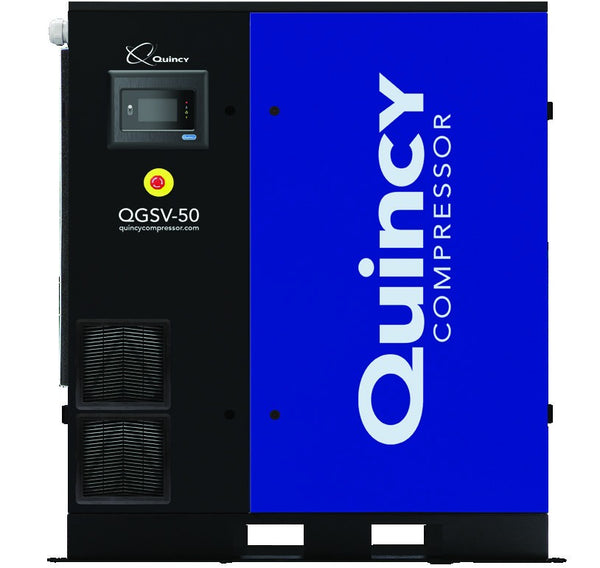
A rotary screw is built to run a 100 percent duty cycle. That one spec is what separates everything on this page from a piston machine, and it is also the quickest way to tell whether you need one. Quincy builds rotary screws from 5 HP shop units up through plant machines of several hundred horsepower, in both fixed speed and variable speed.
Where a screw stops being the right answer
If your shop draws air in short bursts and sits idle the rest of the hour, a screw is the wrong purchase. A fixed speed screw still burns roughly 25 to 35 percent of its full load power while it sits unloaded, so light intermittent duty costs you money every hour the machine is energized. Below about 30 percent average load, a two stage piston compressor does the same work for less. If the load is genuinely heavy but swings hard through the day, variable speed is the honest middle ground.
The mistake people make sizing one
Almost everyone sizes to peak demand. They add up the published CFM of every air tool in the building, buy that number, and end up 40 percent oversized with a machine that short cycles. Size to average demand and cover the peaks with storage instead. Then plan for what comes out the other end: discharge air leaves a screw at roughly 180 to 200 degrees F and fully saturated, so an aftercooler and an air dryer are part of the install, not an upgrade for next year.
Not sure where your real load sits? Our rotary screw guide walks the sizing math, and the full rotary screw collection covers the other brands we carry if Quincy is not the fit.