


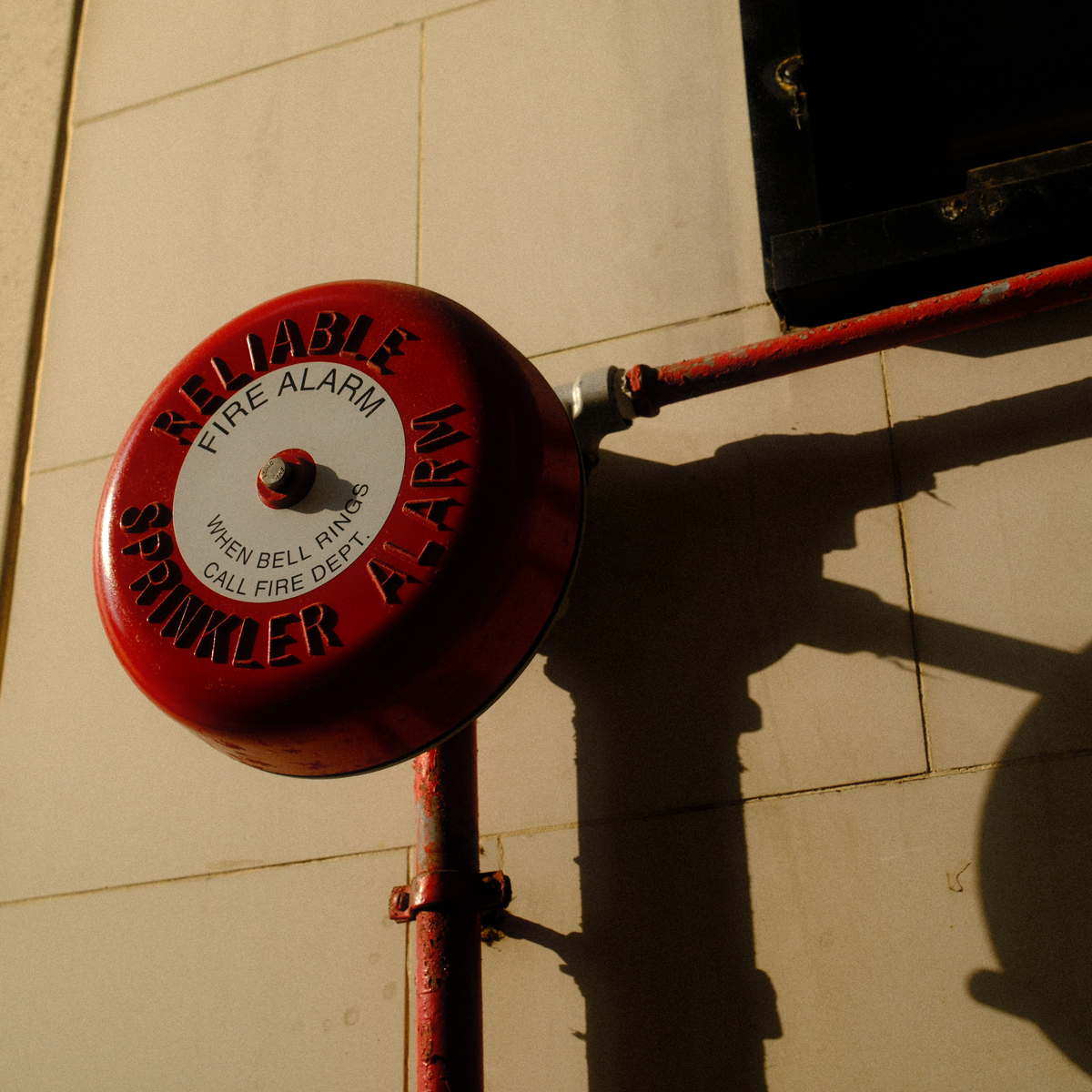
A dry pipe sprinkler system is supposed to sit there full of air for thirty years and do nothing. What actually happens in a lot of buildings is that it sits there full of wet air slowly eating itself, and the first anyone hears about it is a pinhole leak dripping onto a warehouse rack, or a trip test that reveals a branch line half full of water.
The air side of a dry pipe sprinkler system is a small part of the installed cost and a large part of whether the system survives. Here is what the code asks for, what the code does not ask for, and where nitrogen has genuinely changed the conversation.
Start With What We Do and Do Not Sell
Being straight about this up front, because it matters for what follows.
NFPA 13 as of the 2025 edition requires that where an air compressor is dedicated to a sprinkler system, that compressor be listed for fire protection. That is a specific listing on a specific piece of equipment, and a general purpose shop compressor does not carry it no matter how well it performs. We do not sell listed fire protection compressors and we will not tell you a standard industrial unit is an acceptable substitute for a dedicated one. Your fire protection contractor sources that.
What we do sell, and what this article is actually about, is the air treatment and nitrogen generation that determines whether the pipe inside your building corrodes. That side is usually where the real problem is, and it is frequently nobody's job.
What the Code Requires of the Air Supply
Three requirements come up on nearly every job.
Restore pressure within 30 minutes. NFPA 13 requires the compressed air supply to come from a source that is always available and that can restore normal system air pressure within 30 minutes. The exception is systems protecting refrigerated spaces held below 5 F, where 60 minutes is allowed.
This is a sizing requirement, and it is the one people get wrong on retrofits and additions. Extend a system, add a hundred feet of 4 inch main, and the compressor that used to make 30 minutes now does not. Nobody rechecks it because the compressor still works.
Supervisory pressure per the valve. System air pressure is set per the instruction sheet furnished with the dry pipe valve, or at 20 PSI above the calculated trip pressure of the valve based on the highest normal supply water pressure. In practice a lot of systems sit around 40 PSI, but do not treat that as the spec. The valve manufacturer's data is the spec.
The supply has to be always available. Which rules out a compressor shared with a production process that gets valved off on weekends, or one on a circuit that gets shut down.
The Corrosion Problem Nobody Owns
Here is the part that costs buildings real money and rarely appears on anybody's maintenance list.
A dry pipe system is not dry. It is full of compressed air, and compressed air from an ordinary compressor carries moisture. That moisture condenses at low points in the piping. Now you have steel pipe, water, and oxygen sitting together at ambient temperature for years.
Two things eat the pipe from inside:
Oxygen corrosion. Ordinary rust, but happening in a sealed pipe where the product has nowhere to go. It builds up as tubercles, which restrict flow and eventually perforate the wall. Air is about 21 percent oxygen, and that oxygen is the reactant.
Microbiologically influenced corrosion. Bacteria living in trapped water accelerate localized attack dramatically. MIC produces deep, fast pinholes rather than general thinning, which is why a system can look fine and then leak in five places in a year.
Dry pipe and pre-action systems corrode faster than wet systems, which is counterintuitive until you think about it. A wet system is full of water with very little dissolved oxygen, and once that oxygen is consumed the reaction largely stops. A dry system is continuously resupplied with fresh oxygen every time the compressor runs.
The Two Fixes
Dry the air
Remove the water and you remove the electrolyte. No liquid water in the pipe, far less corrosion, and no ice plugs in cold spaces.
For a system in a heated building, a refrigerated dryer is a real improvement over nothing. For a system in an unheated warehouse, a freezer, or any pipe that sees below freezing, a refrigerated dryer is not enough, because a 38 F pressure dew point still condenses at 20 F. That is desiccant territory and a minus 40 dew point. Our refrigerated vs desiccant comparison covers where the line sits.
Ice is its own failure mode and worth naming separately. Water sitting in a branch line in a freezer becomes an ice plug, and an ice plug means that branch does not flow when the system trips. The system tests fine on air and fails when it matters.
Remove the oxygen
The more complete answer. If you fill the system with nitrogen instead of air, you take away the oxygen that drives both oxygen corrosion and MIC. Membrane and PSA nitrogen generators make high purity nitrogen from compressed air on site, and this has become standard practice on new dry and pre-action systems in a lot of markets.
Worth understanding how it plays out in practice: the system has to actually be purged of air, not just topped up with nitrogen, and that takes a proper vent and a purge procedure. Filling over the top of an air-filled system gets you a blend and a fraction of the benefit. Nitrogen also arrives very dry as a side effect of how it is generated, so you solve the moisture problem and the oxygen problem with one purchase.
The economic case is straightforward on a large system: compare the generator against the cost of repiping sections of a warehouse in ten years, plus the leaks, plus the impairments and the fire watch while you fix them. On a small system it is a harder sell and a good dryer may be the sensible stopping point. Our nitrogen generator guide covers how they work and what they cost to run.
What Goes Wrong
| Symptom | What it usually means |
|---|---|
| Compressor runs far more than it used to | Leaks in the system, which also means fresh oxygen constantly entering |
| Water out the auxiliary drain every inspection | No drying on the air supply |
| Pinhole leaks appearing in clusters | MIC, and it will continue |
| Slow to restore pressure after a test | Compressor undersized, often after a system extension |
| Branch line does not flow on a trip test | Ice plug or corrosion blockage |
| Trip time longer than it used to be | Restriction from corrosion product in the pipe |
That first row deserves attention. A dry pipe compressor that cycles frequently is telling you the system leaks, and every cycle pushes fresh oxygen and fresh moisture into the pipe. A leaky system corrodes considerably faster than a tight one, so chasing leaks is corrosion control, not just a nuisance fix.
If You Are Specifying a New System
Order of priority, if the budget is finite:
- A properly sized, listed air supply that meets the 30 minute requirement with margin for future extension.
- Nitrogen generation if the system is large, in a corrosive or humid environment, or protecting anything expensive.
- Failing that, real drying, sized to the coldest temperature the pipe will see and not to the temperature of the mechanical room.
- Pitch and auxiliary drains that someone can actually reach, because a drain nobody can get to is a drain nobody uses.
- A leak test regime, because leaks are the corrosion accelerator.
Where to Start
Ask two questions about your existing system. How long does it take to restore pressure after a test, measured rather than assumed? And how much water comes out of the auxiliary drains at inspection? If the answer to the first is creeping up or the answer to the second is anything at all, the air side needs attention.
Browse nitrogen generators and purification, or air dryers if drying is where you are starting. For the listed compressor itself, talk to your fire protection contractor.
A dry pipe sprinkler system fails quietly, over years, in a way nobody notices until it either leaks or does not flow. The air in it is what decides which.
Frequently Asked Questions
How fast does a dry pipe sprinkler compressor have to fill the system?
NFPA 13 requires restoring normal system air pressure within 30 minutes from a supply that is always available. Systems protecting refrigerated spaces maintained below 5 F are allowed 60 minutes. This is worth re-checking any time a system is extended.
Can I use a regular shop air compressor for a dry pipe system?
Not for a dedicated sprinkler compressor. The 2025 edition of NFPA 13 requires a compressor dedicated to a sprinkler system to be listed for fire protection, which is a specific listing that general purpose industrial compressors do not carry. Your fire protection contractor sources that equipment.
Why do dry pipe systems corrode faster than wet systems?
Because they are continuously resupplied with oxygen. A wet system consumes the dissolved oxygen in its water and the reaction largely stops. A dry system takes in fresh air every time the compressor runs, and any moisture that condenses at low points sits there with steel and oxygen for years.
Does nitrogen really stop sprinkler pipe corrosion?
It removes the oxygen that drives both oxygen corrosion and microbiologically influenced corrosion, which is the root cause rather than a symptom. The system has to be properly purged rather than simply topped up with nitrogen over existing air, or you get a blend and only part of the benefit.
What supervisory pressure should the system run at?
Whatever the dry pipe valve manufacturer's instruction sheet specifies, or 20 PSI above the valve's calculated trip pressure based on the highest normal supply water pressure. Many systems sit near 40 PSI, but that is an observation rather than a specification.


