


Some filters could not be applied and were reset.
-
 Sale Champion R-Series Horizontal Simplex Piston Air Compressor $3,882.00
Regular price $7,360.00Add to cart -
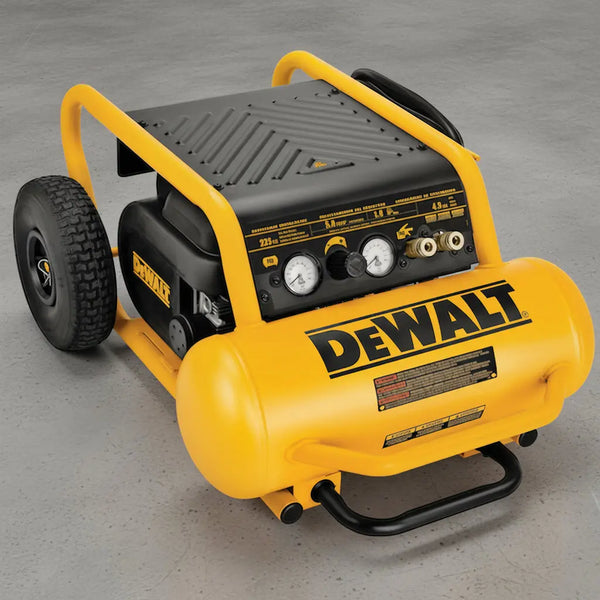 Sale Dewalt D55146 Portable Air Compressor 4.5 Gal 225-PSI Max $419.00
Regular price $550.00 -
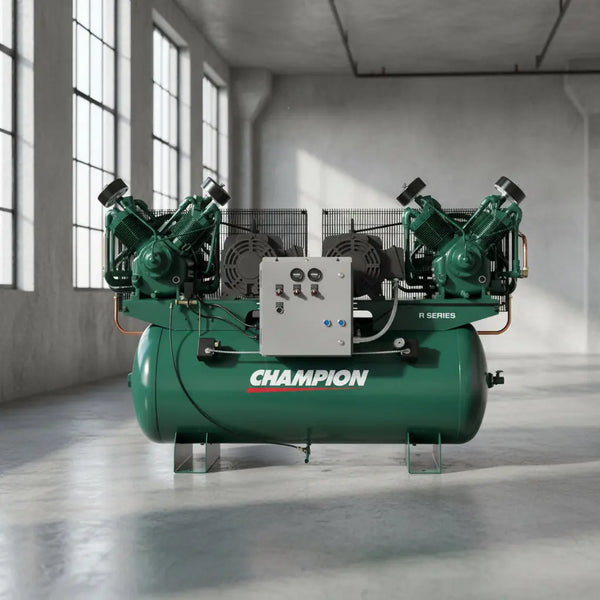 Sale Champion Duplex R-Series Piston Air Compressor $8,830.00
Regular price $16,790.00Add to cart -
 Sale Champion Base-Mounted R-Series Piston Air Compressor $3,199.00
Regular price $6,360.00Add to cart -
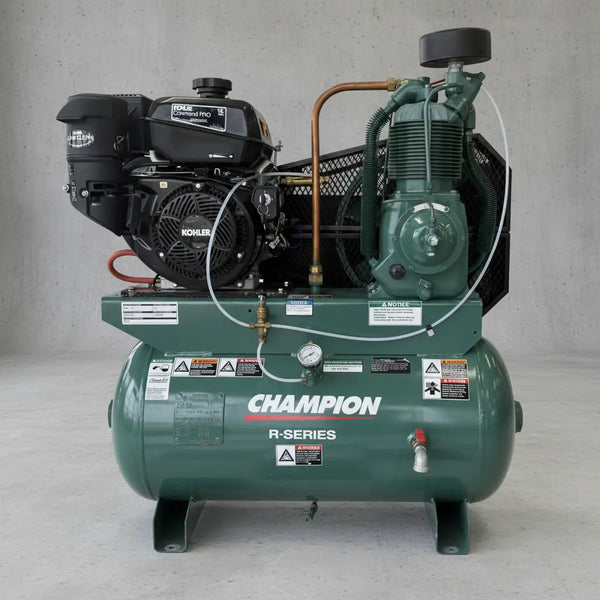 Sale Champion R-Series Engine-Driven Piston Air Compressor $4,101.00
Regular price $7,770.00Add to cart


A two stage reciprocating compressor makes 175 PSI because it compresses twice and cools the air between stages in an intercooler. A single stage tops out near 135 PSI. That one difference settles most purchases, since a 1 inch impact, a paint booth or a long pipe run all need the higher line pressure to work right at the drop.
The real limit is duty cycle. A piston compressor is built for 50 to 75 percent run time, not 100. It needs the off time to shed heat through the head and the receiver tank. Run one flat out and discharge temperature climbs past 350 degrees F, oil carbons onto the valves, and you are pulling the head every few months.
When to stop and buy a screw instead
If the compressor runs more than roughly 60 percent of the shift, or you need more than 25 to 30 CFM all day, a rotary screw is the cheaper machine to own. It runs 100 percent duty, makes less heat per CFM delivered, and is 15 to 20 dBA quieter. A piston is still the better buy for intermittent tool air, for 175 PSI, and for shops that would rather rebuild a cast iron pump than replace a sealed air end.
The mistake people make is comparing horsepower. Two 5 HP compressors can differ by 4 CFM depending on pump design and RPM. Compare CFM at 90 PSI, and check pump speed while you are at it: a slow turning cast iron pump at 700 to 900 RPM will outlive a 1200 RPM pump making the same air.
Before ordering, confirm CFM at your working pressure, maximum system pressure, honest daily run time, and what the panel can actually supply.


